
 We’ve all heard about how important it is for parents to have “the talk” with their tween children. While conversations about puberty, sex and drugs may seem daunting to parents (and mortifying to the children), most make sure that their kids have the information they need and their values are heard. So why is it so hard to have “the talk” with our aging parents? You know, the one that starts out asking them if they should really be driving on snowy Minnesota roads and ends detailing their end-of-life plan. The answer is obvious, though the “aging parents talk” is equally as important. Many experts agree: by the time you approach age 40 and a loved one is around 70, you should have had the “talk” about issues such as home care, financial choices, health, driving, dating and end of life. The Home Instead Senior Care® network refers to this concept as the 40-70 Rule®, a program launched in 2008 to start important conversations early, before a crisis occurs.
Backed by new research with seniors, their adult children, senior care and legal professionals, Home Instead Senior Care of Minneapolis now wants to take those important conversations further. The 40-70 Rule: An Action Plan for Successful AgingSM and accompanying resources encourage individuals and families not only to start those vital conversations soon, but to finish them. You’ll come away with a plan that encourages individuals of all ages to ACT (Assess, Consider, Talk) on their desires and wishes for the future, then put their plan into action. As high schoolers take their ACT to get into a good college, get your ACT to plan for your future and your Mom or Dad’s.
Interactive Conversation Tree
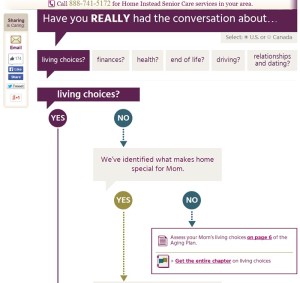 Have you really had the conversation with your loved ones about end-of-life wishes? Finances? Future living preferences? When a family lacks clear communication surrounding a loved one’s choices as they age, frustration arises, most often at the worst time. If a senior never expresses his or her desires about end of life care, for example, bedside arguments between family members about “what he would have wanted” or “how she wanted to go” can result. Click here to walk through an interactive guide to find resources that can assist you with the aging considerations you have yet to discuss with your family. If you’ve already had a conversation about health (for instance), click Yes and move onto end-of-life. If not, click No and assess your Mom’s health, considering risks and genetics. Move on from there to making sure Mom is up to date on medical checks and preventative screenings. Each step links to the Action Plan for Successful Aging which includes checklists, thoughts to consider, conversation starters, and resources. This step-by-step approach will open the door to having “the talk” and ensure that all of the important topics are covered.
Home Instead Senior Care of Minneapolis takes a look at the importance of planning ahead financially for your aging situation through the lens of a mother and her young daughter.
Action Plan for Successful Aging
 Building on your conversation, the next step in the 40-70 Rule® is the Action Plan for Successful AgingSM. Put your plan into action with the assistance of noted experts in aging, finances, health, end of life and communication. This resource will take the guesswork out of some of the issues that many families eventually face. Included are conversation tips and considerations for a variety of circumstances such as living alone, blended families, dementia and religious preferences – topics that so many families are dealing with in today’s world. This Action Plan is written for the individual who wants to face aging with confidence so you may be filling it out with someone you love including a parent, spouse or friend or even for yourself! Topics include:
Living Choices – Where would your patients like to live as they age? Will they stay in their Minnesota home or live in a care facility? Do they need to adapt their home for safety? Who would they call in the event of an emergency? These basic questions will ensure that the family is on the same page about the senior’s future living preferences.
Finances – Have your senior patients calculated the cost involved with meeting their retirement wishes? Have they met with a financial advisor to determine how much they will likely need to cover long-term health care expenses? Calculating the cost now and planning ahead financially can help yield greater peace of mind as they move forward.
Health – Have your patients outlined their goals for a healthy lifestyle as they age? Have they factored their current diet into this equation? Are they up to date on medical checks and health screenings? Addressing health concerns early can be a valuable, preventative tool in successful aging.
End of Life Care Wishes – Many families are not having this important conversation. Without it, they cannot gain a clear understanding of what their parents would like to accomplish before they die or where they would like to end their life. Discussing this difficult topic now will help ensure that the family has a unified plan and advanced directives in place moving forward.
Driving – Most seniors dread the idea of losing the independence associated with driving. Yet, families must be able to address their concerns about driving abilities, not only for the safety of their senior parent but for all with whom they share the road. While the driving topic can often be an emotional one, this chapter provides tips to navigate those emotions and discuss options for independence without a license.
Relationships and Dating – Perhaps Dad passed away and Mom has been spending a lot of time with an older gentleman friend. This can create family awkwardness if intentions aren’t clearly communicated. It’s important for families to talk about the nature of their parents’ relationships and their wishes for companionship as they age. Watch this hysterical video from Mary Maxwell to put yourself in the proper frame of mind!
We hope that completing this plan will help you be better prepared for the road ahead. Download the 40-70 Rule: An Action Plan for Successful Aging to share with your senior loved one, or explore the additional program resources available around these topics so that you and your family has the tools they need to create a successful plan for aging.


 The stress of caring for a seriously or chronically ill senior can take its toll on a spouse. A study from the University of Michigan Comprehensive Cancer Center found little difference in quality of life between patients and spouses, but found significant differences based on the phase of their illness, specifically whether the patient was newly diagnosed, facing a recurrence or living with advanced disease. Couples coping with advanced disease had significantly poorer overall quality of life. Spouses reported lower confidence than patients in their ability to manage the illness, and more uncertainty about the illness; patients also reported more social support than did spouses. Exhausted. Anxious. Overwhelmed. If you are the caregiver of a loved one in MN with cancer or arthritis, it is likely that you relate to all of these emotions. Transportation to and from appointments around Minneapolis, frequent hospital stays, and the sheer scope and duration of the illness are challenges many caregivers of these patients face. What is a caregiver to do when they have little time to care for oneself? One solution is to get
  More Than Joint Pain: Understanding Seniors and Arthritis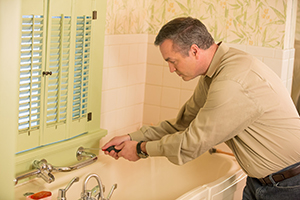

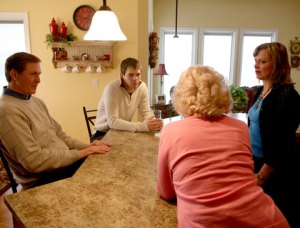 Communication is the key to making your combined family work, says Matthew Kaplan Ph.D., Penn State Intergenerational Programs extension specialist. “Families must address the issues at hand — from multiple perspectives — when they arise…Ask yourself, ‘What can we do to come together and figure things out?'”



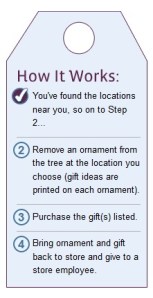 Here’s how it works:
 About the Be a Santa to a Senior Campaign
 By Home Instead Senior Care
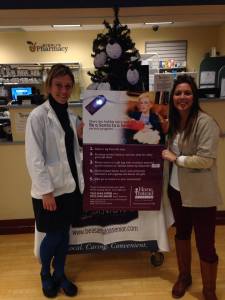
 Christmas trees will be going up soon in which generous folks will pick up ornaments with the first names of seniors and their gift requests, buy items on the list and return them in a gift bag to the location. From there, gifts need to be collected, organized, stored & distributed and that’s where we need your help! If you are a corporation, church group, school group or senior care residence who has compassionate volunteers and space to store gifts, please consider volunteering your time and location to our Be a Santa to a Senior program.
 On September 21, 2013 the
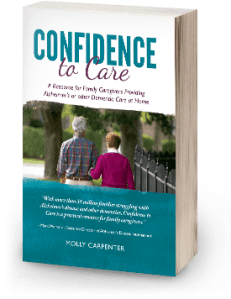
 Confidence to Care also highlights the importance of caring for yourself while caring for others. This at home kit contains, an at-a-glance collection of information, tips and resources to help handle difficult situations, avoid household accidents, encourage engagement and prevent caregiver stress, that is designed for any member of the household to reference, anytime they need it.
 The responsibilities and challenges of caring for a loved one in their Minnesota home can place significant stress on the family caregiver. In fact, this stress can build up to actually cause caregiver distress—a situation where the caregiver may become more susceptible to other health risks such as such as ulcers and weight loss/gain or even more chronic conditions such as diabetes, heart disease.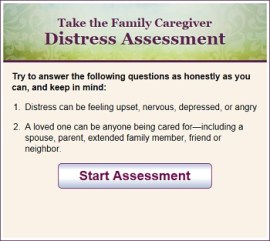
 These tips are recommended while taking care of an aging loved one:
 Home Care MN and Senior Care Information in Minneapolis