Processing the Mixed Emotions of Caregiving

homecaremnCaring for a senior loved one in Minneapolis can come with a contradiction of emotions. For example, research conducted by Home Instead Senior Care® Minneapolis points out that nearly three-fourths (74%) of family caregivers who hide their feelings are overwhelmed, but that same percent of people caring for their Mom or Dad also feel loved. In addition, 64% feel anxious while these same caregivers feel satisfied. A key finding of the research: hiding one’s feelings increases the risk for caregiver distress. As we noted in last month’s blog post, caregiver distress is a situation where the stress of caring for a senior in their home makes one more susceptible to health risks such as high blood pressure, diabetes and  stroke. Watch the video below to learn what Home Instead Minneapolis is doing to uncover this issue and provide home care assistance.

emotions_caregivingHome Instead Senior Care® Minneapolis’ Family Caregiver Stress Relief program is designed to assist caregivers in better identifying their potential for distress in an effort to help avoid its adverse impact. Resources featured here can help family caregivers learn how to deal with the stress of caregiving and balance the varied emotions that so many family caregivers struggle to understand. One U.S. study of 38 years of research revealed that surveyed caregivers had a 23% higher level of stress hormones and a 15% lower level of antibody responses than did non-caregivers. That’s why it is important for a person to first recognize that they’re a caregiver by taking our quiz.

Next, one should take an honest look at their emotions.  Caregiving expert Dr. Amy D’Aprix says caregivers should try to avoid classifying emotions as good and bad. “Just recognizing it’s normal to feel many emotions when you’re a family caregiver helps take the power away from the emotion.” She offers that other major life events also bring conflicting feelings. Who wasn’t scared to walk down the aisle and what Mom didn’t grab a tissue when they proudly dropped their child off at the University of Minnesota? Two attributes set caregiving apart: the intensity of caregiving situations and the lack of planning that generally precipitates the need for care. Dr. D’Aprix offers these tips to help caregivers overcome the anxiety of the unexpected need for caregiving.

  1. Look at your situational concern. What can you control? If your Dad is diabetic, you can control the food you serve. What you cannot control is what he eats. Other common worries such as passing away before your senior loved one are things you can’t control, so try not to worry.
  2. Have an outlet. Find someone you can talk to without judgement. This could be a friend, support group or home care provider. Caregivers who repress their feelings are most likely to feel frustration over increasing demands on their time (56%), experiencing the physical demands of caregiving (41%) and lacking control over their emotions (34%).
  3. Recognize your limitations. Be realistic about what you can do. While you might be the perfect person to make a meal for a senior, you probably shouldn’t be providing medical care services. Set priorities and get help from a home health care provider when needed.


home care mn If you’re showing signs of caregiver distress, consider talking with a healthcare professional that can help you to evaluate your situation. Remember, it is not selfish to focus on your own needs and desires when you are a family caregiver. In fact, it is important that you take initiative with your own physical and emotional care so that you can best assist the person you are caring. Approximately 74% of caregivers who hide their feelings report fatigue, 53% report difficulty sleeping, 37% report depression, and 30% experience weight gain or loss. Take the Family Caregiver Distress Assessment, adapted for the Home Instead Senior Care network  to learn how to deal with the stress of caregiving and balance the varied emotions that so many family caregivers struggle to understand.

Enter to Win our Contest!

alzheimers care mn

Contest

In conjunction with the Caring for a Person with Memory Loss conference and our support of organizations that provide education and assistance to those dealing with Alzheimer’s Disease, we’re offering a chance to win a $100 gift card to Parasole Restaurants PLUS a $100 donation to the Alzheimer’s Association in your name.

Enter by June 28!

UofMHome Instead Senior Care of Minneapolis is committed to making coping with Alzheimer’s and dementia-related issues, such as memory loss as easy as possible. That is why we were a proud sponsor of the Caring for a Person with Memory Loss Conference in Minneapolis, MN held on Saturday, June 1st. According to Joseph Gaugler, Ph.D., coordinator of the conference, “The Caring for a Person with Memory Loss conference is designed to share tools, skills, resources, information, and wisdom with families and care professionals about the most effective ways to care for persons with memory concerns. With more than 5 million people in the U.S. with Alzheimer’s disease or a related dementia and 15.4 million people provided care for these individuals, the need to share relevant, effective care approaches and ideas to improve the quality of life of persons with memory loss is more critical than ever. To this end, our June 1st, 2013 Caring for a Person with Memory Loss conference will touch on several key topics including different types of dementia, family dynamics, art therapy, and abuse issue in person with memory loss. As this conference is a community education event and free for families, the kindness of sponsors such as Home Instead Senior Care of Minneapolis is critical to help us provide speaker honoraria, offer copies of presentation materials to attendees, provide refreshments to attendees, and live stream and record the conference for future viewing by attendees and others.”

The conference was a huge success! Thank you to Joseph Gaugler and others for providing this valuable education and awareness to people caring for those with Alzheimer’s and dementia.

Conference Committee

Joseph E. Gaugler, PhD, is an Associate Professor and McKnight Presidential Fellow in the School of Nursing and Center on Aging at the University of Minnesota. His research focuses on Alzheimer’s disease, family caregiving, and clinical interventions for these individuals.

Mark Reese, MA, LPC, LAMFT, is a study counselor at the University of Minnesota. His work focuses on enhancing clinical services for families caring for relatives with memory loss.

University of Minnesota Caregiver Registry

As Dr. Gaugler’s research program continues to grow, he would like to ask you to take a few minutes and consider being a part of the University of Minnesota Caregiver Registry. Becoming part of the registry does not enroll you in any study, but it provides Dr. Gaugler with permission to contact you in the future about any upcoming opportunities to participate in his research as well other basic information. Filling out the University of Minnesota Caregiver Registry form should not take more than 5 minutes. If you have already done this for us and nothing has changed since you filled it out, there is no need to fill out another form. However, if something has changed since you last filled out a Registry form, please feel free to fill out a new form:

If you are a family member or friend who knows someone with memory loss or is helping them, please fill out the University of Minnesota Caregiver Registry-Family form here:
https://umsurvey.umn.edu/index.php?sid=97146&lang=um

If you are a professional who cares for persons with memory loss or their families, please fill out the University of Minnesota Caregiver Registry-Professional form here:
https://umsurvey.umn.edu/index.php?sid=36229&lang=um

Caring for a Person with Memory Loss (CPWML) Annual Conference was Streamed

The CPWML conference recording will be made available on the virtual library site at: http://tinyurl.com/CPWMLresources after the conference. This live stream will be interactive, meaning you can participate in Q & A with presentation speakers.

Caring for a Person with Memory Loss Conference Virtual Library

If you would like to revisit the information presented in this or past Caring for a Person with Memory Loss conferences, please visit our virtual conference library at http://tinyurl.com/CPWMLresources. There you will find Power Point slides and handouts of each presentation, information on how to access recorded presentations, speaker contact information and other resources from past conferences. We have held Caring for a Person with Memory Loss conferences since Spring 2008, and there is a lot of great, free information in the virtual library for you, your family members, or clients!

Related articles

Caring for a Person with Memory Loss Conference

UofMFree Annual Educational Conference

Saturday, June 1, 2013
8:00am to 4:30pm
Mayo Memorial Auditorium
420 Delaware Street SE
Minneapolis, MN 55455

Home Instead Senior Care of Minneapolis is committed to making coping with Alzheimer’s and dementia-related issues, such as memory loss as easy as possible. That is why we’re a proud sponsor of the Caring for a Person with Memory Loss Conference in Minneapolis, MN. According to Joseph Gaugler, Ph.D., coordinator of the conference, “The Caring for a Person with Memory Loss conference is designed to share tools, skills, resources, information, and wisdom with families and care professionals about the most effective ways to care for persons with memory concerns. With more than 5 million people in the U.S. with Alzheimer’s disease or a related dementia and 15.4 million people provided care for these individuals, the need to share relevant, effective care approaches and ideas to improve the quality of life of persons with memory loss is more critical than ever. To this end, our June 1st, 2013 Caring for a Person with Memory Loss conference will touch on several key topics including different types of dementia, family dynamics, art therapy, and abuse issue in person with memory loss. As this conference is a community education event and free for families, the kindness of sponsors such as Home Instead Senior Care of Minneapolis is critical to help us provide speaker honoraria, offer copies of presentation materials to attendees, provide refreshments to attendees, and live stream and record the conference for future viewing by attendees and others.”

alzheimers care mn

Contest

Register today then stop by our booth! In conjunction with the conference and our support of organizations that provide education and assistance to those dealing with Alzheimer’s Disease, we’re offering a chance to win a $100 gift card to Parasole Restaurants PLUS a $100 donation to the Alzheimer’s Association in your name. Learn more and enter today!

Registration

There is no cost for this conference for participants who do not want contact hours, but pre-registration is required. To RSVP your attendance, click here. If you RSVP on behalf of others, you must complete a new form for each person to be registered for the conference.

Contact Hours

The event will provide 6.5 American Nurses Credentialing Center (ANCC) contact hours, 6.75 Minnesota Board of Social Work contact hours, and 7 Minnesota Licensed Nursing Home Administrator contact hours. A certificate of attendance will be provided so that all health professionals may submit it to their respective organizations for accreditation . Attendance for the full day is required to receive the certificate. There is a $50 registration fee to cover processing costs. Please complete the online registration form (http://tinyurl.com/CPWMLregistration) to learn more about payment options.

Refund Policy

If you need to cancel your registration, a refund will be issued if you cancel in writing to Dr. Gaugler at gaug0015@umn.edu by May 17th, 2013 (2 weeks prior). If you cancel after this date, you will not be eligible for a refund.

Program Schedule

8:00-8:30 am – Welcome
Joseph E. Gaugler, PhD, Associate Professor/McKnight Presidential Fellow
University of Minnesota School of Nursing/Center on Aging

8:30-10:00 am – Different Types of Dementia: Clinical and Practical Considerations
Siobhan McMahon, PhD, GNP-BC, Assistant Professor, University of Minnesota School of Nursing

  • Define dementia and its various subtypes/causes
  • Describe clinical differences in various types of dementia
  • Discuss the approaches to most effectively treat and manage different types of dementia

10:00-10:15 am – Break

10:15-11:45 am – What Family Members Need From Each Other
Patricia Schaber, PhD, OTR/L, Associate Professor
University of Minnesota Program in Occupational Therapy

  • How do family members interact? (Family FIRO Model)
  • Changing needs in family members with memory loss
  • Strategies for promoting daily, positive interactions

11:45am-12:45pm – Lunch Break

12:45-2:15 pm – Dancing – Interactive Connections for Healthy, Enriched Lives
Maria DuBois Genné, BSEd., MEd, Founder and Director of the KAIROSalive!

  • Through experiential processes learn how dance, music, and story can enliven and nurture our bodies and minds
  • Through experiential processes learn how the shared experience of dancing transforms each participant and can help build a sense of belonging and community.

2:15-2:30 pm – Break

2:30-4:00 pm – Elder Abuse and Dementia
Deb A Holtz, JD, MN State Ombudsman for Long-Term Care, Minnesota Board on Aging

  • Provide an overview of the State Ombudsman’s role and responsibilities
  • Discuss key issues related to elder abuse and dementia, using case examples where appropriate
  • Provide information, suggestions, and tools for families of at-risk loved ones with memory loss

4:00-4:15 pm – Thanks and Closing Remarks
Joseph E. Gaugler, PhD

Conference Committee

Joseph E. Gaugler, PhD, is an Associate Professor and McKnight Presidential Fellow in the School of Nursing and Center on Aging at the University of Minnesota. His research focuses on Alzheimer’s disease, family caregiving, and clinical interventions for these individuals.

Mark Reese, MA, LPC, LAMFT, is a study counselor at the University of Minnesota. His work focuses on enhancing clinical services for families caring for relatives with memory loss.

University of Minnesota Caregiver Registry

As Dr. Gaugler’s research program continues to grow, he would like to ask you to take a few minutes and consider being a part of the University of Minnesota Caregiver Registry. Becoming part of the registry does not enroll you in any study, but it provides Dr. Gaugler with permission to contact you in the future about any upcoming opportunities to participate in his research as well other basic information. Filling out the University of Minnesota Caregiver Registry form should not take more than 5 minutes. If you have already done this for us and nothing has changed since you filled it out, there is no need to fill out another form. However, if something has changed since you last filled out a Registry form, please feel free to fill out a new form:

If you are a family member or friend who knows someone with memory loss or is helping them, please fill out the University of Minnesota Caregiver Registry-Family form here:
https://umsurvey.umn.edu/index.php?sid=97146&lang=um

If you are a professional who cares for persons with memory loss or their families, please fill out the University of Minnesota Caregiver Registry-Professional form here:
https://umsurvey.umn.edu/index.php?sid=36229&lang=um

Caring for a Person with Memory Loss (CPWML) Annual Conference will be Streamed Live June 1, 2013!

Please share the following with those you know that won’t be able to attend the conference, especially those out of state:

We are going to stream live and record the conference presentations! The CPWML conference can be accessed live from a remote location with a computer and internet access (highly recommend doing so with T3 or LAN line, as opposed to wireless) as well as via a recorded version after the event. The CPWML conference will be broadcast here: https://umconnect.umn.edu/pwmlc/ and the recording will be made available on the virtual library site at: http://tinyurl.com/CPWMLresources after the conference. This live stream will be interactive, meaning you can participate in Q & A with presentation speakers.

Caring for a Person with Memory Loss Conference Virtual Library

If you would like to revisit the information presented in this or past Caring for a Person with Memory Loss conferences, please visit our virtual conference library at http://tinyurl.com/CPWMLresources. There you will find Power Point slides and handouts of each presentation, information on how to access recorded presentations, speaker contact information and other resources from past conferences. We have held Caring for a Person with Memory Loss conferences since Spring 2008, and there is a lot of great, free information in the virtual library for you, your family members, or clients!

Alzheimer’s Disease or Other Dementias Family Education Workshop

We’ve all heard at least some of the statistics. Maybe you already knew that one in eight seniors aged 65 and older have Alzheimer’s disease or other dementias. But did you know that by 2030, the number of adults living with dementia will almost double (according to the World Alzheimer’s Report, Alzheimer’s Disease International)? Maybe you don’t need to hear these statistics to realize the impact of Alzheimer’s on people’s lives because you’re living it. Are you caring for an aging parent or relative in Minneapolis with Alzheimer’s disease? Do you want to find out more about what causes dementia, and the signs to watch for? Are you familiar with the behaviors – such as wandering and aggression – that can be caused by Alzheimer’s and other dementias? You need to know that there is support for you and your loved one. Home Instead Senior Care developed a unique training program called CARE so that our CAREGiversSM  can provide the highest quality of home care service, changing the way people live with Alzheimer’s or other dementias. CARE stands for Changing Aging through Research and EducationSM and we’re excited to bring this program to family members of those with Alzheimer’s through our Family Education Workshops.

Next Workshop!
Date:  Thursday, May 16, 2013 at 6-8:30pm
Home Instead Senior Care of Minneapolis in Maple Grove, Minnesota
If you are interested in attending, please call us at  763-544-5988 or RSVP on our Facebook page.

We will briefly discuss the causes of Alzheimer’s disease or other dementias, the symptoms and how they are diagnosed. The focus will be on understanding the behaviors and learning to engage your loved one. Our workshops are audience guided and interactive so you’re sure to have your questions answered.

Topics include:
• Alzheimer’s Disease or Other Dementias
• Capturing Life’s Journey
• Techniques to Handle Challenging Behaviors
• Activities to Encourage Engagement

Capturing Life’s Journey

This workshop will help you:
1. Discover how capturing your loved one’s life’s journey can help you and others provide the best care for your loved one.
2. Learn techniques to encourage your senior loved one to share their stories and memories.
3. Become familiar with the format of the Life Journal and how to record information about your loved one’s past.
4. Find out how to use the Life Journal in partnership with professional caregivers.

Techniques to Handle Challenging Behaviors

This workshop will help you:
1. Learn more about the challenging behaviors that may be displayed by those with Alzheimer’s or other dementias.
2. Discover techniques to help handle these behaviors.
3. Determine what techniques work best to manage different types of behaviors.

Activities to Encourage Engagement

This workshop will help you:
1. Learn about the benefits of staying active for a person with Alzheimer’s disease or other dementia.
2. Learn about three types of activities – for mind, body, and soul.
3. Discover various techniques to encourage your loved one to engage in an activity.
4. Become familiar with activities that are suitable for late stage Alzheimer’s disease or other dementia, to stimulate your loved one’s five senses.

Alzheimer’s Disease or Other Dementias

This workshop will help you:
1. Learn about the causes of Alzheimer’s disease or other dementias.
2. Recognize the symptoms of Alzheimer’s disease or other dementias.
3. Discover how Alzheimer’s disease and other dementias are diagnosed.
4. Understand more about the behaviors that can be caused by the symptoms of Alzheimer’s disease and other dementias.

Home Instead Senior Care of Minneapolis is committed to making coping with Alzheimer’s and dementia-related issues, such as memory loss as easy as possible. That is why we’re a proud sponsor of the Caring for a Person with Memory Loss Conference in Minneapolis, MN.  According to Joseph Gaugler, Ph.D., Associate Professor, McKnight Presidential Fellow, Editor-in-Chief, Journal of Applied Gerontology, School of Nursing, Center on Aging at the University of Minnesota and coordinator of the conference, “The Caring for a Person with Memory Loss conference is designed to share tools, skills, resources, information, and wisdom with families and care professionals about the most effective ways to care for persons with memory concerns. With more than 5 million people in the U.S. with Alzheimer’s disease or a related dementia and 15.4 million people provided care for these individuals, the need to share relevant, effective care approaches and ideas to improve the quality of life of persons with memory loss is more critical than ever. To this end, our June 1st, 2013 Caring for a Person with Memory Loss conference will touch on several key topics including different types of dementia, family dynamics, art therapy, and abuse issue in person with memory loss. As this conference is a community education event and free for families, the kindness of sponsors such as Home Instead Senior Care of Minneapols is critical to help us provide speaker honoraria, offer copies of presentation materials to attendees, provide refreshments to attendees, and live stream and record the conference for future viewing by attendees and others.”
The conference is free and will be held Saturday, June 1st at the at the Mayo Memorial Auditorium in Minneapolis, MN. To learn more or to register, click here!

10 Tips to Help Minneapolis Families Cope with Alzheimer’s

Issues related to aging can add stress to even the most stable Minneapolis families. Taking turns caring for a senior after surgery, deciding who’s going to mow the lawn and who’s going to assist with doctor appointments and hiring elderly home care are all typical (yet time and energy consuming) tasks for Minnesota family caregivers. Adding behavioral changes related to Alzheimer’s and dementia can push families to the brink. Watch Laurie Owen from Home Instead Senior Care and Dr. Jane Potter from the University of Nebraska Medical Center discuss the lifestyle changes for patients with Alzheimer’s disease or other dementias.

“Regular communication – whether it’s by email or phone – is the single biggest key to helping families cope with Alzheimer’s disease,’’ said caregiving expert Dr. Amy D’Aprix, who developed Caring Cards exclusively for Home Instead Senior Care to engage families in meaningful communication. Here are 9 more tips from Dr. D’Aprix and the Home Instead Senior Care network to helping families stick together through the ups and downs of Alzheimer’s disease:

  1. Get an accurate diagnosis: Get several opinions, if necessary, to ensure that all family members, doctors and home health care professionals caring for your loved one know and understand the situation.
  2. Hold a family meeting: Often times, the main caregiver becomes the only person who has the important information needed to care for the person with Alzheimer’s. Gather family members together with a professional  to ensure that everyone shares the same information and gets the resources they need.
  3. Learn to manage change: Dementias are ever-changing conditions. Find a support group in the Minneapolis or St. Paul area to share with others who are facing similar challenges.
  4. Learn skills and techniques: The behavioral changes that come with Alzheimer’s disease and other dementias can be difficult to manage. The resources of the e-learning Family Caregiver Training can help. Find memory activities and puzzles here.
  5. Ask the primary caregiver if they need help: The main day-to-day caregiver can harbor resentment towards others who they feel should be doing more. Look at what needs to be done and ask the primary caregiver how you can give them respite.
  6. Assign tasks: Family members who live out of town can still help with things like finances. Make a list of all that needs to be done and form an online care team to allow others to help.
  7. Ask for help if you’re the primary caregiver: Are you the only one of your siblings in Minneapolis who lives by your parent? Or maybe you’re the oldest daughter and everyone expects you to be the caregiver. Whatever the circumstance, caregivers of seniors with Alzheimer’s disease and other dementias shouldn’t try to go it alone. (Hint…see tip #6)
  8. Preserve memories: Create a video of your loved one with Alzheimer’s telling stories about their lives or design a shadow box of keepsakes. Make sure to read next month’s blog from Home Instead Senior Care of Minneapolis for more information!
  9. Tap into local Minneapolis resources: Families can’t have too much information when it comes to managing  the behavioral changes of Alzheimer’s disease. Contact a Home Instead CAREgiver who has received special training to care for those with all types of dementias.

Dr. Amy D’Aprix also prepared content for the Alzheimer’s Disease or Other Dementias Training Program called CARE which stands for Changing Aging Through Research and EducationSM. Programs like these as well as the online Family Caregiver Alzheimer’s Training were developed exclusively for Home Instead Senior Care and FREE to you!

Each e-learning class in the Family Caregiver Alzheimer’s Training  program can be completed within 5–15 minutes and include:

  • Understanding Alzheimer’s and Other Dementias
  • Capturing Life’s Journey
  • Managing Behaviors
  • Encouraging Engagement
  • Safety

To begin your free online training immediately, simply click here and “home instead facebookLike” our Facebook page.

As a Fan of our Facebook page, you’ll have access to special opportunities and resources such as this training that we offer throughout the year. Already a Fan? Click here and get Family Caregiver Alzheimer’s Training now!

10 Signs of Alzheimer’s – Download Guide

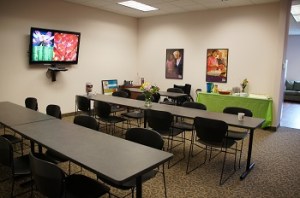
Home Instead senior careHome Instead Senior Care of Minneapolis is all settled into our new office space and we hope you had a nice time being entertained at our open house. Our home care staff and CAREGivers had a great day giving tours and connecting with clients and associates. Now, that we have this large conference room, we’re ready to  welcome and educate! First topic…Alzheimer’s Disease.

Why have we chosen such difficult and sobering topic? Because it’s a reality for so many Americans, including our senior home care clients. According to the Alzheimer’s Reading Room, someone is diagnosed with Alzheimer’s Disease every 70 seconds. Yet it’s often difficult to tell if your loved one in Minneapolis has Alzheimer’s, Dementia or just has brief lapses in memory.

alzheimers trainingDementia is the umbrella term for the variety of conditions that can cause the brain to fail. One of those is Alzheimer’s disease, which represents the majority of cases, noted Dr. Jane F. Potter, chief of the Division of Geriatrics and Gerontology at the University of Nebraska Medical Center.  One thing to consider is, “Normal old age does not cause memory loss. It’s not normal when people can’t take care of daily business, such as paying bills and writing checks.” Dr. Potter said.

It’s imperative to consult a Minnesota physician to hopefully catch the disease early so following are 10 warning signs of Alzheimer’s compared with typical age-related changes, according to the Alzheimer’s Association.

  1. Disruption of daily live due to memory loss: Forgetting information recently attained is more common with Alzheimer’s than forgetting past events. Typical age-related change? Forgetting people’s names or appointments, but remembering them later.
  2. Inability to solve problems or plan: Some people may have difficulty working with numbers or are unable to plan an event or follow a sequence of events. Typical? Making occasional errors when balancing a checkbook.
  3. Difficulty completing tasks they do every day: Pay close attention if a senior in your life forgets the rules of their or gets lost driving to a familiar Minneapolis destination.  Typical? Occasionally needing help using a microwave or recording a television show.
  4. Are not able to retrace steps to find misplaced items:  We all lose things, right? A person with Alzheimer’s might put things in unusual places or accuse others of stealing. Typical? Misplacing things from time to time, such as a pair of glasses.
  5. Confusion with time or place: Forgetting what day it is, holidays or loses track of time. Typical? Getting confused about the day of the week, but figuring it out later.
  6. Trouble understanding images and spatial relationships: They may not realize they are the person in the mirror. Typical? Vision changes related to cataracts.
  7. Decreased or poor judgment: The inability to make a decision-making or making detrimental choices are behaviors to look for with Alzheimer’s. Typical? Making a bad decision once in a while.
  8. Withdrawing from work or social activities: Continuing to reject social activities, refrain from hobbies or not go to work should cause concern. Typical? Sometimes feeling weary of work, family and social obligations.
  9. Difficulty speaking or writing words: Does your loved one have trouble joining or following a conversation when they’ve been quite social in the past? Typical? Sometimes having trouble finding the right word.
  10. Changes in mood and personality: Some can become confused, suspicious, depressed, fearful or anxious. They may be easily upset at home, at work or with friends or in places where they are out of their comfort zone. Typical? Developing specific ways of doing things and becoming irritable when a routine is disrupted.

* Source: http://www.alz.org/alzheimers_disease_10_signs_of_alzheimers.asp.

minneapolis alzheimersTo Download a PDF version of the full David Troxel Guide to Coping with Alzheimer’s Disease & Dementia, Answers to the 15 Most Common Questions, simply click here, home instead facebookLike our Facebook page and download the guide immediately!

As a Fan of our Facebook page, you’ll have access to special opportunities and resources such as this guide that we offer throughout the year. Already a Fan? Click here and download now!

The Home Instead Senior Care® network is a corporate member of the Alzheimer’s Association Alzheimer’s Early Detection Alliance, whose goal is to educate about the warning signs of Alzheimer’s, the importance of early detection and the resources available to help them.

What to Expect with Alzheimer’s

The diagnosis is clear…a senior in your life has been diagnosed with Alzheimer’s disease which can trigger anxiety and fear. What can someone with an Alzheimer’s diagnosis expect?

Based on Home Instead Senior Care® network research, those with Alzheimer’s disease or other dementias who live at home without in-home care reported these common problems, in addition to the warning signs identified above:

  1. Wandering
  2. Nighttime wakefulness and other sleep problems
  3. Refusing to eat
  4. Rummaging around or hiding things
  5. Belligerence, anger or aggressive behavior
  6. Hallucinations, delusions or paranoia

Despite this grim expectation, there is hope on the horizon. “One of the promising areas under study is exercise; it appears that avid exercisers have a lower risk of dementia. So identifying people at risk and developing an activity program are among therapies being considered”, said Dr. Jane F. Potter, chief of the Division of Geriatrics and Gerontology at the University of Nebraska Medical Center. “The currently available treatments are used when dementia has fully developed,”  “All of the new trials are focused on early identification to target the stage before dementia – mild cognitive impairment. In the future we should be able to identify and treat people with mild cognitive impairment to keep the disease from progressing,” she said.

Coping with Alzheimer’s or Dementia? Join Our $10,000 Family Reunion Contest

alzheimers contestIf you have a relative with Alzheimer’s disease, Home Instead Senior Care of Minneapolis would like to reach out to you. The challenges and emotional ups and downs involved in caring for a loved one with Alzheimer’s are often quietly handled within the family. In this post, we’ll provide information on how you can share your Alzheimer’s story for a chance to win a family reunion package, as well as some special information on preserving memories of a loved one with Alzheimer’s disease or dementia.

Deadline is January 31st!

Every family’s story is unique and different. What’s yours?

Home Instead Senior Care Network is running a January contest. To enter, simply share a bit of your family story in essay or video form by January 31st. By sharing your story, you will be entered to win a family reunion!

Finalists will be chosen by a Judge’s Panel and notified by February 15th, 2012. Online voting will occur from March 28th through June 30th, 2012. And the family that wins the Grand Prize will be revealed (after the family reunion event) on November 15th, 2012.

Visit the contest page on the main Home Instead website for complete details.


How to Preserve Your Special Memories

Memory sharing for people experiencing Alzheimer’s disease or other dementia can be a wonderful way to help your loved one engage with his or her meaningful past. It is important to find caring, non-stressful ways to help someone dealing with a decline in cognitive ability to share memories. Here are some tips to help you plan your memory sharing sessions:

1. Encourage memory sharing without putting your loved one on the spot.

In a group situation, such as a family get-together in Minneapolis or St. Paul, you can encourage your loved one to share a memory in a gentle way by asking a broad, open-ended question. And be patient for the answer. For example, you could ask if mom or dad has a special memory from one of your Minnesota family camping trips. But avoid more specific questions like, “Mom, do you remember what trip we took in 1989?”

dementia2. Share pictures and reminisce, without expectation.
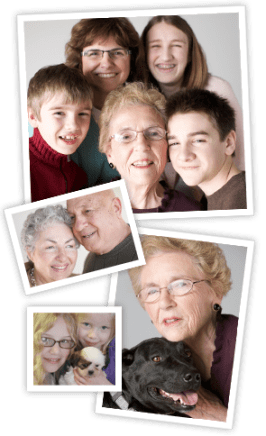
Your loved one might enjoy looking at family photo albums, but may not recognize everyone in the pictures. Avoid quizzing him or her about photos of specific individuals. Instead, offer your own thoughts and allow your loved one to share thoughts and memories as they occur. For example, you might say, “Oh, I remember that day. You wore that pretty blue dress.” Allow time for your loved one to ponder and share too.

3. If recording, be patient and give your loved one time to reflect and share.

Recording video or audio is a great idea, but remember to leave plenty of time for the session together, and be okay with gaps and silence. With patience, you may be able to draw out some special memories. Remember that excess silence can be edited out later.

4. Make a list of general, open-ended questions, not specific dates and details.

Go into the memory sharing session without an expectation of recording an exact journalistic account of your loved one’s life. Bring a list of open ended questions with a goal to encourage your family member to talk about what he or she wants to remember and share.

5. Be conversational and invite thoughts to flow.

It’s important when speaking with someone experiencing mental decline to be conversational and ask a variety of questions, but without interrogating. It’s okay to probe a bit for more detail, but without putting the person on the spot or causing discomfort. Certain memories may surface with some gentle prodding in a light, conversational manner.

6. Be prepared to end the session at a natural stopping place.

Whether your memory sharing session is long or short will depend upon a number of factors on any given day, including how close it is to mealtime and whether your loved one is having a particularly good day. Be prepared to extend the session if the memories are flowing, or bring it to a close if your loved one seems fatigued, frustrated or eager to change the subject.
Did You Know? Our Staff is Specially Trained to Help People Living with Alzheimer’s

Our CARE approach (Changing Aging through Research and Education) can make a huge positive impact on the way people live with dementia. We utilize a unique CAREGiver training program to help our Home Instead CAREGivers provide the most caring, skilled support to families caring for a loved one with Alzheimer’s or other dementia.

Our support services include:

  • Capturing Life’s Journey With this memory care service our CAREGiver will gather past stories and experiences; doing so provides comfort and customized care while honoring the senior’s special past.
  • Techniques to Manage Behavior – By giving simple choices and redirecting, our CAREGivers help your family member to live safely at home.
  • Encouraging Engagement – Our CAREGivers focus on your loved one’s mental, physical and social well-being. Engaging seniors throughout the day builds self-esteem, enhances physical strength and reduces behaviors that might put the senior at risk.
  • Supporting the Family – Home Instead CAREGivers are to work closely with your family and have open communication, which results in quality care for the senior.

Home Instead Minneapolis CAREGivers who are trained in the CARE program receive ongoing classroom training, which the Center of Aging Research Education Services (CARES) at the University of North Carolina Chapel Hill helps to administer. Our trained team not only has a full understanding of what to expect and how to treat dementia clients with care, but they also have a passion and desire to work with these clients and ensure quality of life.