10 Tips to Protect Seniors from Scams

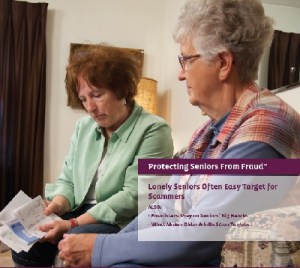
home care MinneapolisAfter reading the 3 stories of senior fraud in last month’s blog post, you might be wondering, why are seniors so often targeted, who would do such a thing and how can I prevent this from happening to an elderly person in my life? “Scam artists are specifically targeting seniors because they are the fastest-growing segment of the population, which has led to increased demands on Minneapolis law enforcement agencies,” said John Stuck, owner of Home Instead Senior Care® of Minneapolis. In addition, the National Association of Triads, a partnership of law enforcement, has identified these characteristics in some seniors that make them vulnerable:

  1. Wealth: Money is one of the most notable reasons why seniors are targeted. Scammers consider not only their disposable income but the value of their homes, property, life savings and other assets.
  2. Availability: Seniors that are retired spend more time at home and are available for phone calls and visits. Scam artists can more easily get in contact with them, often times repeatedly if their first attempt is successful, as with the woman in last month’s blog post who was scammed out of $5,000 over 2-3 months.
  3. Sickness: Chronic health issues mean that many older adults have difficulty maintaining their property and may rely on outside sources for help. Unscrupulous workers can bilk seniors out of thousands of dollars for a job that should only cost hundreds of dollars. Dementia can exacerbate the problem.
  4. Isolation: Seniors are often alone when families move away from the Minneapolis area. If they don’t have a family member or home care agency to assist them with large decisions, they can fall prey to fraud.
  5. Loneliness: Because of their isolation, seniors’ friendships often can be limited, and this can make them vulnerable to that friendly caller who drops by the house. Some scams are even perpetrated by seemingly trusted people who work to build new friendships with older adults and then prey on their vulnerabilities.

home health careCons against older adults aren’t always acts of blatant theft. They can be subtle, like the retailer who over-charges an older adult or an individual who bills for a service and doesn’t finish the job. A 2011 MetLife Study has identified three elder financial abuse strategies: crimes of occasion, crimes of desperation and crimes of predation.

  • Crimes of occasion, or opportunity, are incidents where the senior has something of value and a perpetrator is allowed easy access to it.
  • Crimes of desperation are typically those in which family members or friends become so desperate for money that they will do whatever it takes to get it. Many of these family members are dependent on the senior for resources. Some believe that, in return for care, he or she is due compensation, as with the case in last month’s blog post of our client with MS.
  • Crimes of predation, or occupation are the most popularized by the media. Most often, a trust is engendered specifically for the intention of financial abuse later. The taking of assets is by stealth and cunning.

Senior Scam minneapolisAs a result, the nonprofit National Association of Triads and Home Instead Senior Care Minneapolis have launched a public information program to educate families and seniors about how to protect themselves. The Protect Seniors from Fraud program provides family caregivers with a number of important tools including a Senior Fraud Protection Kit. Download your copy today!

In it, you’ll find these 5 tips to protect seniors from scams:

  1. Add seniors to the national Do-Not-Call Registry. A study has shown that one of 10 telemarketing callers is a scammer. People may register their residential telephone number, including wireless numbers, on the Do-Not-Call Registry at no cost. To register online and for additional information, go to www.donotcall.gov. To register by phone, call 888-382-1222; for TTY, call 866-290-4236. You must call from the phone number you wish to register.
  2. Shred documents that could be useful to criminals, including bank statements, credit-card statements and offers, and other financial information. Documents that need to be preserved, such as tax filings and car titles, should be stored in a safe deposit box.
  3. Insist that your senior calls the local Better Business Bureau (BBB) or gets a BBB Business Review online at bbb.org before acting on a phone call or a piece of mail, or agreeing to a visit from an unknown person, business or charity. Point out suspicious mailings, especially look-alike envelopes that mimic letters sent from the Social Security Administration or Internal Revenue Service.
  4. Insist that your senior never give out personal information nor agree to give money over the phone. Rather ask for written information to be sent through the mail. The best rule of thumb is to “never provide information in a phone call that you did not initiate.”
  5. Establish a strong defense by posting a “No Solicitation” notice by senior’s front door and help them to sort through his or her incoming mail. A Home Instead Senior Care CAREGiver actually prevented fraud by noticing endless magazine subscriptions, along with invoices for them!

Do these tips sound helpful? If so, download your own  Senior Fraud Protection Kit and learn 5 more!
senior careAccording to experts, the top three crimes targeting seniors are identity theft, Medicaid/Medicare and medication fraud, and financial exploitation. The demographics of an aging population and the sophistication of scammers are adding up to big losses – both financially and emotionally – for older adults. The annual financial loss by victims of elder financial abuse is estimated to be at least $2.9 billion, a 12 percent increase since 2008.

Home Instead Senior Care of Minneapolis clients is urging Minnesota families to be protect senior loved ones from scammers who may be targeting them with clever cons that could jeopardize not only their life savings but their independence.

Senior Scams Attempted on our Clients

It’s probably incomprehensible that your Dad who is the most fiscally responsible person you know or your Mom who warned you every day about “stranger danger” could get scammed. However, one recent study reported by Consumers Digest estimated that there are at least 5 million cases of elder financial abuse in the United States each year yet, according to a 2011 AARP study, only 25 percent of senior scam victims report their fraud cases to authorities. Unfortunately, Home Instead Senior Care of Minneapolis CAREGivers all too often witness scam attempts against their clients by unscrupulous people who call seniors on the telephone, knock on their doors in their quiet Minnesota neighborhood or otherwise solicit them for fraudulent purposes. That is why we developed the senior scam minneapolisSenior Fraud Protection Kit. Click here to download your kit which contains senior fraud triggers and targets, a checklist to scam proof your senior and a handy list to put next to Mom or Dad’s computer or phone of do’s and don’ts that can help protect them from scammers.

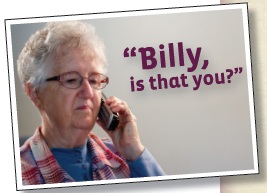
As Client Care Coordinator for Home Instead of Minneapolis, Jill Heley-Otterson is a trusted advisor to the seniors we serve. So trusted in fact, that she was recently contacted by one of our clients asking if Jill could help get her out of a “real mess” she’d gotten herself into and she did not want her husband or children to know what was going on. Jill went to her home and found out that for the last 2-3 months, she had given almost $5000 to two men that kept calling her day and night. They told her she was going to get an expensive new car and $2 million as a Publisher’s Clearinghouse winner, but she had to pay a few installments in order to collect her winnings. They kept instructing her to go to a local Minneapolis area pharmacy and purchase certain green packets. Once she added money to them, they would call her back and ask for the scratch-off code on the back in order to access the funds. It appeared that each time was around $750. She finally realized that she was being conned but, having lost so much, she kept thinking that if she just paid them ONE more time, that she would actually get the car and $2 million…and that they would stop calling her. These guys were very convincing, and knew just what to say to keep her on the hook.

The local law enforcement has no way of tracing or investigating this type of crime because the people making the calls are usually overseas and use computers to re-route the numbers. Jill worked with the client to block the two numbers she had for these men, but as they sat there, the calls immediately started up again with local numbers showing on the caller ID. The only way to stop the calls was to turn the phone off. With the client’s permission, Jill called Adult Protection to report what was happening. In the end, her family was made aware of the situation and both her home number and cell number had to be changed and family is closely monitoring the client’s finances and bills.

When a client of Home Instead Senior Care Minneapolis was diagnosed with MS, even though she was not seriously ill, her son and daughter in law persuaded her to turn over all of her financial affairs to them.  In addition, she deeded the house over to them.  In doing so, she basically gave up any say she had in how her money was spent – and her son and daughter in law took full advantage of this.  They went on trips to Las Vegas with her money, bought things for themselves and took over the home by moving into it and relegating her to just being in a couple of the rooms that were wheelchair accessible.  They created a very hostile work environment for the CAREGivers.  They were only allowed to talk to the client and they could not talk to or engage with the young granddaughter that lived there also.  They would get suspicious and nasty if the client and the CAREGiver were having a conversation that they could not hear – and would yell at them about it.  Home Instead got calls from the son and daughter in law saying the CAREGivers were not allowed to purchase anything for the client (even a candy bar) unless it was approved by them and the CAREGivers were not allowed to park in the driveway, even in the winter.  The client was totally isolated from her family – not allowed to call her sister or her friends.  This is why Home Instead kept sending CAREGivers out there, simply to make sure that there were eyes and ears while authorities and family were making plans to get her out of this situation. Adult Protection was brought into the situation.  The daughter in law was also very specific in the age and appearance of our CAREGivers because she did not trust her husband with them.  The police came to the door one day because the son had snow blown the entire yard of snow onto the street, and cars could not get by.  He demanded that our CAREGiver not open the door to the police!  She did defy him, which made him very angry. All in all, this was a very hostile environment both for our client and our CAREGivers.

Our primary CAREGiver and our Client Care Coordinator helped the client make a plan to move to an assisted living facility, secretly.  It took some time and a lot of planning and when the son and his wife were out of town – she secretly made the move with the belongings she wanted with her.  The facility had extra security involved to prevent her son and his wife from having contact with her or causing trouble.  Their pictures were at the front desk (and probably still are) stating that they are not allowed in the building.  Our client was so thrilled to be reunited with her sister and other family.  She has been thriving, is happy in her new environment, still receives services from us, and is engaged in her new community.  Her son and daughter in law no longer have her money to live off of and are involved in a huge legal mess that is ongoing as far as we know.

Another scam case was less intrusive but could have been equally as damaging. A senior client of Home Instead Senior Care Minneapolis had endless magazine subscriptions that just kept coming and coming! He was getting invoices for the magazines even though his current subscription is paid up for the next ten years. He didn’t realize that he’d paid so far ahead and thinks that he actually needs to pay each of these invoices. Our CAREGiver is monitoring this by insisting that together, they look at a current magazine to find the end date before paying on any more invoices. She is also coaching him to say no to telemarketers. It’s difficult for seniors who may be lonely. They may not mind hearing a friendly voice on the other end of the line… even if they are asking for something. It makes it very hard for them to say NO.

Home Instead’s mission is to help keep Minnesota seniors living safely and independently in their homes for as long as possible includes helping to protect older adults from those trying to take advantage of them.
We are proud to serve as a second set of eyes to help deter tricksters and scammers. With the legacy they leave all of us, our nation’s seniors are treasured commodities that deserve to be shielded from criminals and thieves – a mission we can all feel good about embracing.

Preserve Family Memories of Senior with Alzheimer’s to Stay Engaged

alzheimersIf maintaining independence is a goal of your loved one who has Alzheimer’s disease or another dementia, strive to keep them engaged with their family, Minnesota community and their surroundings. A senior’s home in Minneapolis or surrounding suburbs might just be the best place to accomplish this.
Dr. Jane F. Potter, chief of the Division of Geriatrics and Gerontology at the University of Nebraska Medical Center says, “At home, they will be engaged in self-care, they will be more active and do more for themselves.” As an expert panelist who helped develop content for the Home Instead Senior Care® network’s free Alzheimer’s Disease or Other Dementias CARE Training Program, Potter advises, “The course of losses accelerates if you put seniors with dementia in restrictive environments where people do more things for them.” Potter developed this program with Dr. Amy D’Aprix. View the recent Facebook photo of Dr. D’Aprix with Home Instead Minneapolis’ own John Stuck!

Home Instead Senior Care Minneapolis is here to help you with that goal. Following are important tips on how family caregivers can continue to engage seniors with Alzheimer’s in everyday activities:

• Exercise can help keep seniors active longer. Talk to their home care provider about simple exercises they can do, take them for a walk or even just encourage movement.

• Simplify the task. Allow the senior to dress themself as much as possible. Make it easier by laying out clothing in sequential order, with the underwear and socks on top.

• Allow seniors to do as much as they can, but step in when you see that they’re not physically able so they don’t get frustrated. Give clear instructions, one step at a time.

• Make activities easier or change the activity. If your Mom with Alzheimer’s used to love to bridge but can’t remember how, play war or another card game instead.

• Remember, it’s more than just about the task. Turn a bath into an opportunity to smell different soaps or, when picking out clothing, discuss fashion or special colors.

• Start an activity and then ask the senior to help. If your mom has forgotten how to make that favorite family recipe, begin the process and have her help with whatever she can.

alzheimers memoryOne way to preserve the memories of those families dealing with Alzheimer’s is by creating a scrapbook. Brian Olmstead, President of Archiver’s says, “A scrapbook is a great way to preserve your family’s special stories and memories, and can be as simple as gathering your photos, putting them into an album, and writing down the important details. At Archiver’s, we’re passionate about memories and are here to make it easy to preserve and share yours.” Archiver’s has seven Twin Cities locations including one near our Home Instead Senior Care office in Maple Grove. Organize a family scrapping session in their free workrooms. Feel free to utilize their classes, in-store copier for making copies of delicate heritage photos, helpful store associates, and archival-quality products.

To accommodate your family member’s cognitive ability level and make sharing memories in a positive, meaningful experience, keep the following considerations in mind:
1. Spread photographs out on the table in their home and casually discuss them. Try to select ones that spark your loved one’s interest or memory.
2. Ask personal questions about their family and Minneapolis area upbringing but don’t interrogate.
3. Involve other family members so the senior with Alzheimer’s isn’t on the spot.
4. Focus on general memories and emotions instead exact facts and details. Incorporate their favorite color or mementos from of Lake Minnetonka.
5. Share your memories as well, especially the more recent ones which a senior with Alzheimer’s will be less likely to remember.
6. Work on the project is short increments and record the discussion.

The activities should focus on what that senior can and wants to remember. You can help to minimize frustration by paying attention to your loved one’s limitations and adapting opportunities for reminiscing accordingly. The goal is to give your family member with Alzheimer’s the opportunity to share cherished memories and preserve them for generations to come. For more information, go to https://www.helpforalzheimersfamilies.com/AlzheimersandMemory/

10 Tips to Help Minneapolis Families Cope with Alzheimer’s

Issues related to aging can add stress to even the most stable Minneapolis families. Taking turns caring for a senior after surgery, deciding who’s going to mow the lawn and who’s going to assist with doctor appointments and hiring elderly home care are all typical (yet time and energy consuming) tasks for Minnesota family caregivers. Adding behavioral changes related to Alzheimer’s and dementia can push families to the brink. Watch Laurie Owen from Home Instead Senior Care and Dr. Jane Potter from the University of Nebraska Medical Center discuss the lifestyle changes for patients with Alzheimer’s disease or other dementias.

“Regular communication – whether it’s by email or phone – is the single biggest key to helping families cope with Alzheimer’s disease,’’ said caregiving expert Dr. Amy D’Aprix, who developed Caring Cards exclusively for Home Instead Senior Care to engage families in meaningful communication. Here are 9 more tips from Dr. D’Aprix and the Home Instead Senior Care network to helping families stick together through the ups and downs of Alzheimer’s disease:

  1. Get an accurate diagnosis: Get several opinions, if necessary, to ensure that all family members, doctors and home health care professionals caring for your loved one know and understand the situation.
  2. Hold a family meeting: Often times, the main caregiver becomes the only person who has the important information needed to care for the person with Alzheimer’s. Gather family members together with a professional  to ensure that everyone shares the same information and gets the resources they need.
  3. Learn to manage change: Dementias are ever-changing conditions. Find a support group in the Minneapolis or St. Paul area to share with others who are facing similar challenges.
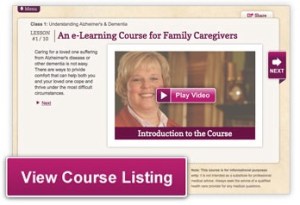
  4. Learn skills and techniques: The behavioral changes that come with Alzheimer’s disease and other dementias can be difficult to manage. The resources of the e-learning Family Caregiver Training can help. Find memory activities and puzzles here.
  5. Ask the primary caregiver if they need help: The main day-to-day caregiver can harbor resentment towards others who they feel should be doing more. Look at what needs to be done and ask the primary caregiver how you can give them respite.
  6. Assign tasks: Family members who live out of town can still help with things like finances. Make a list of all that needs to be done and form an online care team to allow others to help.
  7. Ask for help if you’re the primary caregiver: Are you the only one of your siblings in Minneapolis who lives by your parent? Or maybe you’re the oldest daughter and everyone expects you to be the caregiver. Whatever the circumstance, caregivers of seniors with Alzheimer’s disease and other dementias shouldn’t try to go it alone. (Hint…see tip #6)
  8. Preserve memories: Create a video of your loved one with Alzheimer’s telling stories about their lives or design a shadow box of keepsakes. Make sure to read next month’s blog from Home Instead Senior Care of Minneapolis for more information!
  9. Tap into local Minneapolis resources: Families can’t have too much information when it comes to managing  the behavioral changes of Alzheimer’s disease. Contact a Home Instead CAREgiver who has received special training to care for those with all types of dementias.

Dr. Amy D’Aprix also prepared content for the Alzheimer’s Disease or Other Dementias Training Program called CARE which stands for Changing Aging Through Research and EducationSM. Programs like these as well as the online Family Caregiver Alzheimer’s Training were developed exclusively for Home Instead Senior Care and FREE to you!

Each e-learning class in the Family Caregiver Alzheimer’s Training  program can be completed within 5–15 minutes and include:

  • Understanding Alzheimer’s and Other Dementias
  • Capturing Life’s Journey
  • Managing Behaviors
  • Encouraging Engagement
  • Safety

To begin your free online training immediately, simply click here and “home instead facebookLike” our Facebook page.

As a Fan of our Facebook page, you’ll have access to special opportunities and resources such as this training that we offer throughout the year. Already a Fan? Click here and get Family Caregiver Alzheimer’s Training now!

10 Signs of Alzheimer’s – Download Guide

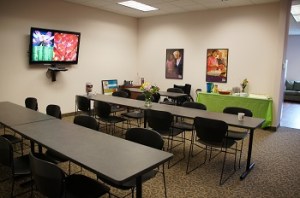
Home Instead senior careHome Instead Senior Care of Minneapolis is all settled into our new office space and we hope you had a nice time being entertained at our open house. Our home care staff and CAREGivers had a great day giving tours and connecting with clients and associates. Now, that we have this large conference room, we’re ready to  welcome and educate! First topic…Alzheimer’s Disease.

Why have we chosen such difficult and sobering topic? Because it’s a reality for so many Americans, including our senior home care clients. According to the Alzheimer’s Reading Room, someone is diagnosed with Alzheimer’s Disease every 70 seconds. Yet it’s often difficult to tell if your loved one in Minneapolis has Alzheimer’s, Dementia or just has brief lapses in memory.

alzheimers trainingDementia is the umbrella term for the variety of conditions that can cause the brain to fail. One of those is Alzheimer’s disease, which represents the majority of cases, noted Dr. Jane F. Potter, chief of the Division of Geriatrics and Gerontology at the University of Nebraska Medical Center.  One thing to consider is, “Normal old age does not cause memory loss. It’s not normal when people can’t take care of daily business, such as paying bills and writing checks.” Dr. Potter said.

It’s imperative to consult a Minnesota physician to hopefully catch the disease early so following are 10 warning signs of Alzheimer’s compared with typical age-related changes, according to the Alzheimer’s Association.

  1. Disruption of daily live due to memory loss: Forgetting information recently attained is more common with Alzheimer’s than forgetting past events. Typical age-related change? Forgetting people’s names or appointments, but remembering them later.
  2. Inability to solve problems or plan: Some people may have difficulty working with numbers or are unable to plan an event or follow a sequence of events. Typical? Making occasional errors when balancing a checkbook.
  3. Difficulty completing tasks they do every day: Pay close attention if a senior in your life forgets the rules of their or gets lost driving to a familiar Minneapolis destination.  Typical? Occasionally needing help using a microwave or recording a television show.
  4. Are not able to retrace steps to find misplaced items:  We all lose things, right? A person with Alzheimer’s might put things in unusual places or accuse others of stealing. Typical? Misplacing things from time to time, such as a pair of glasses.
  5. Confusion with time or place: Forgetting what day it is, holidays or loses track of time. Typical? Getting confused about the day of the week, but figuring it out later.
  6. Trouble understanding images and spatial relationships: They may not realize they are the person in the mirror. Typical? Vision changes related to cataracts.
  7. Decreased or poor judgment: The inability to make a decision-making or making detrimental choices are behaviors to look for with Alzheimer’s. Typical? Making a bad decision once in a while.
  8. Withdrawing from work or social activities: Continuing to reject social activities, refrain from hobbies or not go to work should cause concern. Typical? Sometimes feeling weary of work, family and social obligations.
  9. Difficulty speaking or writing words: Does your loved one have trouble joining or following a conversation when they’ve been quite social in the past? Typical? Sometimes having trouble finding the right word.
  10. Changes in mood and personality: Some can become confused, suspicious, depressed, fearful or anxious. They may be easily upset at home, at work or with friends or in places where they are out of their comfort zone. Typical? Developing specific ways of doing things and becoming irritable when a routine is disrupted.

* Source: http://www.alz.org/alzheimers_disease_10_signs_of_alzheimers.asp.

minneapolis alzheimersTo Download a PDF version of the full David Troxel Guide to Coping with Alzheimer’s Disease & Dementia, Answers to the 15 Most Common Questions, simply click here, home instead facebookLike our Facebook page and download the guide immediately!
As a Fan of our Facebook page, you’ll have access to special opportunities and resources such as this guide that we offer throughout the year. Already a Fan? Click here and download now!

The Home Instead Senior Care® network is a corporate member of the Alzheimer’s Association Alzheimer’s Early Detection Alliance, whose goal is to educate about the warning signs of Alzheimer’s, the importance of early detection and the resources available to help them.

What to Expect with Alzheimer’s

The diagnosis is clear…a senior in your life has been diagnosed with Alzheimer’s disease which can trigger anxiety and fear. What can someone with an Alzheimer’s diagnosis expect?

Based on Home Instead Senior Care® network research, those with Alzheimer’s disease or other dementias who live at home without in-home care reported these common problems, in addition to the warning signs identified above:

  1. Wandering
  2. Nighttime wakefulness and other sleep problems
  3. Refusing to eat
  4. Rummaging around or hiding things
  5. Belligerence, anger or aggressive behavior
  6. Hallucinations, delusions or paranoia

Despite this grim expectation, there is hope on the horizon. “One of the promising areas under study is exercise; it appears that avid exercisers have a lower risk of dementia. So identifying people at risk and developing an activity program are among therapies being considered”, said Dr. Jane F. Potter, chief of the Division of Geriatrics and Gerontology at the University of Nebraska Medical Center. “The currently available treatments are used when dementia has fully developed,”  “All of the new trials are focused on early identification to target the stage before dementia – mild cognitive impairment. In the future we should be able to identify and treat people with mild cognitive impairment to keep the disease from progressing,” she said.

Home Instead Minneapolis Has Moved to Accomodate Training!

Attend Our Open House

Thursday, May 3, 2012
12-5 p.m.
9684 63rd Ave N, Maple Grove
Tour our spacious new setting
Enjoy complimentary refreshments

Why Did We Move?

In addition to making room for our growing home health care business, Home Instead Minneapolis CAREGivers, our clients and their families will now be able to comfortably attend training sessions and other important gatherings. For instance, our CARE: Changing Aging through Research and EducationSM program is a unique training program that works to change the way people live with Alzheimer’s or other dementias. It involves:

  • Capturing Life’s JourneySM – Gathering past stories and experiences helps the CAREGiver give comfort and customized care; all the while honoring who the senior was earlier in life.

  • Techniques to Manage Behavior – CAREGivers use techniques such as giving simple choices and redirecting, allowing the senior to remain calm and safe at home.

  • Encouraging Engagement – Engaging seniors throughout the day builds self-esteem, enhances physical strength and reduces behaviors that need to be managed. Using techniques and activities, CAREGivers focus on the seniors’ mind, body and soul.

  • Supporting the Family – CAREGivers understand the struggles and challenges that accompany caring for a loved one. They are trained to work closely with the family and have open communication, which results in quality care for the senior.

alzheimersLearn more from our friends at Home Instead, Omaha!

Home Instead Minneapolis CAREGivers trained in the CARE program have a passion and desire to work with Alzheimer’s or dementia clients. Our new facility accommodates ongoing classroom training and testing they receive prior to caring for a senior with Alzheimer’s or other dementias. CAREGivers also receive multi-phased safety and caregiving education programs, so our new training room will be busy and well used so that you can rest assured your loved one is with a trusted, well-qualified, home health care professional!

How Seniors Make Volunteering Joyful and Long Lasting

senior volunteerOur parent organization, the Home Instead Senior Care® network, recently performed research on senior volunteers and found some truly interesting facts about what makes volunteering enriching and fun for people in their golden years, especially in Minneapolis.

Minnesota seniors who have learned how to give of themselves in a sustained way had some secrets to share about how to enjoy community service as long as possible. In fact 70% of the seniors surveyed said they plan to go on donating their time to special causes “forever.”

Tips from these seniors included the following:

1.  Find something to be passionate about. What have you always wanted to do? What special causes really make your heart sing? Whether it’s helping to feed the homeless at a Minneapolis shelter, being a docent, helping at a pet shelter or making baby bonnets, there is something for everyone and every passion. Finding the role that really tickles your fancy is the key to keeping it interesting.

2.  Find a cause where there is a real need. In this Minnesota economy, as you might guess, that is a very easy thing to do. Not only are there more people in need today than ever before, but non-profit and community service organizations are more taxed than ever too. The Corporation for National and Community Service conducted a survey in 2009 revealing that 80% of nonprofit and AmeriCorps organizations were feeling fiscal stress.

Some great resources exist locally and nationally to find the greatest need, including:

3.  Giggle your way out a bad day. Like any real job, volunteer roles for seniors are going to have their ups and downs, and one way to handle it is to simply laugh it off. For a quick “laugh fix,” visit CaregiverStress.comSM and “Laugh with Mary Maxwell.” Mary’s delightful perspective on life as a senior will help get rid of the bad day blues!

4.  Don’t set the bar too high. We all want things to go well, but sometimes they just don’t. Organizing events, for example, can involve many details from fliers to food, decorations, and the contributions of other volunteer seniors. Aiming for perfection can make the whole event go sour. By contrast, cheerfully taking the good with the bad and making the best of whatever challenges occur will help you and everyone around you “go with the flow.”

5. Be joyful. Just like paid work, a volunteer role may not be worth doing if there is no joy in it. Even the grittiest hands-on jobs should be things that you enjoy or even take special pride in accomplishing. Whether you’re building, baking, organizing, reading or caring for an elderly person in their home, make sure it brings you joy.

senior minneapolis6. Shrug off the critics. Volunteering takes all kinds of seniors, and some of them can take the roles and responsibilities of volunteering a touch too seriously. If faced with criticism, shrug it off – especially if it is a one time thing. The good news is that tomorrow is likely to be a better day. And if not, there are many more opportunities to explore such as caring for a person with disabilities in their home.

7. Turn the other cheek. Avoiding conflict and side-stepping turf wars has helped many a volunteer to rise above challenges that may crop up from time to time. Remember, sometimes it is best to give up ground to keep the peace, and most disagreements will simply blow over given some cooling off time.

8. Give yourself a break. Do not overdo it. The world will certainly go on if you take care of yourself and your own needs. Dedication is a wonderful thing, but the work you do in your retirement years should not drudgery, and should never supersede your own self care.

9. Ignore negativity. There is “one in every crowd,” as they say. It may be someone who looks for what’s wrong instead of what’s right, or even someone who is envious of all you accomplish. Seek out those who share your interests, have a “team” mentality, and are about the greater good.

10. Need help? Ask for it! If you are yearning to volunteer or you know a senior who is, contact Home Instead Senior Care of Minneapolis, which employs CAREGiversSM . CAREGivers can help around the house with meal preparation and light housekeeping so their clients can volunteer. What a great way to get out of the house and interact with others!

Need ideas for ways to make a difference? Here is a brief overview of the primary volunteer activities of seniors:

  • 47% volunteer with churches and religious organizations
  • 16% work in senior centers or other senior-related services
  • 10% work in hospitals or healthcare organizations
  • 10% work with schools, educational services and youth programs
  • 7% volunteer with social services and nonprofit organizations

There are as many ways to help as there are people who want to give their time. Think about volunteering in Minneapolis today. You can make a world of difference!

Senior Volunteer Nominated for Hospice Work

Know a senior hero like Ernest Bradbury that’s making a difference in your community? Salute that senior’s volunteer efforts by nominating them for the Home Instead Minneapolis Salute to Senior Award.

Nominated Senior Heroes℠ have a chance to win dinner for 2 and a show at the Old Log Theater!

In addition, each Nominated Senior Heroes℠ will automatically be entered in our Home Instead National Salute to Senior Service℠ contest. Home Instead, Inc. will make a $5,000 donation to each of the national winners’ designated non-profit charity of choice. Nominees must be 65 years of age or older and volunteer at least 15 hours a month. Stories will be posted on the SalutetoSeniorService.com website.

Hurry, contest ends March 15th!

Coping with Alzheimer’s or Dementia? Join Our $10,000 Family Reunion Contest

alzheimers contestIf you have a relative with Alzheimer’s disease, Home Instead Senior Care of Minneapolis would like to reach out to you. The challenges and emotional ups and downs involved in caring for a loved one with Alzheimer’s are often quietly handled within the family. In this post, we’ll provide information on how you can share your Alzheimer’s story for a chance to win a family reunion package, as well as some special information on preserving memories of a loved one with Alzheimer’s disease or dementia.

Deadline is January 31st!

Every family’s story is unique and different. What’s yours?

Home Instead Senior Care Network is running a January contest. To enter, simply share a bit of your family story in essay or video form by January 31st. By sharing your story, you will be entered to win a family reunion!

Finalists will be chosen by a Judge’s Panel and notified by February 15th, 2012. Online voting will occur from March 28th through June 30th, 2012. And the family that wins the Grand Prize will be revealed (after the family reunion event) on November 15th, 2012.

Visit the contest page on the main Home Instead website for complete details.


How to Preserve Your Special Memories

Memory sharing for people experiencing Alzheimer’s disease or other dementia can be a wonderful way to help your loved one engage with his or her meaningful past. It is important to find caring, non-stressful ways to help someone dealing with a decline in cognitive ability to share memories. Here are some tips to help you plan your memory sharing sessions:

1. Encourage memory sharing without putting your loved one on the spot.

In a group situation, such as a family get-together in Minneapolis or St. Paul, you can encourage your loved one to share a memory in a gentle way by asking a broad, open-ended question. And be patient for the answer. For example, you could ask if mom or dad has a special memory from one of your Minnesota family camping trips. But avoid more specific questions like, “Mom, do you remember what trip we took in 1989?”

dementia2. Share pictures and reminisce, without expectation.
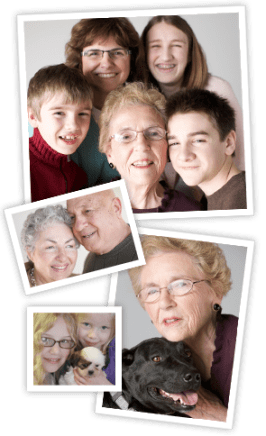
Your loved one might enjoy looking at family photo albums, but may not recognize everyone in the pictures. Avoid quizzing him or her about photos of specific individuals. Instead, offer your own thoughts and allow your loved one to share thoughts and memories as they occur. For example, you might say, “Oh, I remember that day. You wore that pretty blue dress.” Allow time for your loved one to ponder and share too.

3. If recording, be patient and give your loved one time to reflect and share.

Recording video or audio is a great idea, but remember to leave plenty of time for the session together, and be okay with gaps and silence. With patience, you may be able to draw out some special memories. Remember that excess silence can be edited out later.

4. Make a list of general, open-ended questions, not specific dates and details.

Go into the memory sharing session without an expectation of recording an exact journalistic account of your loved one’s life. Bring a list of open ended questions with a goal to encourage your family member to talk about what he or she wants to remember and share.

5. Be conversational and invite thoughts to flow.

It’s important when speaking with someone experiencing mental decline to be conversational and ask a variety of questions, but without interrogating. It’s okay to probe a bit for more detail, but without putting the person on the spot or causing discomfort. Certain memories may surface with some gentle prodding in a light, conversational manner.

6. Be prepared to end the session at a natural stopping place.

Whether your memory sharing session is long or short will depend upon a number of factors on any given day, including how close it is to mealtime and whether your loved one is having a particularly good day. Be prepared to extend the session if the memories are flowing, or bring it to a close if your loved one seems fatigued, frustrated or eager to change the subject.
Did You Know? Our Staff is Specially Trained to Help People Living with Alzheimer’s

Our CARE approach (Changing Aging through Research and Education) can make a huge positive impact on the way people live with dementia. We utilize a unique CAREGiver training program to help our Home Instead CAREGivers provide the most caring, skilled support to families caring for a loved one with Alzheimer’s or other dementia.

Our support services include:

  • Capturing Life’s Journey With this memory care service our CAREGiver will gather past stories and experiences; doing so provides comfort and customized care while honoring the senior’s special past.
  • Techniques to Manage Behavior – By giving simple choices and redirecting, our CAREGivers help your family member to live safely at home.
  • Encouraging Engagement – Our CAREGivers focus on your loved one’s mental, physical and social well-being. Engaging seniors throughout the day builds self-esteem, enhances physical strength and reduces behaviors that might put the senior at risk.
  • Supporting the Family – Home Instead CAREGivers are to work closely with your family and have open communication, which results in quality care for the senior.

Home Instead Minneapolis CAREGivers who are trained in the CARE program receive ongoing classroom training, which the Center of Aging Research Education Services (CARES) at the University of North Carolina Chapel Hill helps to administer. Our trained team not only has a full understanding of what to expect and how to treat dementia clients with care, but they also have a passion and desire to work with these clients and ensure quality of life.

Be a Santa to a Senior Program a HUGE Success in Minneapolis!

In 2011, 2000 gifts were given to local Minneapolis area seniors who needed holiday cheer.
We appreciate your participation!

senior careThe faces of both the seniors and the volunteers lit up as gifts were distributed to seniors in nursing homes, low income senior housing, adult day centers and personally nominated individuals. Just a few of the senior residences include the Ebenezer Tower, Friendship Center and Augustana.

home careThis huge success would not have been possible without our partners which include Byerly’s & Lund’s Pharmacy locations, Starbucks, The Brost Clinic, Health Partners, Minneapolis Women’s Club, Upsher-Smith, Park Nicollet Orthopedic Clinic, Allina Health Clinic Medical Arts, Oakwood Elementary, MN School of Business and Herzig University.

With this experience in our hearts, we look forward to 2012 with positivity and gratefulness.