Is Your Business Alzheimer’s Friendly?

Can you picture this scene? You are enjoying lunch in a local Minneapolis cafe and an older couple is seated at the next table. The waitress is taking their order and the conversation becomes very awkward because the elderly man is having trouble asking about the menu. He doesn’t seem to remember exactly what he wants to ask or forgets the word he’s trying to use. You can see the frustration and impatience building between the older gentleman and the waitress who isn’t understanding him. Conversations and customer interactions of this type happen quite often when Alzheimer’s disease is involved, but it shouldn’t have to.

With the lack of education and misunderstandings about Alzheimer’s disease – which eventually impacts thinking, speaking, and behavior – many caregivers and their loved ones would rather not fight the battle of dealing with the public. Home Instead Senior Care is hoping to change this with their public education program Alzheimer’s Friendly Business. This program aims to offer training to the businesses in your local community which will help educate those serving customers with Alzheimer’s and related dementias and their caregivers, and ultimately ease the daunting task they feel when trying to complete daily routine tasks like banking, shopping, or attending appointments.

Watch us train Liberty Oxygen & Medical Equipment in this segment on Kare 11 News!

The Alzheimer’s Association reports that 1 in 9 Americans 65 years and older have Alzheimer’s disease or a related dementia. The number of individuals aged 65 and older who currently have or will have Alzheimer’s disease is projected to increase from 5.1 million in 2010 to 13.8 million by the year 2050. These numbers are staggering and cannot be ignored.

According to research conducted by Home Instead, 74% of surveyed caregivers for individuals with a dementia illness report they and their loved ones have become more isolated as a result of the disease. The results also show that 85% of the seniors in the survey are feeling a reduced quality of life. The feeling of isolation is a significant issue facing family caregivers and their loved ones with Alzheimer’s disease or other types of dementia. The unpredictable nature of the disease is one of the biggest obstacles to going out in public.

Some common behavioral symptoms of Alzheimer’s disease include:

  • Difficulty remembering names and recent events
  • Seeming depressed and disinterested
  • Difficulty completing routine tasks and problem solving
  • Repeatedly asking questions
  • Easily agitated or frustrated
  • Often wandering or lost
  • Difficulty keeping track of items or unable to retrace steps
  • Inability to follow directions
  • Having problems communicating

How can you be prepared to assist a person with Alzheimer’s?

  • Be patient, flexible and understanding
  • Remain calm
  • Stay positive
  • Treat the person with dignity and respect
  • Avoid arguing or embarrassing the person
  • Speak calmly, slowly and offer few options

When interacting with a person you believe struggles with dementia it’s helpful to use a comforting voice, approach the customer slowly and introduce yourself, avoid interrupting the person and be patient. These, and other helpful tips, are just one part of the free training Home Instead is offering to local businesses that are interested in partnering with us. Our local Home Instead Senior Care Minneapolis ​office can provide the training to your employees, training management in a “train the trainer” approach or online. It can be conducted in just 30 minutes and, once  completed, your business will receive a certificate and materials you can use to show you are an Alzheimer’s Friendly Business. This certification lasts for 2 years.

Together we can work to achieve the goal of educating those serving customers living with Alzheimer’s and other dementias, along with their family caregivers, and ease the challenges they face when completing routine tasks within their community.

So, spread the word! Join us and help make your business Alzheimer’s friendly by learning simple techniques to ensure customers living with Alzheimer’s or other dementias are treated with compassion and respect. With Home Instead’s thoughtful and thorough training program, local businesses can help break through the misconceptions of Alzheimer’s and ease the challenges of going into the community for those customers and their caregivers. ​​​To start the process of becoming an Alzheimer’s Friendly Business, call our office today at 763-544-5988. Or​, if you’re a caregiver for a loved one with Alzheimer’s, b​​​​​​​​e sure to tell the businesses you frequent about the Home Instead Senior Care network’s Alzheimer’s Friendly Business℠ program.

The Sunday Dinner Pledge – It’s a Wrap!

Thanks to you, the Sunday Dinner Pledge has been a huge success for Home Instead Senior Care and Meals on Wheels America. Just because the program is ending July 31, 2015, doesn’t mean you can’t continue having dinner with your family including senior loved ones on a regular basis. Take advantage of the prepared weekly meal plans, try out the featured recipes created by a Home Instead Senior Care network dietician and Food Network celebrity chef Melissa d’Arabian and most importantly, enjoy the time spent with your family. SundayDinnerPledge

If you’re just hearing about the Sunday Dinner Pledge, it’s not too late! In an effort to drive home the importance of sharing family dinners on a regular basis, Home Instead Senior Care Minneapolis has launched the Sunday Dinner Pledge public education program. By taking this pledge, you are committing to bringing your family together at least once a month for Sunday dinner. For every signed Sunday Dinner Pledge taken before July 31, 2015, the Home Instead Senior Care Foundation will donate $1 (up to $20,000) to Meals on Wheels America who delivers meals to seniors in need nationwide.

To ensure the participating families are successful, Home Instead has partnered with Food Network celebrity chef Melissa d’Arabian to help promote the importance of regular family dinners. Melissa and a dietician for the Home Instead Senior Care network have developed easy, nutritious recipes and healthy food plans. In addition to the healthy recipes and weekly food plans, other resources are available to you such as tips for how to involve seniors in meal planning and preparation, pre- and post-dinner family activities, and many others. We even offer some conversation starters to help ease any awkward moments between the generations at the dinner table.

If you haven’t taken the pledge yet there is still time! To get started, simply click on this link and pledge to have dinner together on a regular basis and include your senior relatives. Home Instead is on a mission to make this a successful public education program and make it easy to follow. The Home Instead Senior Care network has created a variety of healthy meal plans, shopping lists and nutritious recipes to help make preparing dinners together easier for busy families. Refer to the easy-to-use weekly food plans to help you stay on track. The Spring/Summer and Fall/Winter Weekly Food Plans each have 5 weeks of easy and nutritious week-long meal plans, which include full shopping lists, healthy recipes, calorie information and more.

Home Instead has also provided a variety of conversation starters, dinner table activities and even informative articles to read if you’re concerned about your senior loved one. You may already know your elderly loved one faces challenges when it comes to enjoying healthy meals, but there may be more than you think. For example, lack of companionship during mealtimes and cooking for one are just two mealtime obstacles that could impact senior health. Click here to read more of the research conducted for the Home Instead Senior Care network. The website is full of useful tips, articles and information – all right at your fingertips! Check it out!

Although nutrition is important, data from the Home Instead Senior Care survey demonstrates that for most seniors, it’s not what’s on their plate that matters most at mealtime – it’s who is at the table. So, make the commitment to share a sit-down family meal with the multi-generational members of your family at least once a month. It’s a great way to reconnect and build stronger bonds among younger and older family members. Join us and pledge to bring back Sunday dinner with your senior loved ones, and discover how to make the most of being together. Sharing meals with your family in your Minneapolis or St. Paul home on a regular basis can help to improve a seniors’ quality of life. Take the pledge today!

Sunday Dinner Pledge

Congratulations! You’ve taken the Sunday Dinner Pledge and so far it’s been a successful program for Home Instead Senior Care and Meals on Wheels. Don’t fall behind or let the excuses creep in. Continue to use the prepared weekly meal plans, try out the featured recipes created by a Home Instead Senior Care network dietician and Food Network celebrity chef Melissa d’Arabian and most importantly, enjoy the time spent with your family.

Haven’t heard of the Sunday Dinner Pledge yet? There is still time! In an effort to drive home the importance of sharing family dinners on a regular basis, Home Instead has launched the Sunday Dinner Pledge public education program. By taking this pledge, you are committing to bringing your family together at least once a month for Sunday dinner. For every signed Sunday Dinner Pledge taken between May 6th and July 31, 2015, the Home Instead Senior Care Foundation will donate $1, up to $20,000, to Meals on Wheels America to deliver meals to seniors in need nationwide. Using the resources and tools from Home Instead makes this an easy pledge to stick to. The important thing is the fact your family is committed to having dinner together on a regular basis, including your senior relatives. “At Meals on Wheels we know the importance of visiting with our aging neighbors, this program is wonderful because it encourages families to spend time together and makes that personal touch available to others in need” states Patrick Rowan, Executive Director with the Metro Meals on Wheels, serving the Twin Cities metro area.

To help reduce any awkward silence and bridge the generation gap between the seniors and teenagers at the dinner table, we have come up with a variety of conversation starters and activities that can be used. Here are several ideas to get the conversation started:

  • What is one thing you hope to do in your lifetime?
  • What is the origin of the family name?
  • Describe your best family vacation or weekend getaway
  • Tell us about your favorite job or time in the military
  • What family meal makes your mouth water?

You can research and share some fun or interesting facts around your topic of conversation and even decide as a group to make an activity out of it. For example, plan to cook the secret family recipe or Minnesota hot-dish of the top voted family meal together next time you gather for dinner. Or if you’re discussing favorite movies, make a plan to go to a movie or even watch an old classic together after dinner.

If you’re looking to take your Sunday dinners to the next level, plan an activity. Here are a few ideas to give your Sunday dinner experience new meaning:

  • After dinner, attend a youth sporting event together. Take Grandpa to see a grandson’s baseball game or catch a Minnesota Twins game.
  • Enjoy game night after dinner – once the dishes are done, teach the younger kids a new game of cards or play a favorite board game.
  • If you’ve always wanted to learn how to knit, ask Grandma to bring her knitting needles and teach you while dinner is in the oven. You may be surprised to know the talents and skills the seniors in your family possess. To be able to learn a skill like woodworking, quilting or stained glass art from a grandparent or great-grandparent is invaluable.
  • Learn a little family history by researching the family tree. There are websites that make it much easier to explore your heritage such as ancestry.com or archives.com.

Make sure you’re sticking to healthy nutritious meals and keep it simple! Download the weekly meal plans Home Instead has prepared for you and refer to them when planning out the next family gathering. The meal plans include the program’s featured weekly recipes, full daily meal plans, nutritional and calorie values, and detailed shopping lists.

See how Kathy Gunderson shares her Sunday dinner tradition

So spread the word! Join us and pledge to bring back Sunday dinner with your senior loved ones, and discover how to make the most of being together. Sharing meals with your family in your Minneapolis or St. Paul home on a regular basis can help to improve a seniors’ quality of life. Take the pledge today!

Bring Back Sunday Family Dinners – Take The Pledge!

Are you feeling a bit guilty that you haven’t made the time to visit your senior loved ones recently? You’re not the only one. Powerful new research shows that 50% of families living near senior relatives believe they do not share enough meals with these older loved ones, losing an important family connection. Home Instead Senior Care knows the value of spending time with our aging relatives and encourages families to make time for these meals.SundayDinnerPledge

In an effort to drive home the importance of sharing family dinners on a regular basis, Home Instead has launched the Sunday Dinner Pledge public education program. By taking this pledge, you are committing to bringing your family together at least once a month for Sunday dinner. For every signed Sunday Dinner Pledge taken between now and July 31, 2015, the Home Instead Senior Care Foundation will donate $1, up to $20,000, to Meals on Wheels America to deliver meals to seniors in need nationwide.

To help you be successful, Home Instead has partnered with Food Network celebrity chef Melissa d’Arabian to help promote the importance of regular family dinners. Melissa, along with a dietician for the Home Instead Senior Care network, have developed easy, nutritious recipes and healthy food plans. In addition to the healthy recipes and food plans, other resources available to you are tips for how to involve seniors in meal planning and preparation, pre- and post-dinner family activities, and many others. We even offer some conversation starters to help ease any awkward moments.

Sound simple? It is! Even after you’ve had a tough week at work and loads of children’s activities in the evenings, you can do this! The Home Instead Senior Care network has created a variety of healthy meal plans, shopping lists and nutritious recipes to help make preparing dinners together easier for busy families. Refer to the easy-to-use weekly food plans to help you stay on track. The Spring/Summer and Fall/Winter Weekly Food Plans each have 5 weeks of easy and nutritious week-long meal plans, which include full shopping lists, healthy recipes, calorie information and more.

Spring/Summer Food Plans:

Week 1
Week 2
Week 3
Week 4
Week 5

Fall/Winter Food Plans:

Week 1
Week 2
Week 3
Week 4
Week 5

You’ve taken the pledge, now what? To stay on track and ensure success, be organized. With school, work, sports, and other activities, families are busy! Plan the dinner dates in advance, use a shopping list and even include the senior in the planning whenever possible. Whether you’re making an old family favorite meal or trying something new, include your senior relative in the meal planning and preparation as much as possible. Have dad write the grocery list and then shop together – even take this opportunity to help him take care of his grocery shopping for the week.

6 Tips to Stay on Track:

  • Stick to your list
  • Don’t shop while hungry
  • Use coupons to save money
  • Stock up on sale items
  • Try store brands
  • Use your food budget wisely

These are just some, Click here to read more helpful tips.

So, join us and pledge to bring back Sunday dinner with your senior loved ones, and discover how to make the most of being together. While the menu is important, Sunday family dinners should revolve around more than just good food. Worry less about whats on the plate than whos at the table. Focus on spending quality time with all generations of your family – sharing meals can help to improve seniors’ quality of life. Take the pledge today!

Home Instead Senior Care Foundation

HomeInsteadFoundationLogoInspired by their experience caring for a grandparent, Lori and Paul R. Hogan set out to help other families in similar situations and soon Home Instead Senior Care was launched. The international company with independently owned and operated franchises, provide in-home non-medical care for seniors. Today, 21 years after it began, the Home Instead Senior Care network has grown to over 1,000 franchises strong and reaches seniors and their families in 18 different countries.

Lori and Paul know firsthand the challenges that go along with caring for a senior loved one, so in 2003, they established the Home Instead Senior Care Foundation. The mission of The Foundation is to enhance the lives of aging adults and those who care for them. To date, more than $1.5 million in grant funding has been distributed throughout the United States and Canada. Programs such as Families First Health and Support Center in New Hampshire, Redwood Empire Food Bank serving Sonoma County California and The OutCare Foundation in Ontario, Canada have all received grant funding through our foundation to help make a difference for the people in the communities they serve. These community grants provide hope to hundreds of thousands of seniors who have experienced the generosity of the Home Instead Senior Care Foundation in a very meaningful way.

Home Instead, Inc. is proud to say they underwrite the operating expenses of The Foundation. This allows 100% of every dollar contributed from the general public to directly support seniors and those who care for them.

The challenge faced by The Foundation is in the numbers. Every day 10,000 people celebrate their 65th birthday. According to the 2012 US Census Bureau Projections, the population age 65 years and older is expected to more than double by the year 2060. In 2012, there were an estimated 43 million Americans age 65 and older. By the year 2060 this number is projected to be 92 million and this older population will represent approximately 1 in 5 residents in the United States. The demographics are similar in Canada and for those seniors age 85 and older, the projection will more than triple by 2060.

In 2010, Met Life Foundation conducted a survey that found most communities across the United States do not have implemented policies, programs or services aimed to meet the needs of the fast-paced growth of our aging population. Adding to this is the economic environment that does not allow for local governments to implement solutions. With these rising numbers, there is an urgent need for communities throughout the United States and Canada to embrace the unique needs of the older generation and implement innovative solutions.

Built on the mission and values that have made the Home Instead Senior Care network the industry leader it is today, The Foundation is steering a movement with hope and optimism for the aging adults in our communities. They are looking to expand the scope of impact through the implementation of programs and services that target the needs of seniors and those who care for them. Along with encouraging our partners and others who also want to invest in a world where all seniors age with greater success, the Home Instead Senior Care Foundation Endowment Fund was established in 2013. This endowment fund impacts the following areas:

  • Alzheimer’s disease and other dementias
  • Health and wellness
  • Education and research
  • Community service
  • General endowment

The success of the endowment fund has allowed the Home Instead Senior Care Foundation to launch innovative programs that lead to better diagnosis and treatment; make healthcare more affordable and accessible for seniors; making research and learning a possibility through scholarships for medical professionals studying geriatrics; and strengthening our communities by providing programs and services that support the elderly.

Other charities that Home Instead Senior Care is working closely with are Help For Alzheimer’s Families and Hilarity for Charity. The Help for Alzheimer’s Families website provides a variety of resources to assist families in dealing with Alzheimer’s and with a dementia diagnosis. Hilarity for Charity was created in 2011 by Seth Rogen and Lauren Miller Rogen. Their charity hosts amazing, one-of-a-kind, and most importantly, hilarious events to raise money and awareness for Alzheimer’s among a younger generation.

Caring for our aging population in a way that offers dignity and hope is critical. To learn more about the Home Instead Senior Care Foundation, visit our website at www.homeinsteadseniorcarefoundation.org and consider a donation. The Foundation values these contributions and recognizes those dedicated and committed to enhancing the lives of seniors. Information about grant requirements and giving methods can also be found on the Home Instead Senior Care Foundation website. 100% of your donation goes to the purpose you choose.

What Is Mindfulness?

homecaremn“Mindfulness means paying attention in a particular way: on purpose, in the present moment, and non-judgmentally.” That definition comes from Jon Kabat-Zinn who developed a form of meditation called mindfulness-based stress reduction (MBSR).

MBSR helps reverse what you might call getting stuck in “autopilot mode” where you go through your day without truly thinking about what you’re doing. You may know the feeling all too well, especially when stressors like work, family activities and other obligations demand your time and attention. Even in the midst of hectic schedules or trying circumstances, mindfulness can help you to act and think more intentionally to find peace and acceptance in your present moment.

Benefits of Mindfulness

According to MBSR participants at the Sarasota Mindfulness Institute, practicing MBSR enables you to:

  • Understand why you feel the way you do
  • Gain control of your emotions—both the positive and negative ones
  • Retrain your mind to think and respond more positively
  • Deal more effectively with anxiety associated with your current life events

Additional benefits of practicing MBSR regularly, according to sources in a Herald-Tribune article titled “Mind Your Moment,” include:

  • Dull or eliminate the sting of chronic pain, illness, anxiety, depression, low self-esteem, fatigue, sleep disturbances and more
  • Boost your immunity
  • Reduce stress
  • Calm your mind and let go of unhealthy thoughts
  • Increase rational understanding and compassion
  • Feel good about yourself and extend those feelings to someone else
  • Enhance your relationships

Learn more about mindfulness and mindfulness exercises at www.mindful.org.

Sharing Personal Information Guidelines

You are a caregiving professional. The guidelines for a professional relationship are different from those of a friendship. In a professional relationship, the focus is on providing support to the client. In a friendship, people expect an even amount of give and take regarding information and support. Before you share any personal information, pause for a moment and consider how sharing it will benefit your client.

Here are a few guidelines to keep in mind:

  • You have the right to keep your personal information private from the client and his or her family.
  • Be friendly and conversational, but use discretion when sharing personal information with the client and family. Do not talk about personal problems or concerns during your shift.

If a client or family member asks for your personal phone number, remind them to call the franchise office for all of their scheduling and communication needs.

Education and Resources for Preventing Senior Hospitalizations

To wrap up our series on preventing hospitalizations, we’ll focus on ongoing prevention and will continue to offer resources. In the previous two articles, we learned ways to prevent hospitalizations and risks to watch for. Many are basic, good-to-know ways to live that will help keep your senior loved one healthy and out of Minneapolis hospitals.

In January, we informed you of a survey conducted by Home Instead, Inc., which indicated the problem of preventable hospitalization of seniors is viewed as very to extremely serious by nearly 75% of the North American nurses surveyed who specialize in senior care. Those same nurses estimate that almost half of senior hospitalizations (48.5%) could be prevented with early detection and intervention. In addition, the survey reflects the critical role that families play when helping to keep their aging loved ones healthy and out of the hospital. In fact, 99% of the nurses believe the role family plays, is as important as the role played by health care professionals.

In the February article, you learned of some top warning signs along with health and lifestyle risk factors that could place seniors significantly more at-risk of hospitalization. Skipping health maintenance and not having anyone checking in on the senior adult ranked highest for warning signs, according to the nurses surveyed. Home Instead also discussed some common actions by aging adults that can help keep them out of the hospital. Not waiting too long to see a doctor or ignoring symptoms, along with staying active, both physically and mentally were two of the most common positive actions aging adults can do to prevent unnecessary hospitalization.

5_ways_prevent_hospitalizationHome Instead, Inc. introduced their 5 Ways to Prevent Senior Hospitalizations guide, along with the Hospitalization Risk Meter in the previous articles as resources. The goal of the guide is to strengthen the role families can take in hospitalization prevention, and to help them feel more confident about actions they can take to keep their senior safe at home. Another tool available from Home Instead is the Hospitalization Risk Meter. This easy-to-read guide teaches you about various warning signs along the way. The risk meter also has resource links on each page to learn more about potential risks and ways to prevent senior hospitalizations. To complete the series, we’ll focus on ongoing prevention and provide additional resources, like the “Senior Routine Tracker” to keep your loved ones healthy.

In the survey conducted by Home Instead, results showed that family is key. In fact, the nurses surveyed believe the family’s role is almost equal to that of the medical community. Yet, less than half (48.6%) of the seniors they see have family members who serve as active advocates for their care according to the survey. Some of the most important actions families can take to help keep their senior parents out of the hospital are:

Watch this video to learn how to prevent senior falls with assessments and balance exercises.

Another important factor in preventing unnecessary hospitalization is following doctor’s orders. Two in five nurses surveyed (43.5%) said the easiest step that seniors can take to help prevent hospitalization is to follow their doctor’s orders. The surveyed nurses estimate that 47% of seniors put off their medical appointments or have problems accessing medical care. And, one of the most common barriers (89.5%) that prevent seniors from complying with doctor’s orders is their willingness to change their ways. The next most common barriers are dementia/Alzheimer’s (88.8%) and denial of health issues (86%). All of these barriers can be broken down and caring for your aging family member would be much more successful with the help of loving family. If the aging adult has loving family checking in regularly, ensuring they attend their doctor appointments and are following doctor’s orders, the outcome will be successful. To help the family members feel confident in the care for their loved one, Home Instead offers another resource in the web-based ‘Senior Routine Tracker”. This easy-to-use routine tracker will help the family caregivers tune into the habits of their senior loved ones in an effort to help them avoid the risk of being hospitalized.

risk meter-120x120The goal is to keep our loved ones healthy and at home. Hospitalizations can be prevented and with the assistance and instructional resources available to the caregivers from Home Instead Minneapolis, hospital stays can be minimized. If a family member is not available, home care services can help bridge the gap. Utilizing resources like the Senior Routine Tracker, 5 Ways to Prevent Senior Hospitalizations guide and the Hospitalization Risk Meter will help you better care for your aging loved one, keep your senior healthy and home instead.

Handling Client Incontinence: How to Get Past the Awkwardness & Other Tips

Incontinence—the inability to control bladder or bowel movements—is a condition that commonly affects older adults, and many of you might care for clients with this condition. Your client may feel embarrassed or uncomfortable needing help with such a private and personal care task. For you as the CAREGiver, it can be unpleasant and awkward at first too. But there are ways to get past that awkwardness and help set your client at ease.

A few months ago, we asked members of the CAREGiver team who have had experience with personal care how they get past the awkwardness of helping a client with private activities like toileting and bathing. Thanks to Deidre and Kristi for sharing the following advice!

“Having a medical background, I was used to these kinds of situations before starting with Home Instead. But what I do is I make sure they know what I am going to be doing.
Then, while completing the task, I talk about something else like how their day was, what their plans for tomorrow are, or even something as simple as the weather. I think this helps the client see your confidence and helps keep their mind occupied with something else rather than the task that they may be ashamed of having to have help with.” –
Deidre

“I have found being sensitive to a person’s feelings is number one. Create an environment of comfort. Keep the bathroom warm, have plenty of towels, light a candle, all this is making your client feel safe and pampered. My Ms. J didn’t like mirrors so I steered her away from mirrors, just little things that I found I could do for her. Incontinence–well we all sneeze, or giggle, so brush off the embarrassment with a hug and a ‘I know what you feel.’” – Kristi

Here are some additional incontinence caregiving tips to keep in mind:

1. Be empathetic. Losing control of bodily functions ranks among the most stressful health issues, so approach the situation with patience, dignity and respect to ease your client’s anxiety. You may find it helps reduce your own stress level as well.

2. Adopt a matter-of-fact approach. This technique can help you overcome a client’s shyness or embarrassment. Use reassurance and a straightforward manner: “Oh, that’s too bad you had an accident, but don’t worry. It happens to a lot of people. Let me help you get cleaned up and into some dry, comfortable clothes.” You may have to fake this matter-of-fact attitude at first, and that’s OK. Pretty soon, you’ll find it comes very naturally.

3. Encourage your client to wear clothes that are easy to get on and off. Slacks with an elastic waistband can be pulled down quickly, enabling your client to get on the toilet faster and possibly avoid an accident. And if you do have to help your clients with cleanup, easy-off garments make it simpler to undress and re-dress them. On the other hand, clients with dementia sometimes remove their clothes at inappropriate times and places. In those situations, you obviously would not want to encourage your client to wear clothing that’s easy to remove.

4. Watch your client’s diet. Some foods make both bladder and bowel incontinence worse. Steer your client away from caffeine (coffee, tea, and some sodas), chocolate, spicy foods and a lot of fresh or dried fruit. However, it’s still important to make sure your client stays properly hydrated.

5. Always be prepared. Pack a small tote bag with supplies such as incontinence briefs or pads, wipes and even a change of clothes in case an accident happens when you’re out and about together. Don’t allow your client to become a hermit because of incontinence issues.

It’s important to note that CAREGivers who work with incontinence care situations should complete the Home Instead Senior Care personal care training. If you have questions about your training or a client care situation, please call our franchise office.

CAREGiver Training Refresher

Toileting

Using the restroom is a private activity, so requiring assistance while toileting can be very upsetting to a client. She/he may feel that her independence is in jeopardy, so treat your client with dignity and respect when assisting her in the bathroom. Here are some additional points to remember:

  • Clients may have a difficult time getting to the bathroom due to lack of mobility. Make sure the pathway to the bathroom is clear of clutter and throw rugs, and make sure lighting is sufficient.
  • Encourage the client to wear clothes that are easy to remove.
  • Provide privacy by either leaving the room or putting a towel over her lap.
  • Be patient. Allow your client plenty of time to use the restroom.
  • If available, encourage your client to use grab bars near the toilet and a raised toilet seat as these may help with physical limitations.

Risk Factors with Senior Hospitalizations

Minnesota winters can be harsh on all of us, but seniors especially run a much higher risk of hospitalization during the bitter cold winter months. We think of their vulnerability to colds, influenza, pneumonia and other respiratory infections which is far more prevalent in senior care facilities compared to seniors living in their home. Weather-related falls and accidents partly due to icy Minnesota roads and sidewalks are also a high risk factor for seniors, but there are several other warning signs to look for to help prevent hospitalization.5_ways_prevent_hospitalization

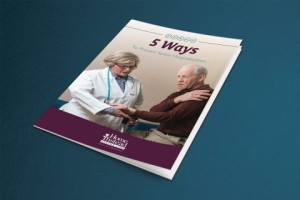
To provide families with resources to minimize the major risk factors and to play an active role in hospitalization prevention, Home Instead, Inc. has created the Five Ways to Prevent Senior HospitalizationsSM guide. This guide identifies potential warning signs and risks and offers five key actions to help prevent senior hospitalization. Click here to download your copy.

Another tool available from Home Instead is the Hospitalization Risk Meter. This easy-to-read guide teaches you about various warning signs along the way. Just slide the button between lower risk to moderate risk to higher risk and be sure to check out the resource links on each page to learn more about potential risks and help prevent senior hospitalizations.risk meter-120x120

Whether you’re a family member of a senior or a patient advocate, there are top risk factors and warning signs to watch for. The most common actions by aging adults that can help keep them out of the hospital are:

There are top lifestyle and health factors that could place seniors significantly more at-risk of hospitalization. The top lifestyle factors are: (The percent refers to nurses who said each factor puts seniors significantly more at risk.)

  • Skipping health maintenance – 85.8%
  • No one checking in on the senior adult – 77.5%
  • Being physically inactive/frail – 76.0%
  • Living alone/isolation – 73.3%

The top health factors are: (The percent refers to nurses who said each factor puts seniors significantly more at risk.)

  • Dementia/Alzheimer’s – 88.3%
  • Having 3 or more chronic health conditions – 86.8%
  • Mobility issues – 78.3%
  • History of hospitalizations – 73.5%

If your senior loved one is not tracking their daily medications, not following doctor’s orders, show a major change in behavior or is isolated, they are experiencing the most serious warning signs that indicate high risk of hospitalization.

Each section of Home Instead’s guide outlines some warning signs and risk factors, as well as specific preventative steps and resources. The goal of this guide is to strengthen the role family can take in hospitalization prevention, and to help them feel more confident about steps they can take to help keep their senior safe at home.

A hospital stay may be necessary and beneficial. But if there are ways to safely avoid it, most seniors and their caregivers would prefer that. Keeping a watchful eye on your aging loved one is important any time of the year, but especially in the winter months when their risk for hospitalization is greatly increased. Using Home Instead’s 5 Ways to Prevent Senior Hospitalizations guide and the Hospitalization Risk Meter can help family members and care providers reduce that risk and ensure your loved one stays healthy and safe at home.

Prevent Senior Hospitalization

As we can understand here in Minnesota, seniors are at their highest risk for hospitalization during the winter, according to 82% of nurses surveyed by Home Instead, Inc. This high risk is due to vulnerability to colds, influenza, pneumonia and other respiratory infections which is far more prevalent in senior care facilities compared to seniors living in their home. Weather-related falls and accidents partly due to icy Minnesota roads and sidewalks also play a factor.

The survey was part of research conducted by Home Instead, Inc. which indicates that the problem of preventable hospitalization of seniors is viewed as very to extremely serious by nearly 75% of the North American nurses surveyed who specialize in senior care.

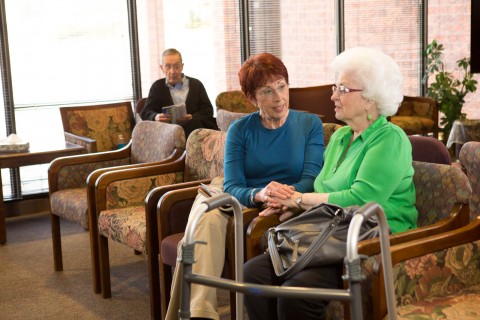
Those same nurses estimate that almost half of senior hospitalizations (48.5%) could be prevented with early detection and Family-caregiver-with-senior_clinic-waiting-roomintervention. In addition, the survey indicates that families play a critical role in helping to keep their aging loved ones out of the hospital – with 99% of nurses surveyed saying that the role family plays is as important as the role played by health care professionals. If a family member is not available, home care services can help bridge the gap.

Families of Minneapolis seniors certainly have good reasons for keeping their loved ones out of the hospital but nurses noted the most important reasons are:

  • They are at risk of hospital-acquired infections
  • Seniors who have been hospitalized have a hard time getting back into their routine
  • Hospitalization can cause more serious health declines
  • Hospitalization leads to confusion for seniors
  • Once hospitalized, seniors often do not regain full function. This is why it’s important to continue care even once the senior has gone home.
  • Immobility in the hospital puts seniors at risk for various health issues

What are some things you can do to help prevent your senior loved one from being hospitalized?

Delaying or avoiding medical care is one of the most common actions by seniors that can put them at potential risk of needing hospitalization. Don’t ignore symptoms! The body is trying to tell you something… listen and relay how or what you are feeling to your doctor. In addition, not following medical orders can be a clear predictor of potential risk. Check in with your aging family members on a regular basis to make sure they are following doctor’s orders, taking their medication when prescribed and not avoiding medical care. Three of the top reasons some seniors don’t comply with doctor’s orders – unwillingness to change ways, denial of health issues and apathy – are all attitudinal.

There are other ways you can reduce the rate of hospitalization. Maintain a healthy diet, particularly if your loved one has diabetes. Learn 3 tips to help seniors avoid diabetes complications and 10 superfoods that should be part of your grocery list. Stay active both physically and mentally to prevent falls and accidents. Work a daily crossword puzzle or take a walk each day, even if it’s a short one. Also make sure you have sturdy shoes or a walking cane to prevent falls.To provide families with resources to minimize the major risk factors and to play an active role in hospitalization prevention, Home Instead, Inc. has created the Five Ways to Prevent Senior HospitalizationsSM guide. The guide focuses on these above-mentioned actions to help keep seniors safe at home and out of the hospital through proactive and preventative measures.

5_ways_prevent_hospitalization

Each section of the guide outlines some warning signs and risk factors, as well as specific preventative steps and resources. The goal of this guide is to strengthen the role families can take in hospitalization prevention, and to help them feel more confident about actions they can take to keep their senior safe at home.

Survey results, overall, also indicated that unnecessary hospitalization of seniors can put them at risk for hospital-acquired infections. Involvement of families is key to helping to minimizing these events and in ensuring that that their loved one receives proper care if they do happen to be hospitalized. Nurses surveyed recommended providing education and instructional resources as a means of helping to reduce hospitalizations.

Hospitalizations should be prevented and it is possible. With the help and education from Home Instead Minneapolis, you can better care for your aging loved one in their home, help prevent time spent in a hospital and also reduce the risk for other health issues that come along with hospitalization. Together, we can keep your senior healthy and home instead.