Too Soon Old

by Dave Griffith

What do you see nurses? . . What do you see?

What are you thinking . . . . When you’re looking at me?

A crabby old man, . . . . . . Not very wise,
Uncertain of habit .. . . . . .With faraway eyes?
Who dribbles his food . . … And makes no reply .
When you say in a loud voice ‘I do wish you’d try!’

Who seems not to notice . . . The things that you do .
And forever is losing . . . . . A sock or shoe?
Who, resisting or not . . . . .Lets you do as you will,
With bathing and feeding . . .The long day to fill?

Is that what you’re thinking?…Is that what you see?
Then open your eyes, nurse . .You’re not looking at me.
I’ll tell you who I am . . . . . As I sit here so still,
As I do at your bidding , . . . As I eat at your will.

I’m a small child of Ten . . . .With a father and mother,
Brothers and sisters . . . . .. . Who love one another
A young boy of Sixteen . . . . .With wings on his feet
Dreaming that soon now . . . . .A lover he’ll meet.

A groom soon at Twenty . . . . My heart gives a leap.
Remembering, the vows . . . . .That I promised to keep .
At Twenty-Five, now . . .. . . ..I have young of my own .
Who need me to guide . . . . . And a secure happy home .

A man of Thirty . . . . .. . . . My young now grown fast,
Bound to each other . . . . . .. With ties that should last .
At Forty, my young sons .. .  . Have grown and are gone,
But my woman’s beside me . . .To see I don’t mourn .

At fifty, once more, . . . . . . Babies play ‘ round my knee,
Again, we know children . .. . . .My loved one and me .
Dark days are upon me . . . . . My wife is now dead .
I look at the future … . . . . . I shudder with dread .

For my young are all rearing . . .Young of their own .
And I think of the years . . .. . And the love that I’ve known .
I’m now an old man . . . . . . . .And nature is cruel .
Tis jest to make old age . . . . . Look like a fool .

The body, it crumbles . . . . …  Grace and vigor, depart .
There is now a stone . . . . . . ..Where I once had a heart .
But inside this old carcass . . . . A young guy still dwells,
And now and again . . . .. .. . . My battered heart swells

I remember the joys . . . . . . .I remember the pain .
And I’m loving and living . . . . .Life over again .
I think of the years . . . . . .. .All too few Gone too fast .
And accept the stark fact . . . That nothing can last .

So open your eyes, people . . .  Open and see…
Not a crabby old man .  . . . . .Look closer  see ME!!

The Trees Are Up! Be a Santa to a Senior!

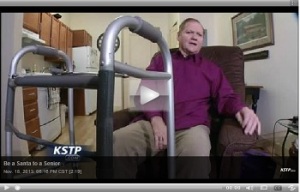
senior videoIf you’re wondering what the Be a Santa to a Senior program is all about, one senior who received a gift from us last year explains it perfectly, “It shows there are angels on Earth.”   Trees are set up all over Minneapolis making it easy for you to be an “angel”. Tags on the trees show names of appreciative seniors like the one in this video that can’t wait to receive a gift. KSTP reporter Joe Mazan interviewed Home Instead Senior Care Minneapolis’  own John Stuck as a proud supporter of the Be a Santa to a Senior program.

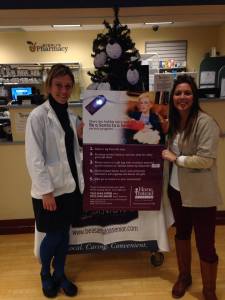
senior trees

Join the Be a Santa to a Senior Campaign

The Be a Santa to a Senior® campaign is all about helping seniors who are alone or in need. The campaign, which first launched in 2006 by our parent organization, helps seniors to get a little TLC during the holidays. The Minneapolis office of the Home Instead Senior Care® network, the world’s largest provider of non-medical in-home care and companionship services for older adults, has partnered with local non-profits groups like East Side Neighborhood Services in Minneapolis, Little Brothers Friends of the Elderly, Meals on Wheels and several Lunds/Byerlys, several nursing homes and low income housing to provide gifts and companionship to seniors who otherwise might not receive either this holiday season. It began with just one nursing home, and has since grown into a movement.

Now you can help brighten a senior’s life too.

How to Participate in Be a Santa to a Senior

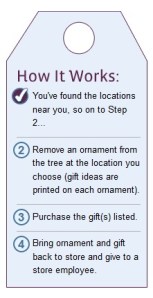
senior_gift_tag Here’s how it works:
1. Head to any of the following locations:

  • Lund’s or Byerly’s stores with pharmacies in Minnetonka, St. Louis Park, Wayzata, Plymouth or downtown Minneapolis, MN
  • Starbucks 2661 Campus Drive, Plymouth, MN
  • Starbucks 16725 C.R. 24, Plymouth, MN
  • Starbucks 7802 Olson Memorial Highway, Golden Valley, MN
  • Home Instead Senior Care of MPLS, 9684 63rd Ave N., Maple Grove, MN 55369

2. Locate the Christmas trees, and choose any ornament with a senior’s name on it. You will find gift suggestions for that senior printed on the ornament.
3. Purchase the item(s) listed, put the item in a gift bag, return to the store with the ornament and deliver them to a store employee.

Hurry! The program ends soon, giving us time to gather and distribute the gifts to seniors. If we are going to meet and possibly exceed last year’s amazing accomplishment of delivering over 2,000 gifts, we need your help!Your participation can make a difference!

be_a_santa_to_a_senior_mplsAbout the Be a Santa to a Senior Campaign

Here’s how the program works. The Home Instead Senior Care network partners with local non-profit and community organizations. Together they identify seniors who perhaps live alone, do not have family members nearby, or are experiencing financial difficulties. The program targets many seniors who otherwise might not receive gifts or visits from family during the holidays.

Home Instead Minneapolis then works with local businesses and retail stores that are willing to help by placing trees and ornaments within their various locations. The involvement from busy stores gives the program visibility and provides a convenient way for shoppers to volunteer their assistance during the busy holiday season.

Since its inception, the Be a Santa to a Senior has attracted nearly 60,000 volunteers throughout North America, and has provided 1.2 million gifts to over 700,000 seniors who are in need of assistance or companionship. Now you can join the movement and help a senior in your Minnesota community.

Need Further Information?

The Be a Santa to a Senior website, provides a locator tool that enables you to find a store by zip code.

Get Involved With Home Instead’s Initiatives to Help Minnesota Seniors

Be a Santa to a SeniorBy Home Instead Senior Care

The snow is just starting to sneak up on us here in Minnesota and the Be a Santa to a Senior®  campaign is in our sights! This popular campaign that delivered more than 2,500 gifts in 2012 to local needy Minnesota seniors needs your help to provide even more gifts and companionship this year to seniors in the Minneapolis area who otherwise might not receive either.

“Seniors faced with medical bills and the high cost of living can find they have little left at the end of the year,” said John Stuck, owner of the Home Instead Senior Care office serving Minneapolis and the Western Suburbs.

Senior SantaChristmas trees will be going up soon in which generous folks will pick up ornaments with the first names of seniors and their gift requests, buy items on the list and return them in a gift bag to the location. From there, gifts need to be collected, organized, stored & distributed and that’s where we need your help! If you are a corporation, church group, school group or senior care residence who has compassionate volunteers and space to store gifts, please consider volunteering your time and location to our Be a Santa to a Senior program.

The huge success of last year’s program would not have been possible without our partners which include Byerly’s & Lund’s Pharmacy locations, Starbucks, TwinWest Chamber of Commerce, Mulitband, Minneapolis Women’s Club, Park Nicollet Orthopedic Group, Sharepoint Credit Union, MN School of Business, Woodland Elementary. Please consider adding your name to this list and putting a smile on thousands of seniors’ faces.

Contact Us Today!

Join Our Book Discussion – cta-book-largeGaining the Confidence to Care

Subscribe to our blog, Like us on Facebook or Follow us on Twitter to respond to discussion topics we’ll be posting over the next month. We’d love your feedback and fellow caregivers will love your ideas!

Get 3 Free Chapters now Or, Get the Entire Book for Free!

To request a free copy of the book, go to our Contact Us page, enter your information and, in the Comments section, provide your address and note that you’d like the Confidence to Care book. We’ll ship it to you for free!

What You’ll Learn from This Book

This book focuses on both memory and behavior symptoms that family caregivers often need help with, including their senior loved one’s resistance to common personal care activities. Each of these chapters offer plenty of care approaches and prevention tips, and begin with a relevant and moving real-life family caregiver story. The chapter topics include:

  • Aggression and Anger
  • Agitation and Anxiety
  • Bedtime Struggles and Sleep Problems
  • Confusion and Memory Loss
  • Delusions
  • False Accusations and Paranoia
  • Hiding/Misplacing Things/Rummaging
  • Hostility
  • Judgment (problems with decision-making and problem-solving)
  • Medication Mismanagement
  • Mood Changes
  • Repetition
  • Sexually Inappropriate Behavior
  • Social Withdrawal
  • Wandering

All profits from this book will be donated to the Home Instead Senior Care Foundation and designated for dementia-related organizations and causes.

Free Book, App and Kit for Dealing with Alzheimer’s and Dementia

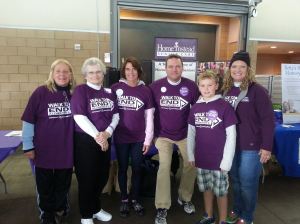
alz_walkOn September 21, 2013 the Home Instead Senior Care Minneapolis team headed to Minnesota’s prized Target Field to walk, raise money and support the Alzheimer’s Association Walk to End Alzheimer’s®. As the nation’s largest event to raise awareness and funds for Alzheimer’s care, support and research, their vision is a world without Alzheimer’s. As one of the most feared diseases, an Alzheimer’s diagnosis presents many challenges for families who have a senior loved one with this disease, especially since an estimated 70% of people with Alzheimer’s live at home. Plus, it may be impossible to predict behaviors exhibited by a person struggling with Alzheimer’s. “Many family caregivers wake up every day with anxiety and fear because they don’t know how a loved one with Alzheimer’s will act or react,” said John Stuck, owner of the Home Instead Senior Care office serving Minneapolis and the western suburbs. One of Home Instead Senior Care network’s first reported experiences with Alzheimer’s disease involved a senior who refused to change clothes. She insisted on wearing the same gray pantsuit every day, all day. Maybe you face similar frustrating situations as you care for a loved one with Alzheimer’s disease or other dementias. Without understanding what triggers the behaviors associated with the disease, or knowing practical techniques to help counter them, it’s easy to feel overwhelmed. But discovering simple tips, like buying a duplicate pantsuit to encourage the senior into a fresh set of clothes, can mean the difference between endless frustration and a positive care experience. In recognition of World Alzheimer’s Month (September 2013), Home Instead Senior Care Minneapolis is offering a number of free resources to help Minnesota families who are living with Alzheimer’s.

cta-book-largeGaining the Confidence to Care Book

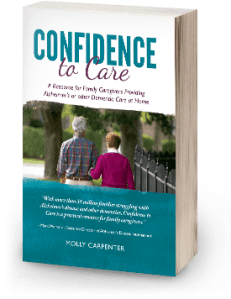
Confidence to Care: A Resource for Family Caregivers Providing Alzheimer’s Disease or Other Dementias Care at Home is your essential handbook to becoming more confident in your ability to understand, manage and even help alleviate dementia-related behavioral symptoms that your loved one may be prone to exhibit.

Why We Wrote the Book

We wrote this book to help you. This book combines personal stories with practical techniques drawn from decades of caregiving experience from family caregivers, professional CAREGivers℠ within the Home Instead Senior Care® network, and internationally recognized experts.

All profits from this book will be donated to the Home Instead Senior Care Foundation and designated for dementia-related organizations and causes.

What You’ll Learn from This Book

This book focuses on both memory and behavior symptoms that family caregivers often need help with, including their senior loved one’s resistance to common personal care activities. Each of these chapters offer plenty of care approaches and prevention tips, and begin with a relevant and moving real-life family caregiver story. The chapter topics include:

  • Aggression and Anger
  • Agitation and Anxiety
  • Bedtime Struggles and Sleep Problems
  • Confusion and Memory Loss
  • Delusions
  • False Accusations and Paranoia
  • Hiding/Misplacing Things/Rummaging
  • Hostility
  • Judgment (problems with decision-making and problem-solving)
  • Medication Mismanagement
  • Mood Changes
  • Repetition
  • Sexually Inappropriate Behavior
  • Social Withdrawal
  • Wandering

Get 3 Free Chapters now Or, Get the Entire Book for Free!

To request a free copy of the book, go to our Contact Us page, enter your information and, in the Comments section, provide your address and note that you’d like the Confidence to Care book. We’ll ship it to you for free!

alz_appAlzheimer’s and Other Dementias Daily Advice App

Families can use this free smartphone app to search behaviors and help find solutions when they have to react quickly to a situation. It’s designed to help families manage issues as they arise, whether at their Minneapolis home or in public. Issues such as: “How do I deal with a mother who is always accusing me of stealing from her?” That’s a common question asked by many sons and daughters caring for a parent with Alzheimer’s disease or other dementias. The accusation scenario could just as easily be replaced with: who won’t eat her food, who refuses to shower, who hides her underwear in my purse, who curses at me, who urinates in the bedroom floor vent, or who doesn’t recognize me. While the situation at hand may differ from day to day and from person to person, the core question remains: How do I deal?

alzheimers mn app preview

An App Designed to Help You Deal

We created the Alzheimer’s and Other Dementias Daily Companion App as a pocket guide to help get you through all the dementia care situations you likely never dreamed you’d have to face. You can download this free app now so when you have a question about the best way to handle a home care situation, you’ll have quick, helpful tips from experts and other caregivers instantly at your fingertips.

App Overview & Features

The Alzheimer’s and Other Dementias Daily Companion is an iOS mobile app available in the app store for download at no cost. It offers immediate advice with close to 500 searchable tips and practical solutions to help deal with behaviors and situations related to Alzheimer’s and other dementias.

Features include:

  • 25 topic categories containing close to 500 searchable pieces of advice from experts and other caregivers regarding:
    • Behaviors and situations
    • Emotional support
    • Helpful resources
  • “Ask a Question” submission form if you can’t find the answer you’re looking for
  • 24-hour caregiving assistance available via a toll-free phone number or email submission
  • Functionality to share advice from your own experience for the benefit of other caregivers
  • A built-in rating system for users to provide feedback on each tip so caregivers benefit from others’ insight and evaluation of the advice
  • Access to free Alzheimer’s and other dementias caregiver resources and training materials
  • Ability to access all of the solutions and tips without Internet connectivity

Confidence to Care At Home Kit

alzheimers_kitConfidence to Care also highlights the importance of caring for yourself while caring for others. This at home kit contains, an at-a-glance collection of information, tips and resources to help handle difficult situations, avoid household accidents, encourage engagement and prevent caregiver stress, that is designed for any member of the household to reference, anytime they need it.

Download the Complete Guide

“According to experts, Alzheimer’s either is or may someday be a reality for about one-third of the families in our community,” said Stuck. “We want to replace their fears with a sense of confidence that they are equipped to handle any situation.”

Confidence to Care Book Discussion – Alzheimer’s Affect on the Sense of Smell

cta-book-largeYou’ve received your Confidence to Care book, have hopefully read the first couple chapters and may have some comments or questions. Well let’s hear them! Click here to jump to the bottom of this post and enter your comment.

Haven’t received a copy of the book yet?

Get 3 Free Chapters now Or, Get the Entire Book for Free!

To request a free copy of the book, go to our Contact Us page, enter your information and, in the Comments section, provide your address and note that you’d like the Confidence to Care book. We’ll ship it to you for free!

First topic – The peanut butter sniff test to confirm Alzheimer’s.

It says on page 3 of the Confidence to Care book that dementia impacts all five senses. Jennifer Stamps, a graduate student in the McKnight Brain Institute Center for Smell and Taste and the University of Florida, chose to focus on the sense of smell and came up with the idea of using peanut butter to test for smell sensitivity. She ran a small pilot study published in the Journal of Neurological Science. The patient closed his or her eyes and mouth and blocked one nostril. The clinician opened the peanut butter container and held a ruler next to the open nostril while the patient breathed normally. The clinician then moved the peanut butter up the ruler one centimeter at a time during the patient’s exhale until the person could detect an odor. The distance was recorded and the procedure repeated on the other nostril after a 90-second delay. Patients in the early stages of Alzheimer’s disease had a dramatic difference in detecting odor between the left and right nostril—the left nostril was impaired and did not detect the smell until it was an average of 10 centimeters closer to the nose than the right nostril had made the detection in patients with Alzheimer’s disease.

Read More

Some are skeptical.

“The idea that smell is altered in Alzheimer’s disease dementia patients is well known, and this is nothing new,” neurologist David Knopman from the Mayo Clinic tells NPR. Knopman says this study is nothing more than an interesting observation. The study itself acknowledges that the findings aren’t fully verified. And the study sample of 94 patients (only 18 of whom were diagnosed with Alzheimer’s) is too small to be conclusive.

Read More

What do you think? Has Alzheimer’s affected your loved one’s sense of smell and would you have agreed to this test?

Join Our Book Discussion

Don’t miss a single post Subscribe to our blog, Like us on Facebook or Follow us on Twitter to respond to discussion topics we’ll be posting over the next month. We’d love your feedback and fellow caregivers will love your ideas!

Brain Study: If you can read this OUT LOUD you have a strong mind.


Brain training like this helps to ward off Alzheimer’s and other dementias. Home Instead Senior Care Minneapolis is committed to supporting and caring for those with Alzheimer’s and their families.

Only 55 people out of 100 can read this:
I cdnuolt blveiee that I cluod aulaclty uesdnatnrd what I was rdanieg. The phaonmneal pweor of the hmuan mnid, aoccdrnig to a rscheearch at Cmabrigde Uinervtisy, it dseno’t mtaetr in what oerdr the ltteres in a word are, the olny iproamtnt tihng is that the frsit and last ltteer be in the rghit pclae. The rset can be a taotl mses and you can still raed it whotuit a pboerlm. This is bcuseae the huamn mnid deos not raed ervey lteter by istlef, but the word as a wlohe. Azanmig huh? Yaeh and I awlyas tghuhot slpeling was ipmorantt! If you can raed this forwrad it

7H15 M3554G3
53RV35 7O PR0V3
H0W 0UR M1ND5 C4N
D0 4M4Z1NG 7H1NG5!
1MPR3551V3 7H1NG5!
1N 7H3 B3G1NN1NG
17 WA5 H4RD BU7
N0W, 0N 7H15 LIN3
Y0UR M1ND 1S
R34D1NG 17
4U70M471C4LLY
W17H 0U7 3V3N
7H1NK1NG 4B0U7 17,
B3 PROUD! 0NLY
C3R741N P30PL3 C4N
R3AD 7H15.
PL3453 F0RW4RD 1F
U C4N R34D 7H15.

The Eye Test
Can you find the B’s
(there are 2 B’s) DON’T skip, or your wish won’t come True…
RRRRRRRRRRRRRRRRRRRRRRRRRRRRRRRR
RRRRRRRRRRRBRRRRRRRRRRRRRRRRRRRR
RRRRRRRRRRRRRRRRRRRRRRRRRRRRRRRR
RRRRRRRRRRBRRRRRRRRRRRRRRRRRRRRR
RRRRRRRRRRRRRRRRRRRRRRRRRRRRRRRR
Once you’ve found the B’s
Find the 1
IIIIIIIIIIIIIIIIIIIIIIIIIIIIIIIIIIIIIIIIIIIIIIIIII
IIIIIIIIIIIIIIIIIIIIIIIIIIIIIIIIIIIIIIIIIIIIIIIIIII
IIIIIIIIIIIIIIIIIIIIIIIIIIIIIIIIIIIIIIIIIIIIII1III
IIIIIIIIIIIIIIIIIIIIIIIIIIIIIIIIIIIIIIIIIIIIIIIIIII
Once you found the 1
Find the 6
9999999999999999999999999999999999
9999999999999999999999999999999999
9999999999999999999999999999999999
9999999999999999999999999999999999
9999999999999999999999999999999999
9999999999999999999999999999999999
9999699999999999999999999999999999
9999999999999999999999999999999999
9999999999999999999999999999999999
9999999999999999999999999999999999
9999999999999999999999999999999999
9999999999999999999999999999999999
Once you’ve found the 6…
Find the N (it’s hard!!)
MMMMMMMMMMMMM
MMMMMMMMMMMMM
MMMMMMMMMMMMM
MMMMMMMNMMMMM
MMMMMMMMMMMMM
MMMMMMMMMMMMM
MMMMMMMMMMMMM
MMMMMMMMMMMMM
MMMMMMMMMMMMM
MMMMMMMMMMMMM
Once you’ve found the N…
Find the Q..
OOOOOOOOOOOOOOOOOOOOOOOOOOO
OOOOOOOOOOQOOOOOOOOOOOOOOOO
OOOOOOOOOOOOOOOOOOOOOOOOOOO

>
>>
>>>
>>>>
>>>>>
>>>>>>
>>>>>>>
>>>>>>>>
>>>>>>>>>
>>>>>>>>>>
>>>>>>>>>>>
>>>>>>>>>> > >
>>>>>>>>>>>>>
>>>>>>>>>>>>>>
>>>>>>>>>>>>>>>
>>>>>>>>>>>>>>>>
>>>>>>>>>>>>>>>>>
>>>>>>>>>>>>>>>>>>
>>>>>>>>>>>>>>>>>
>>>>>>>>>>>>>>>>
>>>>>>>>>>>>>>>
>>>>>>>>>>>>>>
>>>>>>>>>>>>>
>>>>>>>>>>>>
>>>>>>>>>>>
>>>>>>>>>>
>>>>>>>>>
>>>>>>>>
>>>>>>>
>>>> >>
>>>>>
>>>>
>>>
>>
>

Care for the Caregiver to Prevent Distress

cargiver - overwhelmedThe responsibilities and challenges of caring for a loved one in their Minnesota home can place significant stress on the family caregiver. In fact, this stress can build up to actually cause caregiver distress—a situation where the caregiver may become more susceptible to other health risks such as such as ulcers and weight loss/gain or even more chronic conditions such as diabetes, heart disease. home care mn As we noted in our June blog, there are many risk factors including being a woman and caring for senior with Alzheimer’s Disease. To prevent caregiver distress take the Family Caregiver Distress Assessment, adapted for Home Instead Senior Care Minneapolis to learn how to deal with the stress of caregiving and balance the varied emotions that so many family caregivers struggle to understand. The reason this “self reflection” method is so important is that repressing emotions takes a terrible toll on family caregivers.

Research conducted by the Home Instead Senior Care® network reveals that caregivers who hide their emotions are 2.3 times more likely than other caregivers to have experienced depression since becoming a caregiver. Why is it so common for caregivers to hide their emotions (and don’t say it’s a Minnesota Norwegian thing)? As we noted in last month’s seniorcareminneapolis.net blog post, some don’t recognize that they are a caregiver. Others have difficulty processing their emotions and many don’t have an outlet for expressing or sharing their emotions. “It’s difficult to admit feeling angry or frustrated when it comes to caring for your parents,” said Dr. Amy D’Aprix, a caregiving expert. “The uninformed often give disapproving stares if you’re a family caregiver and say you’re feeling frustrated…It’s great to free up caregivers to express their emotions as just that – their true feelings about what they’re going through on their caregiving journey.”

Hear more from Dr. D’Aprix in this video.

Dr. D’Aprix recommends the following process to help caregivers come to grips with the rigors of caregiving.

  1. Acknowledge feelings. It’s OK to feel conflicting emotions as a family caregiver. Perhaps 30% of your emotions are anger-related and 20% are guilt but 50% is love. Try to hang onto that 50% of your heart that knows you’re doing the right thing.
  2. Manage the situation. Oftentimes there’s no other way around it: Caregivers need help. If you can’t find support with family, go to trusted friends, faith community or consider speaking to a home care provider.
  3. Release the feelings in a safe way. Journaling is one effective way that family caregivers can get their feelings out. Talking to other caregivers at a support group or talking to a therapist might also help.
  4. Find solutions. Relaxation is one option. “Make a list of things you enjoy doing to reduce stress,” Dr. D’Aprix advises. Reading, watching a favorite television show, attending a faith service, exercising, visiting a museum, meeting friends and listening to music are all activities that many caregivers enjoy…”

Once you re-discover activities you enjoy, Just 15-20 minutes here and there each day when you can focus on yourself will make a world of difference in managing your caregiver stress.  According to a new Home Instead Senior Care survey, 55% of family caregivers that employed professional caregiving services appeared to have above average or significant levels of stress as they came on board.

home_care_mnThese tips are recommended while taking care of an aging loved one:

  • Work out: Exercise and enjoy something you like to do (walking, dancing, biking, running, swimming, etc.) for a minimum of 20 minutes at least three times per week. Consider learning a stress-management exercise such as yoga or tai-chi, which teach inner balance and relaxation Minneapolis was recently named one of the top healthiest states because of the vast opportunity for exercise.
  • Keep your medical appointments: Make sure you get your annual check-up. Being a caregiver provides many excuses for skipping your necessary check-ups, but don’t do it. A healthy you is worth more to your aging loved one than a sick, weak you.
  • Meditate: Sit still and breathe deeply with your mind as “quiet” as possible whenever things feel like they are moving too quickly or you are feeling overwhelmed by your responsibilities as a caregiver. Many times you will feel like you don’t even have a minute to yourself, but it’s important to walk away and to take that minute.
  • Take a break: Consider respite which is full time-short term care that others can provide (family, friends, volunteers or professional caregivers) while you get a break. Take single days or even a week’s vacation. And when you’re away, stay away. Talk about different things, read that book you haven’t been able to get to, take naps, whatever relaxes you and makes you happy.
  • Indulge: Treat yourself to a foot massage, manicure, nice dinner out or a concert to take yourself away from the situation and to reward yourself for the wonderful care you are providing to your senior relative. You shouldn’t feel guilty about wanting to feel good.

And, laugh! Mary Maxwell has some advice for a senior whose daughter is not making the above mentioned life choices.

Everyone needs some pampering occasionally, for both physical and mental health. If you’re caring for a senior in their home, don’t feel guilty if you treat yourself once in a while…you deserve it and you need it.

Processing the Mixed Emotions of Caregiving

homecaremnCaring for a senior loved one in Minneapolis can come with a contradiction of emotions. For example, research conducted by Home Instead Senior Care® Minneapolis points out that nearly three-fourths (74%) of family caregivers who hide their feelings are overwhelmed, but that same percent of people caring for their Mom or Dad also feel loved. In addition, 64% feel anxious while these same caregivers feel satisfied. A key finding of the research: hiding one’s feelings increases the risk for caregiver distress. As we noted in last month’s blog post, caregiver distress is a situation where the stress of caring for a senior in their home makes one more susceptible to health risks such as high blood pressure, diabetes and  stroke. Watch the video below to learn what Home Instead Minneapolis is doing to uncover this issue and provide home care assistance.

emotions_caregivingHome Instead Senior Care® Minneapolis’ Family Caregiver Stress Relief program is designed to assist caregivers in better identifying their potential for distress in an effort to help avoid its adverse impact. Resources featured here can help family caregivers learn how to deal with the stress of caregiving and balance the varied emotions that so many family caregivers struggle to understand. One U.S. study of 38 years of research revealed that surveyed caregivers had a 23% higher level of stress hormones and a 15% lower level of antibody responses than did non-caregivers. That’s why it is important for a person to first recognize that they’re a caregiver by taking our quiz.

Next, one should take an honest look at their emotions.  Caregiving expert Dr. Amy D’Aprix says caregivers should try to avoid classifying emotions as good and bad. “Just recognizing it’s normal to feel many emotions when you’re a family caregiver helps take the power away from the emotion.” She offers that other major life events also bring conflicting feelings. Who wasn’t scared to walk down the aisle and what Mom didn’t grab a tissue when they proudly dropped their child off at the University of Minnesota? Two attributes set caregiving apart: the intensity of caregiving situations and the lack of planning that generally precipitates the need for care. Dr. D’Aprix offers these tips to help caregivers overcome the anxiety of the unexpected need for caregiving.

  1. Look at your situational concern. What can you control? If your Dad is diabetic, you can control the food you serve. What you cannot control is what he eats. Other common worries such as passing away before your senior loved one are things you can’t control, so try not to worry.
  2. Have an outlet. Find someone you can talk to without judgement. This could be a friend, support group or home care provider. Caregivers who repress their feelings are most likely to feel frustration over increasing demands on their time (56%), experiencing the physical demands of caregiving (41%) and lacking control over their emotions (34%).
  3. Recognize your limitations. Be realistic about what you can do. While you might be the perfect person to make a meal for a senior, you probably shouldn’t be providing medical care services. Set priorities and get help from a home health care provider when needed.


home care mn If you’re showing signs of caregiver distress, consider talking with a healthcare professional that can help you to evaluate your situation. Remember, it is not selfish to focus on your own needs and desires when you are a family caregiver. In fact, it is important that you take initiative with your own physical and emotional care so that you can best assist the person you are caring. Approximately 74% of caregivers who hide their feelings report fatigue, 53% report difficulty sleeping, 37% report depression, and 30% experience weight gain or loss. Take the Family Caregiver Distress Assessment, adapted for the Home Instead Senior Care network  to learn how to deal with the stress of caregiving and balance the varied emotions that so many family caregivers struggle to understand.

Are you in Caregiver Distress? Take This Quiz and Learn the Risk Factors.

personal_careNearly one-third of adults living in Minneapolis, MN are family caregivers to seniors and could be at risk for diabetes, depression, heart disease and various other conditions. This is a result of caregiver distress which is a potentially dangerous condition brought on by the pressures of caring for a senior loved one in their home. Studies indicate that caregiving is a leading stressor for families. In fact, one U.S. study revealed that more than half (52.8%) of those caring for individuals with diseases including cancer or Alzheimer’s had signs of depression.

In response to this growing issue, Home Instead Senior Care® Minneapolis has launched a public awareness campaign – Family Caregiver Stress Relief. Over the coming months, we will offer tools to help you determine if you are in distress, resources to overcome the challenges associated with caregiver distress and advice on preventing and treating surrounding issues.

Are you a Caregiver?

More than 44 million individuals in the U.S. and Canada provide caregiver services to a senior in their home. Yet few people identify themselves as caregivers. Why? Because often the things that make you a caregiver just seem like natural things to do for a loved one such as light household cleaning and making meals. Failing to recognize yourself as a caregiver can cause you to fail to recognize the challenges and responsibilities placed on you, and to overlook the impact caregiving may be having on your health and welfare. Research conducted on behalf of the Home Instead Senior Care® network reveals that caregivers who hid their emotions are more likely to experience depression, difficulty sleeping, and fatigue. In addition, people who don’t self-identify as caregivers may not realize the magnitude of what they do. According to AARP, in 2009, family caregivers provided over $450 billion worth of caregiving services including home care.

Take this quiz to determine if you are actually a caregiver.

What is Caregiver Distress?

Caregiver distress goes beyond the typical stressors of providing home care services for a senior. It actually impacts your health and manifests itself by increasing your risks of health complications. According to a 2010 study by Met Life Mature Market Institute, employees who provide senior care are more likely to report suffering from depression, diabetes, hypertension, or pulmonary disease. Research conducted by Dr. Peter Vitaliano, a Professor at the University of Washington, reveals that caregiver distress can manifest itself by increasing the risks for:

  • High blood pressure
  • Diabetes
  • Ulcers
  • Heart problems
  • Increased risk of stroke
  • Insomnia
  • Anxiety
  • Depression
  • Weight gain/loss and obesity

Caregiver distress can spill over into other areas of life, potentially creating relationship problems, exacerbating addictions and causing job issues. If you or a loved one are a caregiver and experiencing any of the above health conditions, consult your Minnesota health care provider.

What are the Risk Factors?

Since the average demographic of a caregiver is a 45-54 woman caring for both an aging loved one as well as their own family, it’s easy for a caregiver to assume that the above symptoms are a typical sign of aging or that they’re just “stressed out and busy”.

“Stressors include too many caregiver demands, not enough help caring for a loved one, feeling alone, financial problems, and work loss. These all can lead to caregiver distress and burden,” says Dr. Vitaliano. Some risk factors for developing caregiver distress include:

However, even as you lovingly provide support to a senior, you may have problems managing and balancing that support with your own busy life. The responsibilities can impact you physically, mentally and emotionally. And that could lead to the kind of distress that could result in serious health problems.

Are You in Caregiver Distress?

home care mnTo identify the home care tasks that might make caregiving more challenging for you, and learn what you can do to address those challenges, take the Family Caregiver Distress Assessment, adapted for the Home Instead Senior Care network by Dr. Vitaliano. The assessment allows caregivers to determine their risk for distress and resulting emotional and physical issues, including depression, heart disease, high blood pressure, diabetes and obesity. Even if you learned from the quiz that you’re not providing care services to a senior, you probably know someone who is. Recommend this assessment or take it for them so that you can watch for warning signs.

Caring for an older adult can be a fulfilling experiences for any family caregiver. So many tasks bring pleasure as you give back to someone who may have given you so much. By identifying yourself as a caregiver and understanding the risk factors, you can decrease your changes of becoming distressed and, instead, enjoy the experience of caring for your Mom or Dad in their Minneapolis home.

Caring for a Person with Memory Loss Conference

UofMFree Annual Educational Conference

Saturday, June 1, 2013
8:00am to 4:30pm
Mayo Memorial Auditorium
420 Delaware Street SE
Minneapolis, MN 55455

Home Instead Senior Care of Minneapolis is committed to making coping with Alzheimer’s and dementia-related issues, such as memory loss as easy as possible. That is why we’re a proud sponsor of the Caring for a Person with Memory Loss Conference in Minneapolis, MN. According to Joseph Gaugler, Ph.D., coordinator of the conference, “The Caring for a Person with Memory Loss conference is designed to share tools, skills, resources, information, and wisdom with families and care professionals about the most effective ways to care for persons with memory concerns. With more than 5 million people in the U.S. with Alzheimer’s disease or a related dementia and 15.4 million people provided care for these individuals, the need to share relevant, effective care approaches and ideas to improve the quality of life of persons with memory loss is more critical than ever. To this end, our June 1st, 2013 Caring for a Person with Memory Loss conference will touch on several key topics including different types of dementia, family dynamics, art therapy, and abuse issue in person with memory loss. As this conference is a community education event and free for families, the kindness of sponsors such as Home Instead Senior Care of Minneapolis is critical to help us provide speaker honoraria, offer copies of presentation materials to attendees, provide refreshments to attendees, and live stream and record the conference for future viewing by attendees and others.”

alzheimers care mn

Contest

Register today then stop by our booth! In conjunction with the conference and our support of organizations that provide education and assistance to those dealing with Alzheimer’s Disease, we’re offering a chance to win a $100 gift card to Parasole Restaurants PLUS a $100 donation to the Alzheimer’s Association in your name. Learn more and enter today!

Registration

There is no cost for this conference for participants who do not want contact hours, but pre-registration is required. To RSVP your attendance, click here. If you RSVP on behalf of others, you must complete a new form for each person to be registered for the conference.

Contact Hours

The event will provide 6.5 American Nurses Credentialing Center (ANCC) contact hours, 6.75 Minnesota Board of Social Work contact hours, and 7 Minnesota Licensed Nursing Home Administrator contact hours. A certificate of attendance will be provided so that all health professionals may submit it to their respective organizations for accreditation . Attendance for the full day is required to receive the certificate. There is a $50 registration fee to cover processing costs. Please complete the online registration form (http://tinyurl.com/CPWMLregistration) to learn more about payment options.

Refund Policy

If you need to cancel your registration, a refund will be issued if you cancel in writing to Dr. Gaugler at gaug0015@umn.edu by May 17th, 2013 (2 weeks prior). If you cancel after this date, you will not be eligible for a refund.

Program Schedule

8:00-8:30 am – Welcome
Joseph E. Gaugler, PhD, Associate Professor/McKnight Presidential Fellow
University of Minnesota School of Nursing/Center on Aging

8:30-10:00 am – Different Types of Dementia: Clinical and Practical Considerations
Siobhan McMahon, PhD, GNP-BC, Assistant Professor, University of Minnesota School of Nursing

  • Define dementia and its various subtypes/causes
  • Describe clinical differences in various types of dementia
  • Discuss the approaches to most effectively treat and manage different types of dementia

10:00-10:15 am – Break

10:15-11:45 am – What Family Members Need From Each Other
Patricia Schaber, PhD, OTR/L, Associate Professor
University of Minnesota Program in Occupational Therapy

  • How do family members interact? (Family FIRO Model)
  • Changing needs in family members with memory loss
  • Strategies for promoting daily, positive interactions

11:45am-12:45pm – Lunch Break

12:45-2:15 pm – Dancing – Interactive Connections for Healthy, Enriched Lives
Maria DuBois Genné, BSEd., MEd, Founder and Director of the KAIROSalive!

  • Through experiential processes learn how dance, music, and story can enliven and nurture our bodies and minds
  • Through experiential processes learn how the shared experience of dancing transforms each participant and can help build a sense of belonging and community.

2:15-2:30 pm – Break

2:30-4:00 pm – Elder Abuse and Dementia
Deb A Holtz, JD, MN State Ombudsman for Long-Term Care, Minnesota Board on Aging

  • Provide an overview of the State Ombudsman’s role and responsibilities
  • Discuss key issues related to elder abuse and dementia, using case examples where appropriate
  • Provide information, suggestions, and tools for families of at-risk loved ones with memory loss

4:00-4:15 pm – Thanks and Closing Remarks
Joseph E. Gaugler, PhD

Conference Committee

Joseph E. Gaugler, PhD, is an Associate Professor and McKnight Presidential Fellow in the School of Nursing and Center on Aging at the University of Minnesota. His research focuses on Alzheimer’s disease, family caregiving, and clinical interventions for these individuals.

Mark Reese, MA, LPC, LAMFT, is a study counselor at the University of Minnesota. His work focuses on enhancing clinical services for families caring for relatives with memory loss.

University of Minnesota Caregiver Registry

As Dr. Gaugler’s research program continues to grow, he would like to ask you to take a few minutes and consider being a part of the University of Minnesota Caregiver Registry. Becoming part of the registry does not enroll you in any study, but it provides Dr. Gaugler with permission to contact you in the future about any upcoming opportunities to participate in his research as well other basic information. Filling out the University of Minnesota Caregiver Registry form should not take more than 5 minutes. If you have already done this for us and nothing has changed since you filled it out, there is no need to fill out another form. However, if something has changed since you last filled out a Registry form, please feel free to fill out a new form:

If you are a family member or friend who knows someone with memory loss or is helping them, please fill out the University of Minnesota Caregiver Registry-Family form here:
https://umsurvey.umn.edu/index.php?sid=97146&lang=um

If you are a professional who cares for persons with memory loss or their families, please fill out the University of Minnesota Caregiver Registry-Professional form here:
https://umsurvey.umn.edu/index.php?sid=36229&lang=um

Caring for a Person with Memory Loss (CPWML) Annual Conference will be Streamed Live June 1, 2013!

Please share the following with those you know that won’t be able to attend the conference, especially those out of state:

We are going to stream live and record the conference presentations! The CPWML conference can be accessed live from a remote location with a computer and internet access (highly recommend doing so with T3 or LAN line, as opposed to wireless) as well as via a recorded version after the event. The CPWML conference will be broadcast here: https://umconnect.umn.edu/pwmlc/ and the recording will be made available on the virtual library site at: http://tinyurl.com/CPWMLresources after the conference. This live stream will be interactive, meaning you can participate in Q & A with presentation speakers.

Caring for a Person with Memory Loss Conference Virtual Library

If you would like to revisit the information presented in this or past Caring for a Person with Memory Loss conferences, please visit our virtual conference library at http://tinyurl.com/CPWMLresources. There you will find Power Point slides and handouts of each presentation, information on how to access recorded presentations, speaker contact information and other resources from past conferences. We have held Caring for a Person with Memory Loss conferences since Spring 2008, and there is a lot of great, free information in the virtual library for you, your family members, or clients!