Prevent Senior Hospitalization

As we can understand here in Minnesota, seniors are at their highest risk for hospitalization during the winter, according to 82% of nurses surveyed by Home Instead, Inc. This high risk is due to vulnerability to colds, influenza, pneumonia and other respiratory infections which is far more prevalent in senior care facilities compared to seniors living in their home. Weather-related falls and accidents partly due to icy Minnesota roads and sidewalks also play a factor.

The survey was part of research conducted by Home Instead, Inc. which indicates that the problem of preventable hospitalization of seniors is viewed as very to extremely serious by nearly 75% of the North American nurses surveyed who specialize in senior care.

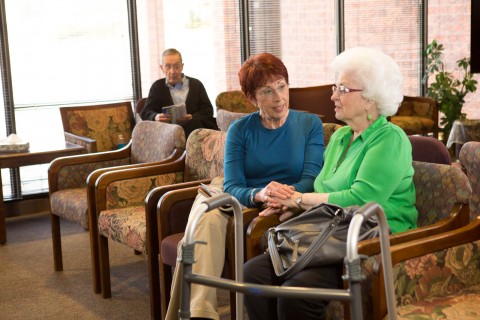
Those same nurses estimate that almost half of senior hospitalizations (48.5%) could be prevented with early detection and Family-caregiver-with-senior_clinic-waiting-roomintervention. In addition, the survey indicates that families play a critical role in helping to keep their aging loved ones out of the hospital – with 99% of nurses surveyed saying that the role family plays is as important as the role played by health care professionals. If a family member is not available, home care services can help bridge the gap.
Families of Minneapolis seniors certainly have good reasons for keeping their loved ones out of the hospital but nurses noted the most important reasons are:

  • They are at risk of hospital-acquired infections
  • Seniors who have been hospitalized have a hard time getting back into their routine
  • Hospitalization can cause more serious health declines
  • Hospitalization leads to confusion for seniors
  • Once hospitalized, seniors often do not regain full function. This is why it’s important to continue care even once the senior has gone home.
  • Immobility in the hospital puts seniors at risk for various health issues

What are some things you can do to help prevent your senior loved one from being hospitalized?

Delaying or avoiding medical care is one of the most common actions by seniors that can put them at potential risk of needing hospitalization. Don’t ignore symptoms! The body is trying to tell you something… listen and relay how or what you are feeling to your doctor. In addition, not following medical orders can be a clear predictor of potential risk. Check in with your aging family members on a regular basis to make sure they are following doctor’s orders, taking their medication when prescribed and not avoiding medical care. Three of the top reasons some seniors don’t comply with doctor’s orders – unwillingness to change ways, denial of health issues and apathy – are all attitudinal.

There are other ways you can reduce the rate of hospitalization. Maintain a healthy diet, particularly if your loved one has diabetes. Learn 3 tips to help seniors avoid diabetes complications and 10 superfoods that should be part of your grocery list. Stay active both physically and mentally to prevent falls and accidents. Work a daily crossword puzzle or take a walk each day, even if it’s a short one. Also make sure you have sturdy shoes or a walking cane to prevent falls.To provide families with resources to minimize the major risk factors and to play an active role in hospitalization prevention, Home Instead, Inc. has created the Five Ways to Prevent Senior HospitalizationsSM guide. The guide focuses on these above-mentioned actions to help keep seniors safe at home and out of the hospital through proactive and preventative measures.

5_ways_prevent_hospitalization

Each section of the guide outlines some warning signs and risk factors, as well as specific preventative steps and resources. The goal of this guide is to strengthen the role families can take in hospitalization prevention, and to help them feel more confident about actions they can take to keep their senior safe at home.

Survey results, overall, also indicated that unnecessary hospitalization of seniors can put them at risk for hospital-acquired infections. Involvement of families is key to helping to minimizing these events and in ensuring that that their loved one receives proper care if they do happen to be hospitalized. Nurses surveyed recommended providing education and instructional resources as a means of helping to reduce hospitalizations.

Hospitalizations should be prevented and it is possible. With the help and education from Home Instead Minneapolis, you can better care for your aging loved one in their home, help prevent time spent in a hospital and also reduce the risk for other health issues that come along with hospitalization. Together, we can keep your senior healthy and home instead.
3 Tips to Help Seniors Avoid Diabetes Complications and 10 Superfoods
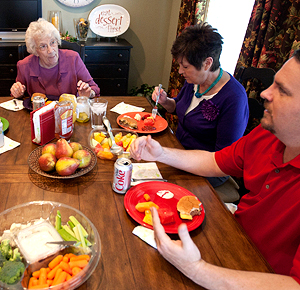

In the midst of the holiday season with decreasing daylight hours and temperatures so cold in Minnesota you only want to stay inside and eat hotdish, it’s difficult to get motivated to eat right an exercise. Yet, with the rate of Type 2 diabetes among seniors over 60 continuing to grow, it’s imperative that seniors and their caregivers stay informed and vigilant in fighting the disease. Given that one-quarter of seniors over age 65 have been diagnosed with diabetes, it’s likely you’ll find yourself helping a senior and their home care team manage a disease that brings along a host of potential complications whether or not they’re living in a senior care facility or living independently in their Minnesota home.

home care mn3 Ways to Help Seniors Avoid Diabetes Complications

Type 2 diabetes rarely exists alone. It brings with it hypertension (high blood pressure), neuropathy (loss of feeling in the limbs) and vision trouble. Here are three ways you can assist seniors with diabetes.

1. Encourage adherence to the treatment plan As you probably know, when a senior receives a diagnosis of diabetes, their health care team will usually create a treatment plan that includes components like medication, diet, exercise, and lifestyle modifications. According to the Mayo Clinic, adhering to the treatment plan can delay or minimize complications that may arise from diabetes. Offer seniors encouragement and positive reinforcement about sticking to the care plan.

2.  Advocate good medication practices Seniors with Type 2 diabetes may take medication not only for blood sugar control but also for coexisting conditions like hypertension or high cholesterol. Managing a lot of medications can become confusing, especially for people with memory loss or other cognitive decline. For seniors who need help monitoring their medication regimen, consider suggesting a non-medical helper or use this medication tracker. These home care aides can provide medication reminders to help seniors stay on track with the many pills they may need to take each day. This in-home assistance can be particularly useful if you’re unable to visit your senior loved one every day.

3. Encourage regular medical follow-up Some diabetes complications come on so slowly a senior may not realize anything is wrong until it’s almost too late to fix the problem. Encourage seniors to schedule regular follow-up care from eye professionals and primary care providers. These routine visits can identify ‘silent’ complications like diabetic retinopathy (decreased vision), high blood pressure and heart disease in order to secure prompt treatment. If transportation to appointments is an issue, our home care team can help.

People with diabetes have the same nutritional needs as everyone else. Eating well balanced meals is the main goal. While a healthy diet and exercise alone can help some with type-2 manage their diabetes, there are many who need medications to help keep blood glucose levels down. Insulin is required for people with type-1, and sometimes necessary for people with type-2 diabetes. With the help of your healthcare team, you can find an insulin routine that will keep your blood glucose levels under control. The good news is: with a proper management plan, you can control your diabetes and feel good.

Watch a Short Video

Even with proper healthcare, home care assistance and involved family care providers, it can still be helpful to access experts who can help you with specific issues. Dr. Amy D’Aprix, MSW, PhD, CSA, is the Executive Director of the DAI Foundation on Caregiving and hosts an “Ask Dr. Amy” program for Home Instead Senior Care. Recently, she was asked, “My husband is a very severe diabetic. He takes insulin four times daily. He suffers from severe depression and has chronic pain throughout his body. He sleeps a lot. What can I do to help him?”

Dr. Amy’s Response: You and your husband are facing a challenging situation. In terms of his physical condition, I encourage you both to speak with your husband’s doctor. Pain and depression can usually be managed with the right combination of medication, therapy, diet and exercise. Ask the doctor about all four of these. It’s important to get the pain under control, because people who suffer from chronic pain tend to manage their diabetes less well than others. Your doctor may need to refer your husband to a pain specialist. Once the depression and pain are being well managed, you can help your husband stay on track in terms of diet and exercise. You can also help by making time to enjoy the activities you used to enjoy as a couple before your husband became ill, as much as possible. Lastly, you can help your husband by taking good care of yourself. If you are rested and healthy, you will be better able to care for him.diabetes home care

Controlling Weight Key to Avoiding Diabetes

Researchers at the University of Washington, Seattle, examined the relationship between Body Mass Index (BMI) at 50 years of age, weight, fat mass, waist circumference, waist-hip ratio, and waist-height ratio and discovered that all factors were strongly related to the risk of diabetes. Participants who were obese (BMI 30 or greater) at 50 years of age and who experienced the most weight gain (more than 20 pounds) between the age of 50 years and entry into the study had five times the risk of developing diabetes compared with weight-stable participants with normal BMI (less than 25) at 50 years of age. Ask your doctor to recommend a good diet and exercise program. If you’re having trouble managing mealtimes, why not consider joining friends for lunch at a senior center or local coffee shop. Shopping, meal preparation and mealtime companionship are among the most requested services provided by local Home Instead Senior Care® CAREGivers, who are screened, trained, bonded and insured.

diabetes diet10 Diabetes Superfoods Seniors Can Say “Yes!” To

Seniors who receive a diagnosis of diabetes may feel they have to give up all the foods they love. That’s not entirely true. Sure, they may have to say no to ice cream and white bread, but you can help the senior you care for adapt by offering new choices that will satisfy his or her desire for sweets and starches while keeping blood sugar levels stable.

1. Berries Strawberries, blueberries, blackberries, raspberries — they all offer a sweet touch to any meal without elevating blood sugar levels too much.

2. Skim milk and fat-free yogurt Choose milk fortified with Vitamin D, which can help seniors maintain bone health. When it comes to yogurt, look for sugar-free varieties.

3. Citrus fruits Avoid fruit juices (which almost all contain added sugar) and go for the whole fruit. Oranges, lemons and limes can be eaten whole or used to add zest to other dishes. The exception? Grapefruit. Most seniors should avoid this citrus fruit because it contains compounds that may interact with medications.

4. Sweet potatoes Sweet potatoes satisfy that craving for a starch with the meal but don’t cause post-meal blood sugar spikes the way white and red potatoes do.

5. Whole grains Whole grain breads, oatmeal, brown rice and barley allow your senior to enjoy bread with meals.

6. Tomatoes Tomatoes are loaded with Vitamins C and E, along with iron. Eat them raw or cooked. (Read the labels of canned tomatoes and spaghetti sauces, which can contain undesirable levels of added sugar and salt.)

7. Dark Green Leafy Vegetables These nutrient powerhouses include spinach, kale, collard greens, beet greens and many others. Seniors who take a ‘blood-thinning’ medication like warfarin (Coumadin) should avoid dark green leafy vegetables, but all others can consume these with abandon.

8. Beans Packed with fiber, beans of all types — navy, kidney, pinto — provide protein along with the essential minerals magnesium and potassium.

9. Fatty fish Choose fresh or frozen fish like salmon once a week or more to garner the healthful effects of its Omega-3 fatty acids.

10. Nuts Almonds, walnuts, pecans and other tree nuts provide nutrients and protein, which helps keep blood sugar levels stable. Go for unsalted varieties.

Changing one’s eating pattern can be very difficult, especially for elderly loved ones. Instead of telling them what they can’t eat, help your senior with diabetes overcome dietary challenges by suggesting foods they can say ‘yes’ to every day.

The Trees Are Up! Be a Santa to a Senior!

senior videoIf you’re wondering what the Be a Santa to a Senior program is all about, one senior who received a gift from us last year explains it perfectly, “It shows there are angels on Earth.”   Trees are set up all over Minneapolis making it easy for you to be an “angel”. Tags on the trees show names of appreciative seniors like the one in this video that can’t wait to receive a gift. KSTP reporter Joe Mazan interviewed Home Instead Senior Care Minneapolis’  own John Stuck as a proud supporter of the Be a Santa to a Senior program.

Be a Santa to a Senior St. Louis Park
Be a Santa to a Senior tree at the Byerly’s pharmacy in St. Louis Park, MN

Join the Be a Santa to a Senior Campaign

The Be a Santa to a Senior® campaign is all about helping seniors who are alone or in need. The campaign, which first launched in 2006 by our parent organization, helps seniors get a little TLC during the holidays. The Minneapolis office of the Home Instead Senior Care® network, the world’s largest provider of non-medical in-home care and companionship services for older adults, has partnered with local non-profits groups like East Side Neighborhood Services in Minneapolis, Little Brothers Friends of the Elderly, Meals on Wheels and several Lunds/Byerlys, several nursing homes and low income housing to provide gifts and companionship to seniors who otherwise might not receive either this holiday season. It began with just one nursing home, and has since grown into a movement.senior_gift_tag

Now you can help brighten a senior’s life too.

How to Participate in Be a Santa to a Senior

Here’s how it works:
1. Head to any of the following locations:

  • Byerly’s in Minnetonka and St. Louis Park
  • Starbucks 2661 Campus Drive, Plymouth, MN
  • Starbucks 16725 C.R. 24, Plymouth, MN
  • Starbucks 7802 Olson Memorial Highway, Golden Valley, MN
  • Home Instead Senior Care of MPLS, 9684 63rd Ave N., Maple Grove, MN 55369
Barista Susan standing next to their EMPTY tree! Thank you to all the Starbucks customers in Golden Valley who participated in our Be A Santa to a Senior program!!!

2. Locate the Christmas trees, and choose any ornament with a senior’s name on it. You will find gift suggestions for the senior printed on the ornament.
3. Purchase the item(s) listed, put the item in a gift bag, return to the store with the ornament and deliver them to a store employee.

Hurry! The program ends soon, giving us time to gather and distribute the gifts to seniors. If we are going to meet and possibly exceed last year’s amazing accomplishment of delivering over 2,000 gifts, we need your help! Your participation can make a difference!

About the Be a Santa to a Senior Campaign

Here’s how the program works. The Home Instead Senior Care network partners with local non-profit and community organizations. Together they identify seniors who perhaps live alone, do not have family members nearby, or are experiencing financial difficulties. The program targets many seniors who otherwise might not receive gifts or visits from family during the holidays.

be_a_santa_to_a_senior_mplsHome Instead Minneapolis then works with local businesses and retail stores that are willing to help by placing trees and ornaments within their various locations. The involvement from busy stores gives the program visibility and provides a convenient way for shoppers to volunteer their assistance during the busy holiday season.

Since its inception, the Be a Santa to a Senior has attracted nearly 60,000 volunteers throughout North America, and has provided 1.2 million gifts to over 700,000 seniors who are in need of assistance or companionship. Now you can join the movement and help a senior in your Minnesota community.

Need Further Information?

The Be a Santa to a Senior website, provides a locator tool that enables you to find a store by zip code.

Having “The Talk” if You’re the Brady Bunch

Many experts agree: by the time you approach age 40 and a loved one is around 70, you should have had the “talk” about issues so many families want to avoid. The Home Instead Senior Care® network refers to this concept as the 40-70 Rule®, a program launched in 2008 to start important conversations early, before a crisis occurs. Through it, we offer education and resources to help make planning, initiating and facilitating “the talk” easier and more productive. When families with special circumstances need to discuss difficult situations, it often gets pushed aside.Blended-Families-Aging

Blended Families

Enter the Brady Bunch – they seemed to have it all: family harmony and the desire to care for one another. But we never saw the Brady clan grow older, did we? Blended families can face a variety of unique challenges when it comes to aging and caring for one another. An estimated 25% of American men and women report being married at least two times by age 50, according to the National Stepfamily Resource Center. About 42% of adults have at least one step relative, with 30% indicating they have a step- or half-sibling, according to a Pew Research Center survey.

A majority of senior care professionals interviewed by the Home Instead Senior Care® network say that factors such as having a blended family make disputes over aging or end-of-life issues more likely. It can also muddy the waters when it comes to who provides care to aging loved ones. So who does? “That’s a huge question, and one that’s difficult to answer,” said communication expert Dr. Jake Harwood of the University of Arizona. “It probably depends a lot on the family history,” he pointed out. “But communication matters: the more all children (biological and stepchildren) can communicate about what is going on, what needs to be done, and who is going to do it, the better.”

Aging Alone

The North American family isn’t what it used to be. In fact, it’s shrinking. And that leaves many boomers and seniors alone and concerned about how they will cope as they grow older. A MetLife Mature Market Institute study “The New American Family”, found that here were 7 million Americans living alone in 1960, representing just 13% of all households. Now there are 31.2 million, a jump of 350%. Among those who are age 65 or older, 45% live alone. This development will have significant repercussions for both retirement planning and long-term care.

Growing older alone isn’t impossible. But it does require careful planning. If you, a family member or client expects to be aging alone, consider the following tips from financial experts and others who are traveling that same path: aging_alone

  • Talk with an attorney about developing or updating a will.
  • Designate a person with power of attorney and a health care proxy. Make sure those individuals know what you would prefer for care if any end-of-life decisions must be made.
  • Meet with a financial planner to help ensure you understand your finances, including the money and benefits that you can expect from savings, pensions, and other means.
  • Arrange for automatic bill pay in the event that you are unable to care for yourself.

4 Fears Surrounding End of Life Care and How to Overcome Them

Many families find conversations about end of life care difficult to broach with a parent or aging loved one, but surely they have come up.
Perhaps you were driving away from a nursing home visit with your mother when she told you she “never wants to live in a place like that.”
Or, maybe you were sharing coffee after a family funeral when your father told you that he “never wants to be hooked up to ventilators like Uncle Mark was.” Statements like these open a window into their desires as they relate to end of life care, but they don’t provide you with the full picture you need to adequately plan ahead.
Here are a few of some of the most common fears and ways to overcome them.

  1. Fear #1: “I hate the thought of having feeding tubes and ventilators keeping me alive.”
    What you can do about it: Consider establishing a living will. Living wills detail an individual’s treatment preferences in the event he or she is unable to make those decisions for him- or herself. The requirements for living wills vary from state to state, so you should also consider having a lawyer assist with this. Many lawyers will prepare a living will as part of an estate planning package.
  2. Fear #2: “I’m afraid I will end up in a nursing home, and I don’t want to die in a hospital or institution.”
    What you can do about it: There are many options for end of life care outside of nursing homes and hospitals. Make sure that you have a conversation with your parent about his or her wishes and look into home care and respite options together so that you are prepared when the time comes.
  3. Fear #3 “What if I get dementia and can no longer make my own decisions?”
    What you can do about it: It’s wise to have your parents designate a trusted person with power of attorney (POA) who will act on their behalf in the event that they are no longer able to advocate for themselves. Designating a person with POA will give them peace of mind that their care wishes will be met regardless of their mental acuity.
  4. Fear #4: “I don’t want to lose my independence.”
    What you can do about it: Look into the home care options in your area so that your parent can have the help they need to continue living independently at home without feeling like they have to rely on you to help meet their daily needs.

The best way to address the end-of-life fears your parent may be struggling with is to communicate clearly with them about their wishes in advance. If the topic doesn’t come up naturally, set up a specific time to talk.

As you complete the plan 40-70 Rule®: An Action Plan for Successful Aging, you will find sections that address special circumstances, such as blended families, and how to deal with aging issues in a variety of areas including:

  • blended_family_considerationsLiving Choices – Consider what other family members may want and how a living situation could impact them. Plan a family meeting to discuss the situation.
  • Financial Choices- Consider obtaining independent financial counsel for each family member.
  • Health – Try scheduling a family meeting or family conference call to talk about any health issues of concern with the family. Make sure you know what you want to achieve at the end of the meeting.
  • Relationships and Dating – You may need the help of a counselor or financial planner to work through sensitive relationship issues surrounding blended families, including money or inheritance.
  • Driving – If you are concerned about someone in the family driving, try to schedule a meeting or conference call to address the issue. If you can’t reach a consensus, ask a third party professional or member of the clergy to step in and mediate.
  • End of life – If families cannot agree, consider a mutually acceptable third party mediator to help you resolve issues.

The plan will help families ACT (Assess, Consider and Talk) about their best options.

Some topics are difficult for adult children to discuss with their aging parents.  The most difficult topics for Boomers to speak to parents about are:
42% Needing to leave home
30% Losing driving privileges
11% Money/Finances
11% Health
5% None

Try to remain open and put yourself in your loved ones’ shoes to better understand their wishes and the reasoning behind them. Be sure to record your discussion by taking notes so you have something to refer back to when making plans and decisions in the future.
For many, it’s normal to feel anxiety surrounding these topics, but know that having open communication with your loved ones will likely give your family a sense of peace that will far outweigh any anxiety you feel broaching the subject.

Tips for Initiating “The Talk”

Having trouble talking to your aging parents about issues that might arise from trying to maintain independence in their Minneapolis home? You’re not alone. Last month, we provided resources that will aid you in having “the talk” such as an interactive guide to find resources that can assist you with aging considerations. But for some, the barrier is just getting the conversation started.home care mn

Biggest obstacle to communicating difficult issues with parents:

31% Continuation of parent/children role
16% Parents refuses to talk
12% Physical issues
10% Child feels unprepared
8% Distance
5% Fear

Last month, we heard from a woman who’s parents had difficulty discussing aging issues with her. It can be just as difficult for the children of seniors to face their parents mortality as it is for the seniors themselves. Whether you’re a child of aging parents in Minneapolis or a senior  yourself and need help getting these important conversations off the ground, visit our Conversations Starters page for more information.HomeInstead_40-70Booklet_Web

Seven Tips to Help Boomer Children Communicate With Their Aging Parents:

Home Instead Senior Care has teamed up with communication expert Jake Harwood, Ph.D., from the University of Arizona, to offer tips to help family caregivers communicate with their aging parents on sensitive subjects.

Get Started.
If you’re 40 or your parents are 70, it’s time to start observing and gathering information carefully and thoughtfully. Don’t reach a conclusion from a single observation and decide on the best solution until you have gathered information with an open mind and talked with your parents. Even if you’re younger than 40, it still may be valuable to initiate a conversation on healthy aging. Watch this humorous video about two young children having “the talk” with their parents.

Talk it out.
Approach your parents with a conversation. Discuss what you’ve observed and ask your parents what they think is going on. If your parents acknowledge the situation, ask what they think would be good solutions. If your parents don’t recognize a problem, use concrete examples to support your case.

Sooner is best.
Talk sooner rather than later when a crisis has occurred. If you know your loved one has poor eyesight or has trouble driving at night, begin to address those issues before a problem arises.

Maximize the Independence.
Always try to move toward solutions that provide the maximum amount of independence for the older person. Look for answers that optimize strengths and compensate for problems. For instance, if your loved ones need help at home, look for tools that can help them maintain their strengths. Professional caregiving services, such as those offered by Home Instead Senior Care, provide assistance in a number of areas including meal preparation, light housekeeping or medication reminders. Or find friends who can help.

Be aware of the whole situation.
If your dad dies and soon afterward your mom’s house seems to be in disarray, it’s probably not because she suddenly became ill. It’s much more likely to stem from a lack of social support and the loss of a life-long relationship. Make sure that your mom has friends and a social life. The Minneapolis area is full of opportunities for senior activity!

Forget the Baby Talk
Remember how much you disliked being spoken to as a child when you were a teen? Patronizing speech or baby talk will put older adults on the defensive and convey a lack of respect for them. Put yourself in your parents’ shoes and think of how you would want to be addressed in the situation.

Ask for Help
Many of the issues of aging can be solved by providing parents with the support they need to continue to maintain their independence. Resources such as Home Instead Senior Care, Minneapolis Area Agencies on Aging and local senior centers can help provide those solutions.

home care mnIdentifying Mom’s Needs Key to Reaching Family Consensus
The signs all point to trouble for Mom. You and your siblings are concerned, but not sure how to proceed, especially because your mother is reluctant to leave her longtime Minnesota home. Leaving home, though, is only one option, and the least popular among older adults, many of whom just need a little help around the house. Read more about the 5 housing options for seniors.

Q. My 75-year-old mother’s house seems to be in a progressively worse state of disarray each time I make my monthly visit. My sister tries to help out a couple of times a week, and Mom has told her that she’s not ready for a care facility yet. Our brother, who lives 800 miles away and seldom visits, thinks we might be overreacting. Our minds are racing — is it time to persuade her to move out or does she just need more help?

There’s no need to panic since it appears that your mother is not in immediate danger. Take a slow and steady approach that involves observation to try to pinpoint the exact nature of your mom’s issues. Make it clear to Mom you want to work together on a solution so that she isn’t fearful that decisions about her fate are being made behind her back.

Then ask yourselves these questions: Is the problem simply that your mother is physically challenged by strenuous housework or is she deteriorating mentally? Does she just need help tidying up around the house or are other aspects of her personal care, such as bathing, going downhill?

Be on the lookout for warning signs that a senior could be in trouble including:

  1. Neglected personal hygiene resulting in wearing dirty clothes, body odor, bad breath, neglected nails and teeth, sores on the skin.
  2. Neglected home that is not as clean or sanitary as you remember growing up. Remember, senior safety starts at home.
  3. Changed relationship patterns such that friends and neighbors have expressed concerns.
  4. Physical problems such as burns or injury marks resulting from general weakness, forgetfulness, or possible misuse of alcohol or prescribed medications.
  5. Changed eating habits within the last year resulting in weight loss, having no appetite or missed meals. Learn the 10 warning signs a senior’s nutrition is in danger.
  6. Decreased or stopped participation in activities that were previously important to them such as bridge or a book club, dining with friends, or attending religious services.
  7. Forgetfulness resulting in unopened mail, piles of newspapers, unfilled prescriptions or missed appointments. This could be the start of Alzheimer’s Disease or dementia.
  8. Mishandled finances such as not paying bills, losing money, paying bills twice or more, or hiding money. Watch this video to learn more about the importance of having “the talk” about finances.
  9. Unusual purchases such as buying more than one magazine subscription of the same magazine, entering a number of contests or excessive purchases from television advertisements.
  10. Inappropriate behavior including being unusually loud or quiet, paranoid, agitated and making phone calls at all hours.

If the problem is physical, then begin the conversation with an offer to have someone come in more often to help with things such as light housekeeping chores and meal preparation.

Good luck with your conversations. Careful observation, communication and a plan of action all will help your family make the best decisions. What’s more, your Home Instead Senior care can serve as a resource by providing a free in-home evaluation.

Having “The Talk”

home care mnWe’ve all heard about how important it is for parents to have “the talk” with their tween children. While conversations about puberty, sex and drugs may seem daunting to parents (and mortifying to the children), most make sure that their kids have the information they need and their values are heard. So why is it so hard to have “the talk” with our aging parents? You know, the one that starts out asking them if they should really be driving on snowy Minnesota roads and ends detailing their end-of-life plan. The answer is obvious, though the “aging parents talk” is equally as important. Many experts agree: by the time you approach age 40 and a loved one is around 70, you should have had the “talk” about issues such as home care, financial choices, health, driving, dating and end of life. The Home Instead Senior Care® network refers to this concept as the 40-70 Rule®, a program launched in 2008 to start important conversations early, before a crisis occurs.

Backed by new research with seniors, their adult children, senior care and legal professionals, Home Instead Senior Care of Minneapolis now wants to take those important conversations further. The 40-70 Rule: An Action Plan for Successful AgingSM and accompanying resources encourage individuals and families not only to start those vital conversations soon, but to finish them. You’ll come away with  a plan that encourages individuals of all ages to ACT (Assess, Consider, Talk) on their desires and wishes for the future, then put their plan into action. As high schoolers take their ACT to get into a good college, get your ACT to plan for your future and your Mom or Dad’s.

Interactive Conversation Tree

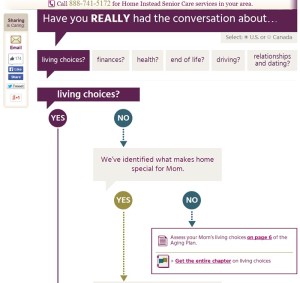
senior care mnHave you really had the conversation with your loved ones about end-of-life wishes? Finances? Future living preferences? When a family lacks clear communication surrounding a loved one’s choices as they age, frustration arises, most often at the worst time. If a senior never expresses his or her desires about end of life care, for example, bedside arguments between family members about “what he would have wanted” or “how she wanted to go” can result. Click here to walk through an interactive guide to find resources that can assist you with the aging considerations you have yet to discuss with your family. If you’ve already had a conversation about health (for instance), click Yes and move onto end-of-life. If not, click No and assess your Mom’s health, considering risks and genetics. Move on from there to making sure Mom is up to date on medical checks and preventative screenings. Each step links to the Action Plan for Successful Aging which includes checklists, thoughts to consider, conversation starters, and resources. This step-by-step approach will open the door to having “the talk” and ensure that all of  the important topics are covered.

Home Instead Senior Care of Minneapolis takes a look at the importance of planning ahead financially for your aging situation through the lens of a mother and her young daughter.

Action Plan for Successful Aging

4070_Aging_PlanBuilding on your conversation, the next step in the 40-70 Rule® is the Action Plan for Successful AgingSM.  Put your plan into action with the assistance of noted experts in aging, finances, health, end of life and communication. This resource will take the guesswork out of some of the issues that many families eventually face. Included are conversation tips and considerations for a variety of circumstances such as living alone, blended families, dementia and religious preferences – topics that so many families are dealing with in today’s world. This Action Plan is written for the individual who wants to face aging with confidence so you may be filling it out with someone you love including a parent, spouse or friend or even for yourself! Topics include:

Living Choices – Where would your patients like to live as they age? Will they stay in their Minnesota home or live in a care facility? Do they need to adapt their home for safety? Who would they call in the event of an emergency? These basic questions will ensure that the family is on the same page about the senior’s future living preferences.

Finances – Have your senior patients calculated the cost involved with meeting their retirement wishes? Have they met with a financial advisor to determine how much they will likely need to cover long-term health care expenses? Calculating the cost now and planning ahead financially can help yield greater peace of mind as they move forward.

Health – Have your patients outlined their goals for a healthy lifestyle as they age? Have they factored their current diet into this equation? Are they up to date on medical checks and health screenings? Addressing health concerns early can be a valuable, preventative tool in successful aging.

End of Life Care Wishes – Many families are not having this important conversation. Without it, they cannot gain a clear understanding of what their parents would like to accomplish before they die or where they would like to end their life. Discussing this difficult topic now will help ensure that the family has a unified plan and advanced directives in place moving forward.

Driving – Most seniors dread the idea of losing the independence associated with driving. Yet, families must be able to address their concerns about driving abilities, not only for the safety of their senior parent but for all with whom they share the road. While the driving topic can often be an emotional one, this chapter provides tips to navigate those emotions and discuss options for independence without a license.

Relationships and Dating – Perhaps Dad passed away and Mom has been spending a lot of time with an older gentleman friend. This can create family awkwardness if intentions aren’t clearly communicated. It’s important for families to talk about the nature of their parents’ relationships and their wishes for companionship as they age. Watch this hysterical video from Mary Maxwell to put yourself in the proper frame of mind!

We hope that completing this plan will help you be better prepared for the road ahead. Download the 40-70 Rule: An Action Plan for Successful Aging to share with your senior loved one, or explore the additional program resources available around these topics so that you and your family has the tools they need to create a successful plan for aging.

Senior Safety Starts at Home

Is home a safe place?

Falls are among the leading causes of death and injury in the senior population especially here in Minneapolis where icy sidewalks can be a hazard.  33% of trips to the ER are caused by falls and other accidents at the home. But families can greatly reduce the risks of accidents by ensuring that their older loved ones have the proper home medical care and support. In fact, Home Instead Senior Care polled over 100 emergency room physicians and 48% said home accidents experienced by seniors could be prevented. Unfortunately, the most common response from families when a senior visits the ER due to a home accident is “I was afraid something like this would happen.”  Yet 85% of seniors have done nothing to prepare their homes for aging.

Watch the video below, “Warning Signs that a Senior is Struggling”, to learn how to spot the warning signs that your parent or senior loved one might already be struggling with mobility and some ways to help. These are just the first steps to making your senior’s home a safe place to be.

Doctors Orders

Many people experience problems with their sense of balance as they get older. 100% of ER doctors said that poor eyesight, mobility problems, balance issues, impaired motor skills and dementia are all very serious risk factors for seniors as potential causes of injuries or accidents at home. In addition, problems in the visual and skeletal systems and the nervous systems can be the source of some posture and balance problems, medical experts say. A circulatory system disorder, such as low blood pressure, can lead to a feeling of dizziness when we suddenly stand up. Problems in the skeletal or visual systems, such as arthritis or eye muscle imbalance, also may cause balance problems. Set up a doctor’s appointment for your senior loved one to determine if he/she has any of these issues.

The CDC offers these tips on how older adults can remain independent and reduce their chances of falling:

grab bar
Some of the most common recommendations include installing assistive equipment in the bathroom and handrails on stairs, removing clutter and tripping hazards, and improving lighting.
  • Exercise regularly. It is important that the exercises focus on increasing leg strength and improving balance, and that they get more challenging over time. Tai Chi programs are especially good.
  • Ask your loved one’s doctors or local Minneapolis pharmacist to review her medicines — both prescription and over-the counter — to identify medicines that may cause side effects or interactions such as dizziness or drowsiness.
  • Have her eyes checked by an eye doctor at least once a year and update her eyeglasses to maximize her vision. Read more about how a senior’s safety is affected by their senses.
  • Make her home safer by reducing tripping hazards and adding grab bars inside and outside the tub or shower and next to the toilet, adding stair railings and improving the lighting in the home.
  • To lower her hip fracture risk, make sure she is getting adequate calcium and vitamin D from food and/or from supplements, and that she gets screened and treated for osteoporosis.
  • Consider purchasing a medical alert system. Lifeline with AutoAlert provides an added layer of protection by automatically placing a call for help if a fall is detected and you can’t push your button because you are disoriented, immobilized, or unconscious.

Risk Factors at Home

65% of seniors’ homes have at least one potential safety issue, according to adult children. The most common issues are tripping hazards, bathrooms without assistive equipment, and storage that is too high or too low.  100% of ER physicians say it is very important that families of seniors invest in basic home safety modifications. Some of the most common recommendations include installing assistive equipment in the bathroom and handrails on stairs, removing clutter and tripping hazards, and improving lighting. Visit one of Liberty Oxygen & Medical Equipment’s 8 locations for a great selection in adaptive equipment.

Check out ways to help make your senior’s home safer by completing a room-by-room safety check.

This video shows simple things you can do to make life easier for your senior loved one using lighting, color and security measures. Suggestions include fixing lighting in dark pathways or rooms, using contrasting color on walls and counters, checking alarms and making sure all doors are secure.

Home Safety Considerations for Families Living with Alzheimer’s

If you are part of a family living with Alzheimer’s disease, it’s important to remember that one of the keys to aging at home is doing so safely. A diagnosis of Alzheimer’s disease does not have to signal the loss of independence and freedom. As many as 70 percent of people living in the U.S. with Alzheimer’s today are doing so in their own homes.

Safety at home begins with adapting the environment to support the changing abilities of the person with Alzheimer’s. We offer some free resources for recognizing and dealing with the challenges of caring for a loved one with Alzheimer’s. Be sure to re-evaluate home safety measures regularly as the disease progresses. Pay special attention to garages, work rooms, basements and outside areas. Inside the home, there are simple things you can do to modify your kitchen, living room, bathrooms and bedrooms to make them safer for the person with Alzheimer’s.alzheimers caregiver mn

  • Invest in installed, working fire extinguishers and smoke detectors.
  • Lock or disguise hazardous areas using child-proof locks and doorknob covers.
  • Limit access to places with knives, appliances and poisonous chemicals.
  • Add textured stickers to slippery surfaces, remove throw rugs, minimize clutter and limit access to stairs to reduce risk of falls.

Enroll the person with dementia in an emergency response service designed specifically for individuals with Alzheimer’s or a related dementia who wander or may have a medical emergency. Should the individual become lost, a caregiver can report the situation to an emergency response network including the local Alzheimer’s Association chapter and law enforcement agencies that will work to get the individual home safely. You may also want to consider a web-based GPS location management service to remotely monitor the person with Alzheimer’s. Learn more about these resources in this video.

If you enlist the help of caregiving professionals to provide care for your loved one with Alzheimer’s or dementia, they’ll be able to point out additional suggestions to make your home a safe environment. Here at Home Instead Senior Care Minneapolis, we provide a home safety evaluation as part of our initial in-home assessment to offer recommendations specific to your living space and the needs of the person with Alzheimer’s or dementia.

How Clients with Dementia Feel and Tips to Care for Them

Today, we wanted to continue the discussion that we started last September about how clients with dementia might feel. We had shared some thoughts from family caregivers and then asked you to weigh in on the question, “Are people suffering from Alzheimer’s really suffering, or are they just as happy as anyone else?”

Here are 5 of the responses that CAREGivers shared:

Tough question. I have been sitting here swinging back and forth. First I replied that they suffer 90% and occasionally feel free of being lost, but I don’t really know if they ever have a bit of time that they feel free of confusion.

–Carole

As a CAREGiver, I’ve found positive results from our dementia clients by complimenting them constantly. Because of our clients’ memory problems, they simply don’t remember that a CAREGiver said something positive, even sometimes just an hour prior. Fun example to use all day long: “Well look at you with that gorgeous dress today. Where did you get it?” Our client may have told the CAREGiver 3 times already in the same day or shift that their daughter bought the dress as a birthday gift. Well guess what? That dress is only part of the happy memory that is brought to surface, just by the complimentary conversation. Our client may now remember other positive moments that occurred in the past while she was wearing the dress, and here come all the beautiful smiles. How wonderful!

–Stephanie

It is my experience that even people with fairly late stages of the disease will communicate that they know something is wrong with their mind and cannot understand why they cannot succeed in calling up the information that they are searching for or put together their thoughts well enough to answer a question. There are good and bad days, joyful and angry, peaceful and frustrated, ornery and despondent, just like the rest of us, only on another level and possibly changing from moment to moment. The good part is that, with redirection, we can often affect the change that we desire for the benefit of the patient and bring them to the positive place once again. With music and existing memories, a well-timed joke, an expression of understanding and reassurance, and most importantly a developed understanding of the person, which takes some time, the tables can be turned and relief achieved, if only temporarily.

–Heidi

I think each person reacts differently to the care, people and the moment. We have to think in short periods of time like they do. Explain, explain, and you still may get a bad reaction, but never stop explaining, and have patience. Agitation is to be expected; you need to know how to deal with it, and again, it’s different with each person. I’ve seen people with this disease go through it with no agitation or anger and others that do. As far as they are not feeling the changes, I’m sure they do, and each day is a challenge for them. To me, it would feel like waking up to a new nightmare each day.

–Anonymous

If I’m correct, I think that, to some extent, the patient is unaware of having developed the particular disease, but, to a greater extent, he or she is aware that something has changed. Of course I imagine that change brings about changes in his or her thinking that also affects the emotions and behavior. I also think that they suffer only because they get frustrated and are confused, especially fearing they may no longer be the same or in charge of their lives and affairs. I feel they suffer mostly if they’re not properly cared for.

–Janett

Making Sense of Senior Home Safety

senior safety mnby John Stuck

Observing the safety hazards in a senior’s Minneapolis home is one thing. Living them is another. According to research conducted by Home Instead, Inc., nearly 100% of emergency room doctors in the U.S. and Canada report that the following health conditions are very serious risk factors for injuries or accidents at home:

  • Confusion or Dementia
  • Balance Issues
  • Mobility Problems
  • Poor Eyesight
  • Impaired Motor Skills

Try putting yourself in a senior’s shoes. Difficult? Perhaps this will put things in perspective: As time goes on, the effects of aging could impact all senses including hearing, vision, taste, smell and touch. These sensory changes often affect a senior’s lifestyle as well. This domino effect, of sorts, might make a senior vulnerable to safety issues in the home. Poor eyesight, for instance, could make it more difficult to see a throw rug, safely use a knife to cut an apple or take the proper dose of medication.

Aging’s Effects on the Five Senses

The following describes how aging can compromise the five senses:

Touch: Decreased blood flow to nerve endings as we age can reduce the sense of pain and temperature.

Sight: By the time someone is 60, pupils decrease to about one-third the size they were at age 20. Add to that aging-related eye conditions such as cataracts and macular degeneration.

Hearing: Our ears control hearing and sense of balance, both of which can be compromised as we age.

Taste: We start out with about 9,000 taste buds. They decrease in both number and mass with aging.

Smell: Sense of smell can diminish, especially after age 70, because of loss of nerve endings and less mucus in the nose.

Making Home Safer for Seniors with Diminished Senses

It’s possible to counteract the effects of aging by being proactive. As we mentioned in our post Senior Friendly Home Adaptations, 100% of emergency room doctors surveyed say it is very important that adult children perform a safety check of their loved one’s home once per year, yet only 44% have done this.  A little extra help at home could be just what a Minnesota senior needs to stay safe. In fact, doctors estimate that 61% of seniors in the U.S.  who come to the emergency room could benefit from more care at home. What are the most unsafe areas of the home for seniors? Bathrooms and bedrooms lead the way, according to a survey of ER doctors. Physicians say that injuries are most likely to happen in these areas of the home:

  • Bathroom – 69%
  • Bedroom – 13%
  • Kitchen – 9%
  • Stairs – 5%

100% of ER doctors, 85% of adult children and 94% of seniors agree that falls are the most common home accidents for older adults. So what can older adults who want to stay at home do? ER doctors in the U.S. and Canada are unanimous. One hundred percent agree that an annual home safety check is very important to a senior’s home safety. But do you know which rooms in the house pose the greatest danger for your aging loved ones? Explore the everyday items that could become hazards to seniors as they age at home. Discover the ways you could help older adults safeguard their homes by completing a room-by-room safety check.  This checklist explores nine areas rooms of the home, including the bedroom, bathroom, living room, hallway, kitchen, laundry room/basement, garage and front yard.

In this video, Erin Albers from Home Instead Senior Care® explains a few simple and inexpensive home modifications that seniors can make to remain safe at home as they age.

So, too, can having additional help around the house. An estimated 97% (99% in Canada) of ER doctors report that not having help at home with activities of daily living is a very serious risk factor for accidents or injuries at home. Check out this interactive, virtual safety tour.
interactive safety guideThen, download this infographic to learn more or to share.

It’s not always easy to understand the physical limitations older adults face that could make home a virtual minefield for an aging parent. With resources and help from Home Instead Senior Care Minneapolis, your senior loved one has a much higher chance of remaining safe and independent in their Minnesota home for as long as possible.