

Congratulations! You’ve taken the Sunday Dinner Pledge and so far it’s been a successful program for Home Instead Senior Care and Meals on Wheels. Don’t fall behind or let the excuses creep in. Continue to use the prepared weekly meal plans, try out the featured recipes created by a Home Instead Senior Care network dietician and Food Network celebrity chef Melissa d’Arabian and most importantly, enjoy the time spent with your family.
Haven’t heard of the Sunday Dinner Pledge yet? There is still time! In an effort to drive home the importance of sharing family dinners on a regular basis, Home Instead has launched the Sunday Dinner Pledge public education program. By taking this pledge, you are committing to bringing your family together at least once a month for Sunday dinner. For every signed Sunday Dinner Pledge taken between May 6th and July 31, 2015, the Home Instead Senior Care Foundation will donate $1, up to $20,000, to Meals on Wheels America to deliver meals to seniors in need nationwide. Using the resources and tools from Home Instead makes this an easy pledge to stick to. The important thing is the fact your family is committed to having dinner together on a regular basis, including your senior relatives. “At Meals on Wheels we know the importance of visiting with our aging neighbors, this program is wonderful because it encourages families to spend time together and makes that personal touch available to others in need” states Patrick Rowan, Executive Director with the Metro Meals on Wheels, serving the Twin Cities metro area.
To help reduce any awkward silence and bridge the generation gap between the seniors and teenagers at the dinner table, we have come up with a variety of conversation starters and activities that can be used. Here are several ideas to get the conversation started:
- What is one thing you hope to do in your lifetime?
- What is the origin of the family name?
- Describe your best family vacation or weekend getaway
- Tell us about your favorite job or time in the military
- What family meal makes your mouth water?
You can research and share some fun or interesting facts around your topic of conversation and even decide as a group to make an activity out of it. For example, plan to cook the secret family recipe or Minnesota hot-dish of the top voted family meal together next time you gather for dinner. Or if you’re discussing favorite movies, make a plan to go to a movie or even watch an old classic together after dinner.
If you’re looking to take your Sunday dinners to the next level, plan an activity. Here are a few ideas to give your Sunday dinner experience new meaning:
- After dinner, attend a youth sporting event together. Take Grandpa to see a grandson’s baseball game or catch a Minnesota Twins game.
- Enjoy game night after dinner – once the dishes are done, teach the younger kids a new game of cards or play a favorite board game.
- If you’ve always wanted to learn how to knit, ask Grandma to bring her knitting needles and teach you while dinner is in the oven. You may be surprised to know the talents and skills the seniors in your family possess. To be able to learn a skill like woodworking, quilting or stained glass art from a grandparent or great-grandparent is invaluable.
- Learn a little family history by researching the family tree. There are websites that make it much easier to explore your heritage such as ancestry.com or archives.com.
Make sure you’re sticking to healthy nutritious meals and keep it simple! Download the weekly meal plans Home Instead has prepared for you and refer to them when planning out the next family gathering. The meal plans include the program’s featured weekly recipes, full daily meal plans, nutritional and calorie values, and detailed shopping lists.
See how Kathy Gunderson shares her Sunday dinner tradition
So spread the word! Join us and pledge to bring back Sunday dinner with your senior loved ones, and discover how to make the most of being together. Sharing meals with your family in your Minneapolis or St. Paul home on a regular basis can help to improve a seniors’ quality of life. Take the pledge today!

 The stress of caring for a seriously or chronically ill senior can take its toll on a spouse. A study from the University of Michigan Comprehensive Cancer Center found little difference in quality of life between patients and spouses, but found significant differences based on the phase of their illness, specifically whether the patient was newly diagnosed, facing a recurrence or living with advanced disease. Couples coping with advanced disease had significantly poorer overall quality of life. Spouses reported lower confidence than patients in their ability to manage the illness, and more uncertainty about the illness; patients also reported more social support than did spouses. Exhausted. Anxious. Overwhelmed. If you are the caregiver of a loved one in MN with cancer or arthritis, it is likely that you relate to all of these emotions. Transportation to and from appointments around Minneapolis, frequent hospital stays, and the sheer scope and duration of the illness are challenges many caregivers of these patients face. What is a caregiver to do when they have little time to care for oneself? One solution is to get
  More Than Joint Pain: Understanding Seniors and Arthritis

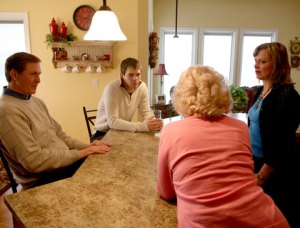 Communication is the key to making your combined family work, says Matthew Kaplan Ph.D., Penn State Intergenerational Programs extension specialist. “Families must address the issues at hand — from multiple perspectives — when they arise…Ask yourself, ‘What can we do to come together and figure things out?'”
 On September 21, 2013 the
  Gaining the Confidence to Care Book

 Confidence to Care also highlights the importance of caring for yourself while caring for others. This at home kit contains, an at-a-glance collection of information, tips and resources to help handle difficult situations, avoid household accidents, encourage engagement and prevent caregiver stress, that is designed for any member of the household to reference, anytime they need it.
 The responsibilities and challenges of caring for a loved one in their Minnesota home can place significant stress on the family caregiver. In fact, this stress can build up to actually cause caregiver distress—a situation where the caregiver may become more susceptible to other health risks such as such as ulcers and weight loss/gain or even more chronic conditions such as diabetes, heart disease.
 These tips are recommended while taking care of an aging loved one:
 Caring for a senior loved one in Minneapolis can come with a contradiction of emotions. For example, research conducted by


 Home Care MN and Senior Care Information in Minneapolis