Senior Scams Attempted on our Clients

It’s probably incomprehensible that your Dad who is the most fiscally responsible person you know or your Mom who warned you every day about “stranger danger” could get scammed. However, one recent study reported by Consumers Digest estimated that there are at least 5 million cases of elder financial abuse in the United States each year yet, according to a 2011 AARP study, only 25 percent of senior scam victims report their fraud cases to authorities. Unfortunately, Home Instead Senior Care of Minneapolis CAREGivers all too often witness scam attempts against their clients by unscrupulous people who call seniors on the telephone, knock on their doors in their quiet Minnesota neighborhood or otherwise solicit them for fraudulent purposes. That is why we developed the senior scam minneapolisSenior Fraud Protection Kit. Click here to download your kit which contains senior fraud triggers and targets, a checklist to scam proof your senior and a handy list to put next to Mom or Dad’s computer or phone of do’s and don’ts that can help protect them from scammers.

As Client Care Coordinator for Home Instead of Minneapolis, Jill Heley-Otterson is a trusted advisor to the seniors we serve. So trusted in fact, that she was recently contacted by one of our clients asking if Jill could help get her out of a “real mess” she’d gotten herself into and she did not want her husband or children to know what was going on. Jill went to her home and found out that for the last 2-3 months, she had given almost $5000 to two men that kept calling her day and night. They told her she was going to get an expensive new car and $2 million as a Publisher’s Clearinghouse winner, but she had to pay a few installments in order to collect her winnings. They kept instructing her to go to a local Minneapolis area pharmacy and purchase certain green packets. Once she added money to them, they would call her back and ask for the scratch-off code on the back in order to access the funds. It appeared that each time was around $750. She finally realized that she was being conned but, having lost so much, she kept thinking that if she just paid them ONE more time, that she would actually get the car and $2 million…and that they would stop calling her. These guys were very convincing, and knew just what to say to keep her on the hook.

The local law enforcement has no way of tracing or investigating this type of crime because the people making the calls are usually overseas and use computers to re-route the numbers. Jill worked with the client to block the two numbers she had for these men, but as they sat there, the calls immediately started up again with local numbers showing on the caller ID. The only way to stop the calls was to turn the phone off. With the client’s permission, Jill called Adult Protection to report what was happening. In the end, her family was made aware of the situation and both her home number and cell number had to be changed and family is closely monitoring the client’s finances and bills.

When a client of Home Instead Senior Care Minneapolis was diagnosed with MS, even though she was not seriously ill, her son and daughter in law persuaded her to turn over all of her financial affairs to them.  In addition, she deeded the house over to them.  In doing so, she basically gave up any say she had in how her money was spent – and her son and daughter in law took full advantage of this.  They went on trips to Las Vegas with her money, bought things for themselves and took over the home by moving into it and relegating her to just being in a couple of the rooms that were wheelchair accessible.  They created a very hostile work environment for the CAREGivers.  They were only allowed to talk to the client and they could not talk to or engage with the young granddaughter that lived there also.  They would get suspicious and nasty if the client and the CAREGiver were having a conversation that they could not hear – and would yell at them about it.  Home Instead got calls from the son and daughter in law saying the CAREGivers were not allowed to purchase anything for the client (even a candy bar) unless it was approved by them and the CAREGivers were not allowed to park in the driveway, even in the winter.  The client was totally isolated from her family – not allowed to call her sister or her friends.  This is why Home Instead kept sending CAREGivers out there, simply to make sure that there were eyes and ears while authorities and family were making plans to get her out of this situation. Adult Protection was brought into the situation.  The daughter in law was also very specific in the age and appearance of our CAREGivers because she did not trust her husband with them.  The police came to the door one day because the son had snow blown the entire yard of snow onto the street, and cars could not get by.  He demanded that our CAREGiver not open the door to the police!  She did defy him, which made him very angry. All in all, this was a very hostile environment both for our client and our CAREGivers.

Our primary CAREGiver and our Client Care Coordinator helped the client make a plan to move to an assisted living facility, secretly.  It took some time and a lot of planning and when the son and his wife were out of town – she secretly made the move with the belongings she wanted with her.  The facility had extra security involved to prevent her son and his wife from having contact with her or causing trouble.  Their pictures were at the front desk (and probably still are) stating that they are not allowed in the building.  Our client was so thrilled to be reunited with her sister and other family.  She has been thriving, is happy in her new environment, still receives services from us, and is engaged in her new community.  Her son and daughter in law no longer have her money to live off of and are involved in a huge legal mess that is ongoing as far as we know.

Another scam case was less intrusive but could have been equally as damaging. A senior client of Home Instead Senior Care Minneapolis had endless magazine subscriptions that just kept coming and coming! He was getting invoices for the magazines even though his current subscription is paid up for the next ten years. He didn’t realize that he’d paid so far ahead and thinks that he actually needs to pay each of these invoices. Our CAREGiver is monitoring this by insisting that together, they look at a current magazine to find the end date before paying on any more invoices. She is also coaching him to say no to telemarketers. It’s difficult for seniors who may be lonely. They may not mind hearing a friendly voice on the other end of the line… even if they are asking for something. It makes it very hard for them to say NO.

Home Instead’s mission is to help keep Minnesota seniors living safely and independently in their homes for as long as possible includes helping to protect older adults from those trying to take advantage of them.
We are proud to serve as a second set of eyes to help deter tricksters and scammers. With the legacy they leave all of us, our nation’s seniors are treasured commodities that deserve to be shielded from criminals and thieves – a mission we can all feel good about embracing.

Preserve Family Memories of Senior with Alzheimer’s to Stay Engaged

alzheimersIf maintaining independence is a goal of your loved one who has Alzheimer’s disease or another dementia, strive to keep them engaged with their family, Minnesota community and their surroundings. A senior’s home in Minneapolis or surrounding suburbs might just be the best place to accomplish this.
Dr. Jane F. Potter, chief of the Division of Geriatrics and Gerontology at the University of Nebraska Medical Center says, “At home, they will be engaged in self-care, they will be more active and do more for themselves.” As an expert panelist who helped develop content for the Home Instead Senior Care® network’s free Alzheimer’s Disease or Other Dementias CARE Training Program, Potter advises, “The course of losses accelerates if you put seniors with dementia in restrictive environments where people do more things for them.” Potter developed this program with Dr. Amy D’Aprix. View the recent Facebook photo of Dr. D’Aprix with Home Instead Minneapolis’ own John Stuck!

Home Instead Senior Care Minneapolis is here to help you with that goal. Following are important tips on how family caregivers can continue to engage seniors with Alzheimer’s in everyday activities:

• Exercise can help keep seniors active longer. Talk to their home care provider about simple exercises they can do, take them for a walk or even just encourage movement.

• Simplify the task. Allow the senior to dress themself as much as possible. Make it easier by laying out clothing in sequential order, with the underwear and socks on top.

• Allow seniors to do as much as they can, but step in when you see that they’re not physically able so they don’t get frustrated. Give clear instructions, one step at a time.

• Make activities easier or change the activity. If your Mom with Alzheimer’s used to love to bridge but can’t remember how, play war or another card game instead.

• Remember, it’s more than just about the task. Turn a bath into an opportunity to smell different soaps or, when picking out clothing, discuss fashion or special colors.

• Start an activity and then ask the senior to help. If your mom has forgotten how to make that favorite family recipe, begin the process and have her help with whatever she can.

alzheimers memoryOne way to preserve the memories of those families dealing with Alzheimer’s is by creating a scrapbook. Brian Olmstead, President of Archiver’s says, “A scrapbook is a great way to preserve your family’s special stories and memories, and can be as simple as gathering your photos, putting them into an album, and writing down the important details. At Archiver’s, we’re passionate about memories and are here to make it easy to preserve and share yours.” Archiver’s has seven Twin Cities locations including one near our Home Instead Senior Care office in Maple Grove. Organize a family scrapping session in their free workrooms. Feel free to utilize their classes, in-store copier for making copies of delicate heritage photos, helpful store associates, and archival-quality products.

To accommodate your family member’s cognitive ability level and make sharing memories in a positive, meaningful experience, keep the following considerations in mind:
1. Spread photographs out on the table in their home and casually discuss them. Try to select ones that spark your loved one’s interest or memory.
2. Ask personal questions about their family and Minneapolis area upbringing but don’t interrogate.
3. Involve other family members so the senior with Alzheimer’s isn’t on the spot.
4. Focus on general memories and emotions instead exact facts and details. Incorporate their favorite color or mementos from of Lake Minnetonka.
5. Share your memories as well, especially the more recent ones which a senior with Alzheimer’s will be less likely to remember.
6. Work on the project is short increments and record the discussion.

The activities should focus on what that senior can and wants to remember. You can help to minimize frustration by paying attention to your loved one’s limitations and adapting opportunities for reminiscing accordingly. The goal is to give your family member with Alzheimer’s the opportunity to share cherished memories and preserve them for generations to come. For more information, go to https://www.helpforalzheimersfamilies.com/AlzheimersandMemory/

10 Tips to Help Minneapolis Families Cope with Alzheimer’s

Issues related to aging can add stress to even the most stable Minneapolis families. Taking turns caring for a senior after surgery, deciding who’s going to mow the lawn and who’s going to assist with doctor appointments and hiring elderly home care are all typical (yet time and energy consuming) tasks for Minnesota family caregivers. Adding behavioral changes related to Alzheimer’s and dementia can push families to the brink. Watch Laurie Owen from Home Instead Senior Care and Dr. Jane Potter from the University of Nebraska Medical Center discuss the lifestyle changes for patients with Alzheimer’s disease or other dementias.

“Regular communication – whether it’s by email or phone – is the single biggest key to helping families cope with Alzheimer’s disease,’’ said caregiving expert Dr. Amy D’Aprix, who developed Caring Cards exclusively for Home Instead Senior Care to engage families in meaningful communication. Here are 9 more tips from Dr. D’Aprix and the Home Instead Senior Care network to helping families stick together through the ups and downs of Alzheimer’s disease:

  1. Get an accurate diagnosis: Get several opinions, if necessary, to ensure that all family members, doctors and home health care professionals caring for your loved one know and understand the situation.
  2. Hold a family meeting: Often times, the main caregiver becomes the only person who has the important information needed to care for the person with Alzheimer’s. Gather family members together with a professional  to ensure that everyone shares the same information and gets the resources they need.
  3. Learn to manage change: Dementias are ever-changing conditions. Find a support group in the Minneapolis or St. Paul area to share with others who are facing similar challenges.
  4. Learn skills and techniques: The behavioral changes that come with Alzheimer’s disease and other dementias can be difficult to manage. The resources of the e-learning Family Caregiver Training can help. Find memory activities and puzzles here.
  5. Ask the primary caregiver if they need help: The main day-to-day caregiver can harbor resentment towards others who they feel should be doing more. Look at what needs to be done and ask the primary caregiver how you can give them respite.
  6. Assign tasks: Family members who live out of town can still help with things like finances. Make a list of all that needs to be done and form an online care team to allow others to help.
  7. Ask for help if you’re the primary caregiver: Are you the only one of your siblings in Minneapolis who lives by your parent? Or maybe you’re the oldest daughter and everyone expects you to be the caregiver. Whatever the circumstance, caregivers of seniors with Alzheimer’s disease and other dementias shouldn’t try to go it alone. (Hint…see tip #6)
  8. Preserve memories: Create a video of your loved one with Alzheimer’s telling stories about their lives or design a shadow box of keepsakes. Make sure to read next month’s blog from Home Instead Senior Care of Minneapolis for more information!
  9. Tap into local Minneapolis resources: Families can’t have too much information when it comes to managing  the behavioral changes of Alzheimer’s disease. Contact a Home Instead CAREgiver who has received special training to care for those with all types of dementias.

Dr. Amy D’Aprix also prepared content for the Alzheimer’s Disease or Other Dementias Training Program called CARE which stands for Changing Aging Through Research and EducationSM. Programs like these as well as the online Family Caregiver Alzheimer’s Training were developed exclusively for Home Instead Senior Care and FREE to you!

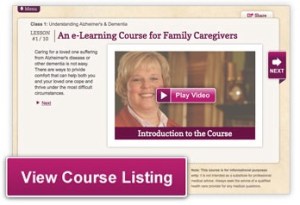
Each e-learning class in the Family Caregiver Alzheimer’s Training  program can be completed within 5–15 minutes and include:

  • Understanding Alzheimer’s and Other Dementias
  • Capturing Life’s Journey
  • Managing Behaviors
  • Encouraging Engagement
  • Safety

To begin your free online training immediately, simply click here and “home instead facebookLike” our Facebook page.

As a Fan of our Facebook page, you’ll have access to special opportunities and resources such as this training that we offer throughout the year. Already a Fan? Click here and get Family Caregiver Alzheimer’s Training now!

How Seniors Make Volunteering Joyful and Long Lasting

senior volunteerOur parent organization, the Home Instead Senior Care® network, recently performed research on senior volunteers and found some truly interesting facts about what makes volunteering enriching and fun for people in their golden years, especially in Minneapolis.

Minnesota seniors who have learned how to give of themselves in a sustained way had some secrets to share about how to enjoy community service as long as possible. In fact 70% of the seniors surveyed said they plan to go on donating their time to special causes “forever.”

Tips from these seniors included the following:

1.  Find something to be passionate about. What have you always wanted to do? What special causes really make your heart sing? Whether it’s helping to feed the homeless at a Minneapolis shelter, being a docent, helping at a pet shelter or making baby bonnets, there is something for everyone and every passion. Finding the role that really tickles your fancy is the key to keeping it interesting.

2.  Find a cause where there is a real need. In this Minnesota economy, as you might guess, that is a very easy thing to do. Not only are there more people in need today than ever before, but non-profit and community service organizations are more taxed than ever too. The Corporation for National and Community Service conducted a survey in 2009 revealing that 80% of nonprofit and AmeriCorps organizations were feeling fiscal stress.

Some great resources exist locally and nationally to find the greatest need, including:

3.  Giggle your way out a bad day. Like any real job, volunteer roles for seniors are going to have their ups and downs, and one way to handle it is to simply laugh it off. For a quick “laugh fix,” visit CaregiverStress.comSM and “Laugh with Mary Maxwell.” Mary’s delightful perspective on life as a senior will help get rid of the bad day blues!

4.  Don’t set the bar too high. We all want things to go well, but sometimes they just don’t. Organizing events, for example, can involve many details from fliers to food, decorations, and the contributions of other volunteer seniors. Aiming for perfection can make the whole event go sour. By contrast, cheerfully taking the good with the bad and making the best of whatever challenges occur will help you and everyone around you “go with the flow.”

5. Be joyful. Just like paid work, a volunteer role may not be worth doing if there is no joy in it. Even the grittiest hands-on jobs should be things that you enjoy or even take special pride in accomplishing. Whether you’re building, baking, organizing, reading or caring for an elderly person in their home, make sure it brings you joy.

senior minneapolis6. Shrug off the critics. Volunteering takes all kinds of seniors, and some of them can take the roles and responsibilities of volunteering a touch too seriously. If faced with criticism, shrug it off – especially if it is a one time thing. The good news is that tomorrow is likely to be a better day. And if not, there are many more opportunities to explore such as caring for a person with disabilities in their home.

7. Turn the other cheek. Avoiding conflict and side-stepping turf wars has helped many a volunteer to rise above challenges that may crop up from time to time. Remember, sometimes it is best to give up ground to keep the peace, and most disagreements will simply blow over given some cooling off time.

8. Give yourself a break. Do not overdo it. The world will certainly go on if you take care of yourself and your own needs. Dedication is a wonderful thing, but the work you do in your retirement years should not drudgery, and should never supersede your own self care.

9. Ignore negativity. There is “one in every crowd,” as they say. It may be someone who looks for what’s wrong instead of what’s right, or even someone who is envious of all you accomplish. Seek out those who share your interests, have a “team” mentality, and are about the greater good.

10. Need help? Ask for it! If you are yearning to volunteer or you know a senior who is, contact Home Instead Senior Care of Minneapolis, which employs CAREGiversSM . CAREGivers can help around the house with meal preparation and light housekeeping so their clients can volunteer. What a great way to get out of the house and interact with others!

Need ideas for ways to make a difference? Here is a brief overview of the primary volunteer activities of seniors:

  • 47% volunteer with churches and religious organizations
  • 16% work in senior centers or other senior-related services
  • 10% work in hospitals or healthcare organizations
  • 10% work with schools, educational services and youth programs
  • 7% volunteer with social services and nonprofit organizations

There are as many ways to help as there are people who want to give their time. Think about volunteering in Minneapolis today. You can make a world of difference!

Be a Santa to a Senior Program a HUGE Success in Minneapolis!

In 2011, 2000 gifts were given to local Minneapolis area seniors who needed holiday cheer.
We appreciate your participation!

senior careThe faces of both the seniors and the volunteers lit up as gifts were distributed to seniors in nursing homes, low income senior housing, adult day centers and personally nominated individuals. Just a few of the senior residences include the Ebenezer Tower, Friendship Center and Augustana.

home careThis huge success would not have been possible without our partners which include Byerly’s & Lund’s Pharmacy locations, Starbucks, The Brost Clinic, Health Partners, Minneapolis Women’s Club, Upsher-Smith, Park Nicollet Orthopedic Clinic, Allina Health Clinic Medical Arts, Oakwood Elementary, MN School of Business and Herzig University.

With this experience in our hearts, we look forward to 2012 with positivity and gratefulness.

Brighten Someone’s Holidays! Be a Santa to a Senior

Have you heard? Home Instead Senior Care Minneapolis is, once again, bringing Santa to seniors with the Be a Santa to a Senior® program. But hurry. You must choose your senior gift recipient by December 9th, 2011. In this blog post, we’ll share this exciting program with you and tell you how you can help. We know you’re busy, but we have good news: there are two great ways you can help. And they are both easy.

Facebook Home InsteadLike Us to Donate a Dollar

Home Instead Senior Care Minneapolis is donating $1 to Be a Santa to a Senior for every single new “Like” on our Facebook page during the month of November! So head on over to Facebook and Like us now. And be sure to share this easy click-to-donate campaign with your friends and family.

Join the Be a Santa to a Senior Campaign

The Be a Santa to a Senior® campaign is all about helping seniors who are alone or in need. The campaign, which first launched in 2006 by our parent organization, helps seniors to get a little TLC during the holidays. The Minneapolis office of the Home Instead Senior Care® network, the world’s largest provider of non-medical in-home care and companionship services for older adults, has partnered with local non-profits groups like Little Brothers Friends of the Elderly, Meals on Wheels and several Lunds/Byerlys, several nursing homes and low income housing to provide gifts and companionship to seniors who otherwise might not receive either this holiday season. It began with just one nursing home, and has since grown into a movement.

Here’s a little story that illustrates the impact this program can have on seniors’ lives. The year after its fledgling effort, Home Instead Senior Care volunteers returned to the first nursing home they had visited the year before and discovered their card to one of the residents still pinned to the bulletin board. They learned that the card and gift from Home Instead were the only ones she received that previous year, so the card continued to be very special to her.

Now you can help brighten a senior’s life too.

How to Participate in Be a Santa to a Senior

Senior Santa
Creative Be a Santa to a Senior display at Starbucks

Here’s how it works:
1. Head to any of the following locations:

  • Lund’s or Byerly’s stores with pharmacies in Minnetonka, St. Louis Park, Wayzata, Plymouth or downtown Minneapolis, MN
  • Starbucks 2661 Campus Drive, Plymouth, MN
  • Starbucks 16725 C.R. 24, Plymouth, MN
  • Starbucks 4175 Vinewood Lane North, Plymouth, MN
  • Starbucks 7802 Olson Memorial Highway, Golden Valley, MN
  • TwinWest Chamber of Commerce – 10700 Old County Road 15, Suite 170  Plymouth, MN 55441

2. Locate the Christmas trees, and choose any ornament with a senior’s name on it. You will find gift suggestions for that senior printed on the ornament.
3. Purchase the item(s) listed, put the item in a gift bag, return to the store with the ornament and deliver them to a store employee.
Your participation can make a difference!

About the Be a Santa to a Senior Campaign

Here’s how the program works. The Home Instead Senior Care network partners with local non-profit and community organizations. Together they identify seniors who perhaps live alone, do not have family members nearby, or are experiencing financial difficulties. The program targets many seniors who otherwise might not receive gifts or visits from family during the holidays.

Home Instead Minneapolis then works with local businesses and retail stores that are willing to help by placing trees and ornaments within their various locations. The involvement from busy stores gives the program visibility and provides a convenient way for shoppers to volunteer their assistance during the busy holiday season.

Since its inception, the Be a Santa to a Senior has attracted nearly 60,000 volunteers throughout North America, and has provided 1.2 million gifts to over 700,000 seniors who are in need of assistance or companionship. Now you can join the movement and help a senior in your Minnesota community.

Need Further Information?

The Be a Santa to a Senior website, provides a locator tool that enables you to find a store by zip code.