
Incontinence—the inability to control bladder or bowel movements—is a condition that commonly affects older adults, and many of you might care for clients with this condition. Your client may feel embarrassed or uncomfortable needing help with such a private and personal care task. For you as the CAREGiver, it can be unpleasant and awkward at first too. But there are ways to get past that awkwardness and help set your client at ease.
A few months ago, we asked members of the CAREGiver team who have had experience with personal care how they get past the awkwardness of helping a client with private activities like toileting and bathing. Thanks to Deidre and Kristi for sharing the following advice!
“Having a medical background, I was used to these kinds of situations before starting with Home Instead. But what I do is I make sure they know what I am going to be doing.
Then, while completing the task, I talk about something else like how their day was, what their plans for tomorrow are, or even something as simple as the weather. I think this helps the client see your confidence and helps keep their mind occupied with something else rather than the task that they may be ashamed of having to have help with.” –
Deidre
“I have found being sensitive to a person’s feelings is number one. Create an environment of comfort. Keep the bathroom warm, have plenty of towels, light a candle, all this is making your client feel safe and pampered. My Ms. J didn’t like mirrors so I steered her away from mirrors, just little things that I found I could do for her. Incontinence–well we all sneeze, or giggle, so brush off the embarrassment with a hug and a ‘I know what you feel.’” – Kristi
Here are some additional incontinence caregiving tips to keep in mind:
1. Be empathetic. Losing control of bodily functions ranks among the most stressful health issues, so approach the situation with patience, dignity and respect to ease your client’s anxiety. You may find it helps reduce your own stress level as well.
2. Adopt a matter-of-fact approach. This technique can help you overcome a client’s shyness or embarrassment. Use reassurance and a straightforward manner: “Oh, that’s too bad you had an accident, but don’t worry. It happens to a lot of people. Let me help you get cleaned up and into some dry, comfortable clothes.” You may have to fake this matter-of-fact attitude at first, and that’s OK. Pretty soon, you’ll find it comes very naturally.
3. Encourage your client to wear clothes that are easy to get on and off. Slacks with an elastic waistband can be pulled down quickly, enabling your client to get on the toilet faster and possibly avoid an accident. And if you do have to help your clients with cleanup, easy-off garments make it simpler to undress and re-dress them. On the other hand, clients with dementia sometimes remove their clothes at inappropriate times and places. In those situations, you obviously would not want to encourage your client to wear clothing that’s easy to remove.
4. Watch your client’s diet. Some foods make both bladder and bowel incontinence worse. Steer your client away from caffeine (coffee, tea, and some sodas), chocolate, spicy foods and a lot of fresh or dried fruit. However, it’s still important to make sure your client stays properly hydrated.
5. Always be prepared. Pack a small tote bag with supplies such as incontinence briefs or pads, wipes and even a change of clothes in case an accident happens when you’re out and about together. Don’t allow your client to become a hermit because of incontinence issues.
It’s important to note that CAREGivers who work with incontinence care situations should complete the Home Instead Senior Care personal care training. If you have questions about your training or a client care situation, please call our franchise office.
CAREGiver Training Refresher
Toileting
Using the restroom is a private activity, so requiring assistance while toileting can be very upsetting to a client. She/he may feel that her independence is in jeopardy, so treat your client with dignity and respect when assisting her in the bathroom. Here are some additional points to remember:
- Clients may have a difficult time getting to the bathroom due to lack of mobility. Make sure the pathway to the bathroom is clear of clutter and throw rugs, and make sure lighting is sufficient.
- Encourage the client to wear clothes that are easy to remove.
- Provide privacy by either leaving the room or putting a towel over her lap.
- Be patient. Allow your client plenty of time to use the restroom.
- If available, encourage your client to use grab bars near the toilet and a raised toilet seat as these may help with physical limitations.
 3 Ways to Help Seniors Avoid Diabetes Complications
 10 Diabetes Superfoods Seniors Can Say “Yes!” To



 Home Instead Minneapolis then works with local businesses and retail stores that are willing to help by placing trees and ornaments within their various locations. The involvement from busy stores gives the program visibility and provides a convenient way for shoppers to volunteer their assistance during the busy holiday season.



 The stress of caring for a seriously or chronically ill senior can take its toll on a spouse. A study from the University of Michigan Comprehensive Cancer Center found little difference in quality of life between patients and spouses, but found significant differences based on the phase of their illness, specifically whether the patient was newly diagnosed, facing a recurrence or living with advanced disease. Couples coping with advanced disease had significantly poorer overall quality of life. Spouses reported lower confidence than patients in their ability to manage the illness, and more uncertainty about the illness; patients also reported more social support than did spouses. Exhausted. Anxious. Overwhelmed. If you are the caregiver of a loved one in MN with cancer or arthritis, it is likely that you relate to all of these emotions. Transportation to and from appointments around Minneapolis, frequent hospital stays, and the sheer scope and duration of the illness are challenges many caregivers of these patients face. What is a caregiver to do when they have little time to care for oneself? One solution is to get
  More Than Joint Pain: Understanding Seniors and Arthritis

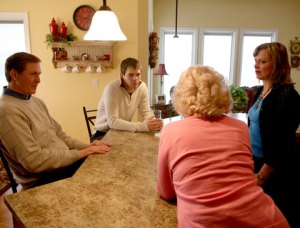 Communication is the key to making your combined family work, says Matthew Kaplan Ph.D., Penn State Intergenerational Programs extension specialist. “Families must address the issues at hand — from multiple perspectives — when they arise…Ask yourself, ‘What can we do to come together and figure things out?'”




 Home Care MN and Senior Care Information in Minneapolis