

Whether you’re senior with a large family or young family with small children, the holidays can take their toll on your time and emotions. That is why the Home Instead Center for Successful Aging focused on providing you these holiday stress busters.
For Caregivers
- Communicate your needs
Difficult family dynamics can take center stage during the holidays. Conflict may arise if family members can no longer continue their traditional holiday roles. Let yourself be heard and invite conversation around conflicts. Communicating is the best way to help smooth out problems and avert new ones. 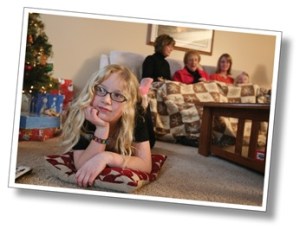 Plan ahead
Lower your level of stress by starting your holiday preparations way in advance. Make a list before the season arrives of what needs to get completed and purchased.- Be flexible
The holidays are steeped in personal, family and religious traditions. Maintaining those is a lot of responsibility for anyone, especially family caregivers, who lead busy lives while caring for aging parents. Diane K. Hendricks, social worker for the Center, recommends: “As a family, ask yourself, ‘What is important to continue and what can we adapt or let go?’” - Be resourceful
Take a look at your list from suggestion #2 and think about who might be able to help. Think about their skills and time commitment. Sometimes, people simply need to be asked. Maybe a Home Instead CAREGiver could help? - Take care of yourself
You hear it every year – don’t over-eat during the holidays and keep exercising. That’s easier said than done, for sure. Make a concerted effort to schedule time for exercise and keep healthy snacks handy to help avoid sugary holiday treats. - Make time for your traditions
One of the most important things about the holidays is creating memories with your loved ones. Don’t let favorite traditions go by the wayside during the busy holiday season. If time or circumstances make them difficult to maintain, adapt them as necessary. Consider making volunteering for the Home Instead Be a Santa to a Senior program part of your holiday traditions! - Look for comic relief
Nothing lifts the spirit like a good laugh! Gather friends together for a game night or to watch a funny holiday movie. Or, for immediate relief, let the queen of aging humor, Mary Maxwell, give her a one word solutions for those that might not want to cook a large holiday dinner.
For Seniors
- Reconsider the menu
If Mom can no longer handle preparing and cooking the traditional meal on her own, make it a group effort. It’s a win-win: Mom can supervise and the next generation can learn all the secrets to making those favorite family recipes. Involve Mom’s home care provider to do the grocery shopping and prep work. - Be their eyes, hands and feet
When arthritis prevents seniors from writing cards or macular degeneration damages eyesight and makes it difficult to shop for gifts, you can offer to take on those tasks. If time is short, suggest more efficient options such as online shopping and sending e-cards. - Mix it up
Older adults are usually most alert and at their best earlier in the day. Why not plan a holiday brunch rather than a lunch, or attend a daytime religious service instead of the evening one? - Go Skype
Distance can separate older adults from loved ones, which exacerbates loneliness, isolation and depression during the holidays. Use the latest technology to help an older adult stay connected to loved ones from afar. - Think simple
You may love seeing the family home all decked out for the season, but hauling boxes of decorations may become impossible for seniors who struggle with mobility and balance issues. Get together with family and friends and decide which holiday decorating traditions to keep and what to forego.
- Hit the road
You no doubt remember it as a child – those holiday light tours that you and your parents loved. A holiday driving tour is an easy way to bring back the memories and joy to an older adult who can no longer decorate. Get a list of places to visit in Minneapolis! - Compensate when necessary
If hearing impairment keeps Dad from enjoying the annual holiday movie, check out the latest sound enhancement technology. If Mom is having trouble seeing the deck of playing cards, look for large print cards or activities that can help keep her in the game.  Relive memorable moments
Seniors with Alzheimer’s disease and other dementias will especially appreciate opportunities to tap into old memories. Read our post on preserving family memories for ideas.- Make new memories
Sometimes, things must change. If an older adult can’t participate in the holiday or is hospitalized, why not create a simple video that shares highlights of the season? Or arrange to have a group sing carols to your senior loved one – traditional songs from his or her generation. - Get help – fast!
One of the best ways to adapt holiday activities is to ask for help . Enlisting the help of a professional caregiver to help with meal preparation or to provide transportation for your loved one can lighten the load for families and free them up to maximize special holiday time with their senior loved one.
 Be a Santa to a Senior®, the popular campaign that
  Christmas trees will be going up soon in which generous folks will pick up ornaments with the first names of seniors and their gift requests, buy items on the list and return them unwrapped to the store. From there, gifts need to be collected, organized, stored & distributed and that’s where we need your help! If you are a corporation or senior care residence who has compassionate employees and space to store gifts, please consider volunteering your time and location to our Be a Santa to a Senior program.
 After reading the 3 stories of senior fraud in
  Cons against older adults aren’t always acts of blatant theft. They can be subtle, like the retailer who over-charges an older adult or an individual who bills for a service and doesn’t finish the job. A 2011 MetLife Study has identified three elder financial abuse strategies: crimes of occasion, crimes of desperation and crimes of predation.
 Senior Fraud Protection Kit.
  As Client Care Coordinator for


 Dementia is the umbrella term for the variety of conditions that can cause the brain to fail. One of those is Alzheimer’s disease, which represents the majority of cases, noted Dr. Jane F. Potter, chief of the Division of Geriatrics and Gerontology at the University of Nebraska Medical Center. One thing to consider is, “Normal old age does not cause memory loss. It’s not normal when people can’t take care of daily business, such as paying bills and writing checks.” Dr. Potter said.
 To Download a PDF version of the full David Troxel Guide to Coping with Alzheimer’s Disease & Dementia, Answers to the 15 Most Common Questions,
  Our parent organization, the
  6. Shrug off the critics. Volunteering takes all kinds of seniors, and some of them can take the roles and responsibilities of volunteering a touch too seriously. If faced with criticism, shrug it off – especially if it is a one time thing. The good news is that tomorrow is likely to be a better day. And if not, there are many more opportunities to explore such as
 2. Share pictures and reminisce, without expectation.
 6. Be prepared to end the session at a natural stopping place.
 The faces of both the seniors and the volunteers lit up as gifts were distributed to seniors in nursing homes, low income senior housing, adult day centers and personally nominated individuals. Just a few of the senior residences include the Ebenezer Tower, Friendship Center and Augustana.
 This huge success would not have been possible without our partners which include Byerly’s & Lund’s Pharmacy locations, Starbucks, The Brost Clinic, Health Partners, Minneapolis Women’s Club, Upsher-Smith, Park Nicollet Orthopedic Clinic, Allina Health Clinic Medical Arts, Oakwood Elementary, MN School of Business and Herzig University.
 In addition to holiday-related sadness, seniors can experience seasonal moodiness due to less exposure to sunlight. Called “seasonal affective disorder” or “SAD”, this type of depression affects many elderly people in the fall and winter months, especially in Minnesota. Keep in mind that anything more than a mild case of the blues is a reason to get a physician’s evaluation. There may be supplements or medications that can help.

 Home Care MN and Senior Care Information in Minneapolis